Friday, April 28, 2017

Old Dominion Hemp: a product with a past, a vision for the future

Source: growwaynesboro.com

It All Began Here
Standing in front of hundreds of bails of hemp, housed in a Waynesboro warehouse on a rainy winter day, it doesn’t take Marty Phipps long to arrive at his favorite Thomas Jefferson quote: “Hemp is the necessity for the wealth of our nation.”
Growing up in the shadow of Jefferson, an Albemarle High School graduate and now a permanent resident, activist, and entrepreneur in the region, Marty is firm in his conviction that both the past and the future of hemp begins here. “I see this more than anything as a jobs movement,” he says. “This is our chance to bring life back to empty towns in Virginia, to revitalize those towns. This is our chance to say that farmers don’t have to lose their land, that they deserve a livelihood in which they can thrive.”
 
Marty Phipps of Old Dominion Hemp at his Waynesboro warehouse. Photo by Norm Shafer.
From Food Service to Activist Entrepreneur
Marty’s career began in food service, which he credits as teaching him valuable customer service and entrepreneurial skills. When he found himself back home in Virginia five years ago and looking for his next investment, a friend and founder of the Virginia Industrial Hemp Coalition invited him to a meeting, a gathering which at the time included no more than about half a dozen members. Suddenly, Marty was hooked. He quickly became the Coalition’s regional coordinator for Central and Southwest Virginia, holding community round tables and movie screenings, working to educate everyone from his father to Virginia legislators.
As his activism grew, Marty’s entrepreneurship merged with his passion. “We needed an endgame,” he recounts. “Here I was talking with farmers, researchers, and policy makers, but I knew we needed to move beyond talk. We had to demonstrate that there is an incredible market and demand for this product.”
Growing Demand and Building Networks
The biggest challenge for launching and growing Old Dominion Hemp was a widespread lack of awareness of the legality, uses, and possibility of hemp products.  While Virginia allows the growing of hemp under University-sponsored research programs, growing for commercial purposes is restricted under various federal and state statutes, a ban dating back to early restrictions on the biologically related cannabis plants. While hemp and marijuana are governed by many of the same federal statutes, their uses, effects, and biology differ dramatically. In terms of hemp’s safety and possible economic uses, Marty says “we still have so much education to do.”

.
The first eight months of launching Old Dominion Hemp, Marty spent most of his time talking with potential clients and donating his product to deserving nonprofits. Old Dominion Hemp imports crushed pieces of hurd, the inner stem of hemp plants, from Europe and sells it for horse and other livestock bedding. While his product is organic, absorbs four times its weight in water, lasts four times longer than competing bedding products, and reduces dust and odor smells, it’s unfamiliar to the market. Beginning with horse therapy and educational nonprofits, he began sharing his product around. Quickly, word spread.
“We began selling publicly in April 2016,” says Marty. “Since then, our sales have sky-rocked. We used to import a shipping container every couple of months. Now, we’re selling two a month. In some cases, we’re shipping entire international shipping containers to new customers across the county. It’s fantastic.”

Waynesboro as a Home for Innovation
While Marty sells bedding, it’s clear that his business vision extends far beyond the stack of bedding bales in the warehouse. He works with U.S. farmers to understand possible demand. He’s passionate about building US infrastructure for processing and using hemp products, which as production restrictions lift he believes have incredible fabric, biofuel, bioplastics, and bedding applications. He sees himself as a connected node for an emerging network that will one day form the U.S. hemp industry, now in its infancy and thus full of untapped and unexplored potential. He’s already sold his product for housing applications, and the idea of naturally built homes for veterans clearly occupies one of his soft spots.
For him, Waynesboro was the perfect spot for launching this evolving venture. With far lower rent than his Charlottesville childhood home, low overhead gives him room to experiment and to take new risks. “This is the type of town that needs to grow this industry,” he says. “Here we are, with both historic manufacturing space and surrounding farmland. This is ground zero for hemp.”  With New Country Organics, a leader in the organic feed business, headquartered just across the street from him and now serving as a wholesale customer and retailer of Old Dominion Hemp’s product, it’s clear that Waynesboro’s local economy is both welcoming and leveraging his enthusiasm.
 
Marty Phipps of Old Dominion Hemp at his Waynesboro warehouse. Photo by Norm Shafer.
Advice Grounded in Passion and Experience
Asked what advice he has for fellow Waynesboro entrepreneurs, Marty doesn’t hesitate. “Constant follow-up,” he says before adding “Instant follow-up.”  Marty’s passion to both sell and educate, combined with his training in food service customer service clearly serves him well. “Once you have someone buying you product, it is your job to retain them, regardless of how good your product is.” For him, that means staying current on environmental benefits, returning emails, sharing knowledge, and merging his business with his goal of building a better world.
“As entrepreneurs, we have to fight for what want,” he says. “It’s what we do every day.”

Learn More
To learn more about Old Dominion Hemp, check out their website at http://www.odhemp.com. Also, check back at GrowWaynesboro.com for regular updates on their fellow entrepreneurs and small business owners who are working with Marty to build a more vibrant, better connected local economy.

Hemp for victory (but not in Boulder County)

By Paul Danish
Source: boulderweekly.com


Artie Elmquist, a Weld County farmer with Boulder County ties, thinks he has the answer for corn growers who are getting hammered by plunging corn prices — hemp.
U.S. farmers brought in a record corn crop of 15.1 billion bushels in 2016, more than 1.5 billion bushels larger than 2015’s crop of 13.6 billion bushels. The two crops came on the heels of bumper crops in 2014 and 2013 as well. The ensuing corn glut drove 2016 prices down to $3.40 a bushel from a peak of $6.89 in 2012. And farmers are starting to look for something more profitable to grow.
Elmquist thinks hemp is the answer. He’s started a new company called New Plains Agro that’s seeking 2,500 acres of land to plant hemp on in 2017.
“Hemp doesn’t take much fertilizer and requires one-third of the water it takes to grow corn,” he recently told a reporter for weekly agriculture magazine The Fence Post. “It’s an easy crop to grow, and is a great crop to add into the rotation as it helps restore soil health.
“We also believe hemp production, which relies on certified organic products to control weeds, could help transition producers over to a more organic system in all of their crops and shift them away from their dependence on GMO crops.”
Hemp is the same species as Cannabis sativa marijuana but a different strain. Modern hemp varieties have had their THC effectively bred out of them, down below 0.3 percent, but do have a significant CBD content.
The ways hemp and pot are grown are dramatically different. Marijuana plants are grown to maximize flower production, so they’re spaced several feet apart from each other. Hemp is grown to maximize the plant’s fibrous content (among other qualities), so the seeds are planted only six or seven inches apart with a seed drill.
Marijuana growers attempt to eliminate seed content from the flowers, thus the name sensimilla (without seeds). Hemp growers seek to maximize seed production, since hemp seeds are valuable as a source of oil, meal and flour, which can be used as a source of both human food and animal feed.
The hemp plants can grow as tall as corn, producing long fibers that can be woven into cloth. In the 18th and 19th centuries hemp was a major resource for “home-spun” clothing, especially in northern climes where cotton couldn’t be grown, and for canvas for sail-making. The word “canvas” derives from cannabis.
Once the fiber is recovered from the stalk of the plant, the inner core, called a herd, remains. The herds can be mixed with lime and water to produce hempcrete, which Elmquist calls “a phenomenal building product.”
According to Elmquist, the various parts of a hemp crop can be worth more than $1,000 an acre, and the CBD in the flowers can be worth several thousand dollars more if it’s recovered and extracted.
New Plains Agro is looking to partner with landowners who may be interested in hemp production “through a cash rent and cost share basis.”
“We have the silent support of local bankers, but they aren’t very vocal about it just yet because they are still nervous about the federal government viewing hemp and marijuana plants as the same,” he told The Fence Post. “So under the plan we have put together, New Plains Agro would permit the acreage under its name, which removes the tenant farmer or landowner from having direct involvement with the hemp production. They would provide the land, do the irrigation, fertilize and control pests as needed, and we would consult with them on a weekly basis to address any management concerns.”
Hemp can be legally grown in 30 states, including Colorado, where it was legalized with the passage of Amendment 64.
But it can’t be legally grown in Boulder County, because shortly after the passage of Amendment 64 its priggish, nanny-statist County Commissioners banned the growing of any type of cannabis in the county’s agricultural zoning district.
The irony is that hemp isn’t a GMO crop, so it would be an obvious substitute for Bt and Roundup Ready corn and sugar beets that the commissioners are driving off the land, if they could get over their canna-phobia. 
Interested landowners, investors and farmers can contact Elmquist at aelmquist@juno.com or 720-771-2570

GREENHOME BUILDS A COMMUNITY CENTRE FROM HEMP!

Source: greenfamilyguide.com

Children Outside the house--SarahIsaacs


GreenHome Builds a Community Centre from Hemp for Yiza Ekhaya Soup Kitchen

On Friday 31 March 2017, in a landmark ruling, the Western Cape High court legalised Cannabis for private use in South Africa. Possession, cultivation and use at home are allowed. This judgement marks a step towards its decriminalisation.

In 2015 GreenHome teamed up with architect Oliver Wolf and Tony Budden from Hemporium and built South Africa’s 3rd hemp building for Yiza Ekhaya, a soup kitchen in Khayelitsha which provides essential nourishment, care, safety and shelter for hundreds of children.
Hemp is completely natural, hard-wearing and strong making it an excellent, environmentally friendly building material. In addition hemp is non-toxic and provides good insulation. It’s cool in summer and warm in winter – creating a perfect comfortable environment for the children.


The Yiza Ekhaya Soup Kitchen was built from hemp to show it as an environmentally sustainable, cost effective and superior building material for RDP and affordable housing. This is one of its many material, medicinal and nutritional uses. 

Catherine Morris, Managing Director of GreenHome says, “We hope that the decriminalisation of personal use marijuana is a step towards the industrial production of hemp in South Africa. We encourage and support the use of sustainable raw materials wherever possible; whether it’s for making compostable food packaging or building homes. GreenHome is proud to have been the driving force behind the first township hemp building.”


About GreenHome

Established in 2007, GreenHome is South Africa’s first and to this day, only completely compostable food packaging company. Our vision is to provide sustainable packaging for takeaway food throughout Africa, and beyond. We believe that if food packaging is necessary; it should be made from annually renewable plant resources and should last only as long as it is needed. 

 Visit www.greenhome.co.za and follow GreenHome on Facebook and Twitter.


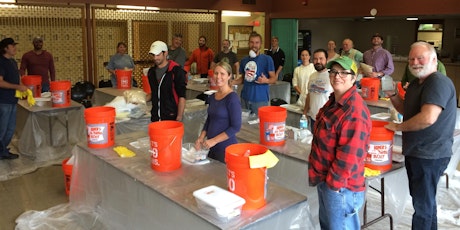
Seattle Hempcrete Workshop with Hemp Technologies & Hemp Ace (8/7/17)

Hemp Event
Source: eventbrite.com

Image result for hemp workshop

DESCRIPTION

Hemp Technologies, builders of the first permitted hempcrete homes in the U.S., is uniquely positioned and very proud to offer their Hempcrete Workshop participants a world class team comprised entirely of industry leaders, experienced hempcrete builders and professional instructors from around the globe who are immersed in sustainability, industrial hemp and green building. Our premier Hempcrete Workshops include fascinating presentations on the science and use of hempcrete, along with complimentary whole healthy house building applications, and current federal regulatory landscape and processing infrastructure. Workshops also include the hand-mixing and forming of your own hempcrete block and a delicious lunch! Don't miss an opportunity to attend one of our captivating Hempcrete Workshops ~ you can find our complete schedule at www.HempcreteWorks.com!
Joining renowned industrial hemp instructor Joy Beckermanremotely from Canada will be Hemp Technologies' globally recognized President Anndrea Hermann, M.Sc, B.GS, P.Ag. and larger than life Co-Founder Greg Flavall. There are over 50 years of combined industrial hemp experience between these three internationally renowned hemp industry leaders. Click here to learn more about Joy, Anndrea and Greg.
Hempcrete, made from industrial hemp and lime, is the healthiest possible building material for constructing a safe indoor air environment. It is mold-resistant, rot-resistant, fire-resistant and pest-resistant. Hempcrete is a carbon negative, carbon sequestering building material that is durable and recyclable, lasting hundreds of years. Hempcrete regulates temperature and has a high vapor permeability, so it can absorb and release water, allowing it to respond to changing humidity levels and creating a “breathable wall.” In many climates, a 12” hempcrete wall will facilitate app. 60⁰F indoor temperatures year-round without the use of heating or cooling systems. Join us and learn from the experts!

DATE AND TIME

LOCATION

Address TBD
Edmonds, WA 98020-5047

Hemp study from U.S. on tap at EIHA

Source: hemptoday.net


U.S.-based research about diseases common to the hemp plant will be presented during this year’s European Industrial Hemp Association (EIHA) conference, June 7-8 in Cologne, Germany.
Dr. Nicole Ward Gauthier from the University of Kentucky will present the findings of a group of researchers from the school’s Department of Plant Pathology who found 10 diseases on hemp grown for fiber, seed, and cannabinoids. The researchers began responding to grower inquiries in 2014, the first year the crop was grown under the program.
American universities are heavily involved in the U.S. domestic hemp industry under pilot research programs managed by a number of individual states. Universities in Kentucky are working with farmers who grew more than 4,000 acres (1,600 hectares) of hemp in 2016.
Dr. Gauthier’s presentation will be on Day 1 of the conference, when sessions are planned featuring various country reports, sessions on cultivation and processing and biocomposites. Speakers for the day are from Canada, France, Germany, India, Italy, Thailand, The Netherlands and USA. Full program.
The annual EIHA conference moves this year to Cologne to accommodate the rapidly growing numbers of attendees. The event is June 7-8, 2017, at the Maternushaus hotel. Three hundred attendees from 42 countries were on hand at last year’s conference.

Spring Carrot Hemp Seed Salad

By Heather Carey
Source: heathercarey.com

It feels so good to be back on the blog. I have been sending out newsletters and promoting things, but have not taken the time to post a new recipe lately. This time of year is notoriously busy for me, but when is it not?

If you haven’t noticed, it’s been really rainy around my neck of the woods lately, which only means one thing: spring garden season! I don’t mind the rain because I know that means things outside grow. We have plenty of time for hot and humid.

I also love spring because we are finally away from heavy, slow cooked foods and into real seasonal, simple eating. In Chinese medicine we are in the Wood phase, which is a time to clean out, naturally detox our liver and start eating lighter. Carrots and parsley happen to play a prominent role in this phase as well. So do leafy green vegetables such as kale, citrus, peas and broccoli. All natural detoxifiers. But that’s for another post.

I made this salad and it just fits the bill for what I am craving right now. The earthiness of nutrient rich carrots, the anti-inflammatory benefits of parsley and the healthy fats found in hemp, and I’m in heaven. Round it out with a drizzle of honey, some lemon and good olive oil and you have a winner.

I think this simple, easy salad would be perfect as part of a bowl – some quinoa and tofu, etc. It’s looking for companions. Could be tomorrow’s lunch. Let me know what you think in the comments below!

Spring Carrot Salad with Hemp Seeds

Makes 6 servings
Ingredients
1 pound carrots, trimmed and cut into 1-inch pieces
4 tablespoons extra virgin olive oil
3 tablespoons fresh squeezed lemon juice
1 tablespoon honey
1 teaspoon salt
1/2 teaspoon pepper
3/4 cup dried currants
1/2 cup minced fresh parsley
2 tablespoons hemp seeds
Directions
1. Peel the carrots and grate them in a food processor (or hand grate). Place into a large mixing bowl and set aside.
2. In a small bowl, whisk the olive oil, lemon juice, honey, salt, and pepper until combined. Drizzle the dressing over the carrots and add the currants, parsley and hemp seeds.Toss to combine and serve.

Coram Bill May Clear the Way for Colorado Hemp Boom

Source: coloradosenaterepublicans.com

Denver -- Industrial hemp may become Colorado's next big cash crop, following Monday's unanimous approval by the Colorado House of Senate Bill-117, authored by Montrose Republican Senator Don Coram, which ensures that Washington can't deny hemp growers access to water from federal reclamation projects, due to disagreements between Washington and Denver on drug and farm policies.   
After Colorado voters approved hemp's cultivation as part a broader legalization of marijuana, questions arose about the legality of using federal reclamation water to grow a  crop often wrongly confused with marijuana. The issue came to a head when the Bureau of Reclamation stopped an Arkansas Valley farmer from irrigating his hemp fields with water from Pueblo Reservoir, a federal reclamation project, which had a chilling effect on the willingness of some Colorado farmers to grow hemp. 
"It was time to end the uncertainty and ambiguity surrounding this question, by recognizing industrial hemp as an agricultural product for which a person with a water right decreed for agricultural use can use the water," Coram said after hearing of the House vote. "We can broaden options for Colorado farmers, and strengthen the state's farm sector overall, by finally putting to rest any doubts about whether growers of industrial hemp can use federal reclamation water on those crops." 
It's too early to tell if the measure will fuel a hemp boom across Colorado, but Coram says he'll be satisfied enough if farmers who choose to grow hemp aren't laying awake at night, wondering if federal agents are going to turn off the spigot.