Wednesday, August 3, 2016

Kentucky Hemp Dawg breaks Ky State Fair barrier

By Jere Downs
Source: courier-journal.com

Locally grown hemp and Henry County beef in new bratwurst brings local food buzz inside Kentucky Cattlemen's Association food booths.

636044476397814071-saltblock-weiners030.jpg


Sizzling on grills at the Kentucky State Fair, Kentucky Hemp Dawgs will be served as a first-time competitor with commodity beef hot dogs, rib eye sandwiches and hamburgers trucked in from out-of-state.
A dash of hemp oil lends "roasted nut flavor," while a sprinkling of crushed hemp hearts adds bite to the quarter-pound bratwurst to be sold for around $6.
"Some people will assume it tastes like marijuana but there is a major difference," said Webb's Butcher Block manager Trey Webb, who is overseeing production of 2,000 Hemp Dawgs from two Henry County steers at the family business in Paynesville. "It has a nice, roasted nut flavor to it."
The Hemp Dawg represents a breakthrough for Kentucky cattle farmers, whose young steers are shipped out west to be fattened in feed lots. For decades, fair goers have chomped on conventional beef trucked in by Sysco from all over the U.S. to grills manned by 40 workers at Kentucky Cattlemen's food outlets. Hemp contains no THC, the high-inducing compound in marijuana.
Hemp added to locally-produced meats shatters a barrier for a little-understood crop local farmers hope proves lucrative enough to secure a future for small, family-owned farms.
This week, farmer David Neville got help from U.S. Rep. Thomas Massie's office to navigate U.S. Dept. of Agriculture guidelines for USDA inspectors' approval required to process hemp hearts and hemp oil into new meat products.
"Marijuana is not a permitted ingredient," in foods approved by the Food & Drug Administration, the USDA told Massie's office in an email. "Hemp oil and hemp seeds may be used ... for the purpose of flavoring in meat and poultry products without any additional approval."
Massie's a beef farmer and longtime advocate for crops Kentucky farmers can raise profitably to replace lost revenue from tobacco subsidies. He authored an amendment to the current farm bill allowing hemp to be grown and marketed for research purposes.
“As a producer of grass-fed beef, I am familiar with the difficulties small producers face when marketing directly to consumers,” said Rep. Massie, who owns 50 head of cattle and whose 4th Congressional District stretches across northern Kentucky from Shelby County to Ashland.
“Despite consumers’ desire to know where their food comes from, federal inspection requirements make it difficult for them to purchase food from local farmers they know and trust," Massie added. "These onerous federal rules also make it more difficult for small farms and ranches to succeed financially. It is time to open our markets to small farms and producers and give consumers the freedom to choose.”
As a result of Massie's help, the USDA's Food Safety Inspection Service gave the green light on the Kentucky Hemp Dawg Wednesday. By Thursday, Henry County cattle farmer David Neville cooked up hemp dogs for fair officials to taste. He left with an order for 2,000 brats from Maxine Bracken, a beef restaurateur at the Kentucky State Fair since 1986.
The hemp dogs "are really good," Bracken said. "It's a lot like a Polish sausage. We'll probably serve it with sauerkraut or peppers and onions."
"I'm not going to crow but I will say there was a bunch of people that said it will take months to get this done," Neville said. "I've been dead driven to get a Hemp Dawg into the state fair."
Hemp Dawgs join Kentucky Cattlemen's other menu offerings, including $5 commodity hot dogs and five-ounce rib eye sandwiches from Sysco to sell for around $8 or $9 at the fair August 18 through 28, Bracken said. Inspired by the local beef Hemp Dawg, Bracken said she's also in talks to procure Kentucky-grown hamburger meat from Homestead Heritage Meats, a farm based in Springfield.
Sysco's commodity beef patties retail for 86 cents apiece, she said while the Kentucky hamburger runs $1.16 for each four-ounce patty.
Hemp oil derived from Kentucky-grown hemp comes from Victory Hemp Foods, based in Campbellsburg. Since the crop is so new in Kentucky, hemp hearts have yet to be harvested here on research crops overseen by that company, owner Chad Rosen said. To fine tune the taste, Neville will test his Kentucky beef hot dogs Saturday with hemp on top incorporated into green tomato relish at the Henry County Harvest Showcase prepared by Falls City Smokers, Neville said.
In its 17th year, the July 30 agricultural festival showcases locally-grown foods, country ham, crafts and tractor display. Besides hot dogs, the harvest festival features pulled pork from a hog raised in Henry County. The event is free at the Henry County Fairgrounds, Highway 421, in New Castle from 8 a.m. to 3 p.m.
"It's really hard to put your marketing hat on while you're fixing fences, cutting hay and making sure the calves are OK," Neville said of his investment of $5,000 in the form of two of his Capstone Farms steers in Hemp Dawg production. "I'm just a farmer sticking his neck out and hoping the public is ready."

Bohempia aims to bring hemp back into the Czech textile business

By  Daniela Lazarová
Source: radio.cz

A newly-established Czech firm is trying to bring hemp back into the Czech textile business. It produces T-shirts, socks, gloves and even sneakers out of hemp and is currently aiming to expand its line to hemp jeans.
Photo: BohempiaPhoto: BohempiaBohempia is the brainchild of textile machinery expert Tomáš Rohal. When he graduated textile companies were in decline –either closing down or moving east. A proponent of slow fashion, Rohal decided he would set up an entirely different business, environmentally friendly with a stamp of its own that could compete with cheap textile imports from the East because it offered added value. And he decided hemp was the secret to success.
Hemp was widely used in Czech textile manufacture up until the end of the 19th century, when it was replaced by cotton, so it is a return to our roots, Rohal told the ctk news agency. All of Bohempia’s products are made of hemp - T-shirts, socks, gloves, towels and even a hand-made line of hemp sneakers. According to Rohal, products made of hemp have strong anti-bacterial and antiseptic properties and are good thermo-regulators. Hemp absorbs UV rays and is moreover extremely durable. In the Middle Ages paper was made of hemp and it is still used in the production of banknotes to increase their durability.
The firm uses hemp yarn made in France, and the hemp cloth is woven here in the Czech Republic according to the firm’s specific requirements. T-shirts, socks and gloves come in all sizes and the production of sneakers is highly personalized. The customer can choose from a line of colours and soles. The shoes are hand-made, without the use of any skin hide, and fulfil strict orthopaedic norms.
Next the owner wants to expand the line to include dresses, bags and jackets. According to Rohal the products are perfect for shopaholics who love Nature and appreciate high quality. They are now sold via an e-shop and the firm also delivers to select stores around the country. Rohan’s dream is to one day export his products beyond Czech borders.


Thursday, July 28, 2016

Tararua farmers ponder hemp option as a new cash crop

By GEORGIA FORRESTER
Source: stuff.co.nz

A paddock of hemp.
A paddock of hemp

Industrial hemp crops could be grown across the Tararua district as the council looks for alternative farming ventures.

Manuka, saffron, flax, feijoas, hazelnuts and now hemp have been identified as suitable crop options for the district, as part of the Go Project by the Tararua District Council.

Economic development and communications manager Lianne Simpkin said the point of the project was to increase the options for farmers and people living on lifestyle blocks to make more money.

A workshop was held in Dannevirke to encourage farmers, business owners and interested people to learn about the benefits of growing industrial hemp.

"Industrial hemp can be used for so many things, like oils or fibre. There's a huge market out there for it. So we are just trying to get people to look at their options. It's about getting people to make the most of their land and maximise their potential for business and revenue options."

Simpkin said Tararua had great soil for growing crops such as hemp, hazelnuts and feijoas, but a lot of the land was being under utilised.

In New Zealand hemp was unable to be used in food, but there was a huge market for it overseas, she said.

As industrial fibre and material, it was a cost-effective crop that was growing in popularity and use in New Zealand, she said.

The Go Project was encouraging traditional farmers like sheep and beef farmers, to plant a small crop as a trial. Then they could see for themselves whether it was a venture that could potentially increase their revenue in the long run, she said.

"There is a market for industrial hemp and we have the right people in the right places to help farmers along the way, so what we are asking people is to just trial it, see if they like it."


Penn State to Develop Pennsylvania Industrial Hemp Guidelines

By Geoff Rushton
Source: statecollege.com


Penn State's College of Agricultural Sciences will work with the Pennsylvania Department of Agriculture to develop policies and procedures to guide research projects for industrial hemp.
Gov. Tom Wolf signed into law last week Act 192, which will allow the state agriculture department and colleges and universities to grow hemp (Cannabis sativa L.) for research. Industrial hemp is unlike marijuana in that it has reduced levels of THC, significantly decreasing or eliminating any of THC's intoxicating, psychoactive effects. The federal 2014 Farm Bill allowed for universities and state agricultural departments to grow industrial hemp in research pilot programs, and the new state law could give Pennsylvania entry into a growing industry.
“William Penn himself was an advocate of hemp growth, and in 1683, one of the first laws passed by the General Assembly in Pennsylvania was a law to encourage every farmer to grow hemp,”  Wolf said upon signing the law. “The U.S. industrial hemp industry has been estimated at over $500 million in annual retail sales and is still growing. Supporting this industry in Pennsylvania is a smart investment in the commonwealth’s economy.”
The new Pennsylvania law creates an Agricultural Pilot Program for the study of the growth, cultivation and marketing of industrial hemp. It may only be grown by the state agriculture department or higher education institute, and only on sites that are certified by the agriculture department.
"The ability to grow industrial hemp could benefit farmers in Pennsylvania by allowing them to diversify their crop bases," said Gary Thompson, Penn State College of Ag Sciences associate dean for research and graduate education, in a news release. "Our research in the Agricultural Pilot Program could help farmers to be more successful if and when the law allows them to grow industrial hemp for profit."
Industrial hemp can grow without much land and and can be used in making "products such as paper, clothing, biodegradable plastics, paint, insulation, biofuel, food and animal feed," according to Penn State.
Thompson will begin work with the Pennsylvania Department of Agriculture to develop guidelines for growing industrial hemp for research in Pennsylvania. 
"As a land-grant university, it is Penn State's duty to help Pennsylvania's farmers succeed," Thompson said. "There is potential in industrial hemp for a value-added crop to be grown in the state. We look forward to investigating this potential and to working with farmers to face the challenges of the future."
Penn State Professor of Agronomy Greg Roth said farmers have an opportunity to apply modern perspectives to a crop which was first cultivated thousands of years ago.
"That modern perspective," he said, "includes, for example, knowledge of how best to grow the crop in Pennsylvania's climate and landscape, what varieties might perform best here and what yields can be expected when the crop is grown under both conventional and organic practices."

Green Gorilla 'Hemp & Olive' CBD Lip Balms Introduced

Press Release
Source: digitaljournal.com

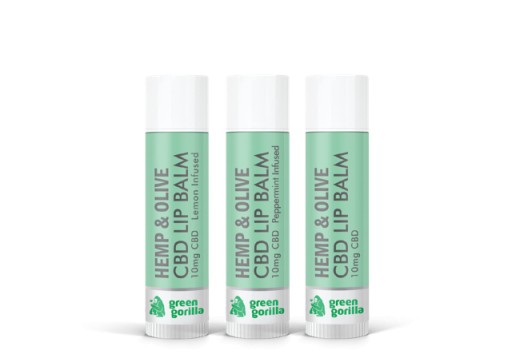
Green Gorilla has launched a new line of 'Hemp & Olive' CBD infused Lip Balms which are 0.15oz in size, available in Unflavored, Lemon Infused, and Peppermint Infused options with each containing 10mg of CBD. Each Green Gorilla Lip Balm also has an all-natural SPF element added, so that they have an SPF 25 rating. 

Green Gorilla has launched a new line of ‘Hemp & Olive’ CBD infused Lip Balms. Green Gorilla’s “Hemp & Olive” CBD Lip Balms are 0.15oz in size, available in Unflavored, Lemon Infused, and Peppermint Infused options with each containing 10mg of CBD.  Each lip balm also has an all-natural SPF element added, so that they have an SPF 25 rating.  In time, the company may release additional options for this product, including a larger sized lip balm that could include as much as 100mg of CBD.

Green Gorilla (www.ilovegreengorilla.com) products are now available at retail outlets nationally, and on the company’s website. Green Gorilla's flagship line, Hemp & Olive, features the highest quality CBD Oils, CBD Pet Care products, and now, CBD Cosmetics!  Hemp & Olive's CBD Oils are all 100%: Organic, Non-GMO, Vegan, Plant-Based, Paleo, Kosher, Gluten-Free, Sugar-Free, and THC-Free.  The company’s cosmetics are made using the Hemp & Olive CBD Oil as their base.  Like the new Lip Balms, all cosmetics products in the Hemp & Olive line are made with 100% Pure Cannabidiol, extracted from Organically Cultivated & Non-GMO Hemp, and purified to its natural crystalline state. Green Gorilla’s CBD is then infused into 100% Organic Extra Virgin Olive Oil, sourced from Award-Winning, boutique California producer, Ojai Olive Oil.  That infused olive oil is then used as the base to create a host of cosmetics products, from Lip Balms to Face Creams, Body Lotions, Shampoo & Conditioner, Night-Time Face Masks, Sunscreens, and more.  All ingredients used in the Hemp & Olive cosmetics line are 100% natural, and the cosmetics are of unparalleled quality. 

Most people don’t realize that lip balms are essentially eaten as they are used.  When something like a generic Chap Stick is applied, users are consuming any toxic and, or unnatural ingredients that might be used to make that product. The Hemp & Olive Lip Balms being released today are over 90% extra virgin olive oil by content, and made with all healthy and natural ingredients – so that when applied, our consumers are actually doing something good for their bodies as well as protecting their lips.

Pure CBD extracted from hemp is the healthiest, safest and highest quality Cannabidiol available. Extra Virgin Olive Oil is the healthiest, safest, and most effective way to deliver CBD to the body. Beyond being the healthiest option, olive oil also has synergistic effects in combination with CBD and is also able to deliver the CBD to the parts of the body that need it most. All Green Gorilla products contain Zero THC, and have no psychoactive properties. While most cosmetics companies will use cheap olive oil, if they even use real olive oil, we use only award winning, organic, extra virgin olive oil.  One could even say that the Hemp & Olive cosmetics are essentially “food grade”, as the primary ingredients used are identical to those used in the company’s supplements, and are of the highest possible quality.

Green Gorilla Co-Founder and Co-CEO Philip Asquith commented, “I'm very happy to announce the launch of this this new Lip Balm, and the beginning of what will be an amazing lineup of cosmetics and personal care products under the Hemp & Olive brand.  CBD and olive oil are an amazing combo to use for products that go on your skin, and I know that people are going to love this stuff.  I use our face cream and lip balms every day, and I already can’t imagine not having them.” Green Gorilla’s Steven Saxton added, “At Green Gorilla, we believe that our products are the best in the business. This new Lip Balm is just another example of our commitment to bringing people only the very finest quality."  
With the recent release of their Pet Care products, Green Gorilla’s ‘Hemp & Olive’ line moves closer to becoming the most comprehensive and best formulated CBD line in the world.  The company now has dozens of unique products available, and is working up towards it’s full planned line, which will include well over 100 unique products for people and pets. Green Gorilla is committed to sustainablyand ethically providing people with tools to live healthier and happier lives. The company is currently focused on utilizing hemp to create myriad products to that end. Hemp is an incredible resource, and the company sees great potential here for both helping people, and also helping to preserve and protect the planet. Philip Asquith concluded, “At Green Gorilla we love what we do, we love helping people, and we have gone to great lengths to create the very highest quality CBD products possible. We hope that our customers will find our Hemp & Olive products as amazing as we do, and that they bring happiness and health to each of them.” 

Any product related statements have not been evaluated by the FDA, and our products are not intended to diagnose, treat, or cure any disease. Always consult your own physician before beginning a new dietary supplement program. All Green Gorilla products contain zero THC, and are produced and sold in compliance with US federal law. 

About Green Gorilla: Green Gorilla is building an international brand in the hemp and cannabis industry. Our mission is to provide sustainable and ethical goods and services to a broad range of customers, with a primary focus on health and wellness. Green Gorilla prides itself on being a sustainable and ethical company, utilizing hemp to provide people with tools to live healthier and happier lives, while also preserving and protecting our planet. While federal policy is developing, the Company will operate only in areas that are unequivocally federally legal, and is initially focused entirely on hemp based products. The company is building a multitude of market leading product lines centered on hemp and the picks and shovels of the cannabis industry, as well as a state of the art web portal addressing a wide range of related goods, services, online interaction, and education. Green Gorilla was established in 2013 by founders Philip J.P. Asquith and Sir Steven Saxton. 


Hemp Fiberboard Could Replace Plywood

by Addison Herron-Wheeler 
Source: ireadculture.com

construction-642631_1280

It’s no secret among cannabis enthusiasts that hemp is good for just about anything. Until the days of Reefer Madness shut it down, hemp was a viable option for fibers and materials, and it is one of the major cash crops that America was built on. So it should come as no surprise that hemp fiberboard could possibly replace plywood as a major building material source.
According to davidwolfe.com, this could be a viable option because trees take years to grow, and deforestation in order to make homes and dwellings is a major ecological issue. Hemp, on the other hand, grows in about four or five months, and can produce a lot more volume-wise on growing acreage than trees can.
One acre of hemp can reportedly yield up to 5,300 pounds of straw, which can be turned into 1,300 pounds of wood fiber. Additionally, hemp is reported to be even stronger than steel when it comes to the quality of the building material. It can hold up to major impacts, and won’t break down easily when used to create fiberboard. In fact, if the boards are treated in the right way, they can also be fire and water resistant, and they can provide good insulation from hot and cold temperatures.
Because of all the issues faced today with deforestation, climate change, and scarcity of resources for building, it just makes sense to turn to hemp. The plant can provide the means to build homes for the disadvantaged, and the homes will be sturdy, insulated, and well-made. Since hemp grows so readily, it is also an affordable alternative to using plywood.
As these next few years see more acceptance of cannabis recreationally and medically, and hemp becomes legal and accepted again, many manufacturers will surely choose the durable plant as their building material of choice.


Why You Should Be Eating Hemp Hearts If You Want to Lose Weight

By Jenny Sugar
Source: popsugar.com

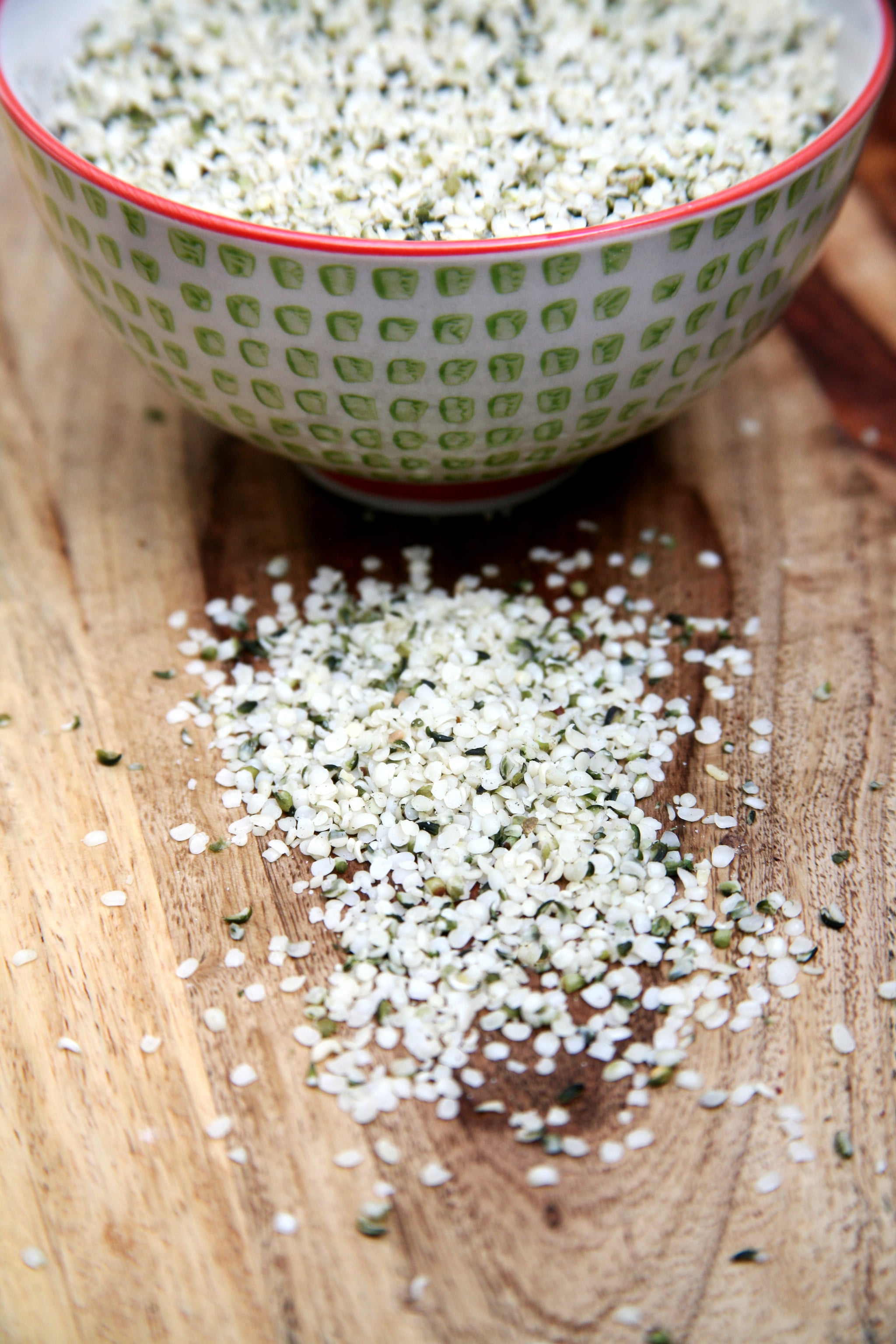
If you care deeply about your health and want to try a new and delicious food that can help you drop a few pounds, you're going to want to pick up a bag of hemp hearts. These are raw hemp seeds that have the hull or shell removed, leaving a small, soft and chewy, mild-tasting, nutty seed that's easier to digest than hemp seeds. Here are three reasons these tiny gems are not only super nutritious but, as a bonus, can also help you reach your weight-loss goals.

Tiny Seeds, but Huge Protein!

A three-tablespoon serving of raw hemp hearts offers a whopping 10 grams of protein — and hemp seeds offer all nine essential amino acids, making it a complete protein that's also rich in iron, magnesium, and zinc. Protein helps keep energy and blood-sugar levels stable, which helps prevent cravings for high-calorie treats. Since a couple hours between meals tends to be a common crash time, adding hemp hearts to your oatmeal or cereal for breakfast, sprinkling them on your lunchtime sandwich, or making this citrus hemp salad dressing can keep you energized until your next meal, which curbs mindless snacking.

Low in Carbs

If you're trying to cut down on carbs, look to the incredible hemp heart. At only two grams of carbs per three-tablespoon serving and with an addictively chewy texture, they make a great alternative to oats for breakfast — try these hemp overnight oats. Or when noshing on toast or bananas, it's good to know that hemp seed butter is also lower in carbs than both peanut butter and almond butter and lower in calories, too.

Great Source of Healthy Fats

Although hemp seeds aren't a great source of filling fiber, they are rich in omega-3 fatty acids, something your body needs that also contributes to that full feeling. If your hunger is satiated for longer, that equates to eating less, and boom — you lose weight! Throw them into your blender the next time you make a smoothie, or sprinkle them on your yogurt, on cooked whole grains, or even on top of dips like hummus.