Tuesday, July 26, 2016

Rhode Island has Legalized Hemp

By Julia Granowicz
Source: marijuanatimes.org
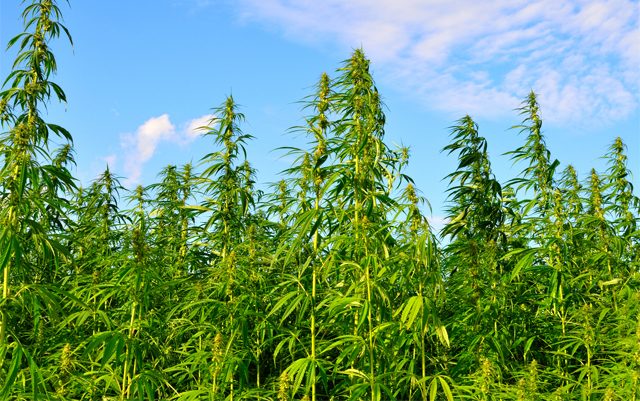
rhode-island-legalized-hemp

Before marijuana really became known in the United States, hemp was a vital crop. These days, we are the world’s number one importer of hemp products due to a federal ban that has been in place for as long as cannabis has been illegal. Since there was never a distinction between the two types of cannabis plant, the industrial hemp plant has had to serve the same sentence of prohibition that the marijuana plant was put under.
In 2014, the federal government finally made a small move forward in differentiating the two, however, their provision only allows hemp to be cultivated for research purposes under an amendment to the federal farming bill.
More and more states are deciding to ignore federal law when it comes to industrial hemp – allowing it to be grown for commercial purposes. Now Rhode Island will join Maine, Oregon, Vermont, and Colorado on the list of states allowing the growth of industrial hemp. The governor of Rhode Island, Gina Raimondo, signed the bill this week though it will not officially go into effect until January of 2017. The bill even states that: “States are not required to enforce federal law or prosecute people for engaging in activities prohibited by federal law. Therefore, compliance with this chapter does not put the state of Rhode Island in violation of federal law.”
Clearly lawmakers were not worried about whether or not the federal government would approve of their new laws – they are more concerned with bringing a cash crop back into the world of agriculture where it belongs. Under the new law, hemp will be considered any cannabis plant with less than one tenth of a percent THC. In most states (and federally) hemp is considered to be any cannabis plant with less than 3 percent THC. The new law also requires that plants be tested routinely throughout growing, harvesting and processing to ensure that they meet this requirement.
The bill was overwhelmingly supported during the voting process, receiving a unanimous 71-0 in the House and 26-7 in the Senate. This is a big step for those who will benefit from industrial hemp – which can be used in a number of products including food, clothing, cosmetics and more. Along with this bill, other cannabis related bills that passed include one adding PTSD to the list of qualifying conditions for medical marijuana in the state. There was a bill aimed at legalizing cannabis entirely – however they did not get to vote on it before the end of this session.
Even though the two plants are so similar, their uses vary so much that industrial hemp is practically an entirely different plant. With legalization happening for commercial use in multiple states, it will only be a matter of time before the price of hemp products goes down and the number of imported products will likely drop as well. However, until the federal ban is lifted – or more states take the initiative to ignore such a senseless law – we will likely remain the world’s largest importer of industrial hemp products.


Italian farmers are planting hemp to decontaminate polluted soil

By EMILY GRAY BROSIOUS
Source: extract.suntimes.com

Italian farmers are planting cannabis to clean polluted soil


Can hemp crops revitalize Italian farmland tainted by heavy metals?

Farmers in Taranto, a town in the Italian region of Puglia once known for its dairy farms and traditional cheeses, are now planting cannabis crops in an effort to counteract devastating environmental pollution from a nearby massive steel plant, as reported by Slate.

The Ilva steel plant covers 15 million square meters—nearly three times the size of the city itself. It opened in 1965 and doubled in size by the 1970s. It once churned out almost one-third of Italy’s steel. The plant helped turn Taranto into a grimy industrial city. Smoking chimneys, blast furnaces, and aggregates yards now dominate the once-pastoral town. Even today a giant oil refinery and a huge cement factory welcome visitors.

Slate reporter Sara Manisera introduces readers to Italian farmer Vincenzo Fornaro, who used to run a profitable dairy farm in Taranto.

“People came from all over to buy dairy products handmade in ancient, wood-fired terracotta furnaces,” Manisera writes. “Those days are long gone.”

Soil in the area is so badly contaminated with heavy metals from the steel plant that farmers like Fornaro are now banned from grazing their animals within a 12-mile radius of the plant.

These days, Fornaro is using his land to plant cannabis — not to sell but to decontaminate polluted soil.

Hemp and phytoremediation

Hemp is a variation of the cannabis plant that contains very little THC, marijuana’s psychoactive compound.

Hemp is primarily grown for its fibers, which can be used to produce thousands of products, including textiles and paper.

But hemp also has another special trait: It’s extremely efficient at sucking up heavy metal toxins in polluted soil.

Heavy metals are a unique class of toxins that cannot be broken down into nontoxic forms, which means they stick around for a long time.

The concentration of this type of soil pollution has increased greatly in many locations across the world since the start of the industrial revolution, Claire Moore, plant biologist and laboratory manager at Michigan-based cannabis testing facility Iron Labs, told Extract in an email.

“Phytoremediation describes the treatment of environmental problems, often contamination with heavy metals, through the use of plants that help mitigate the contamination without the need to excavate the offending contaminant(s) and dispose of it elsewhere,” she explains.

It’s a relatively new technology that’s gaining international attention due to its cost-effective, non-intrusive method of “exploiting the ability of certain species of plants to remediate pollutants from contaminated sites,” Moore said.

While the practice of phytoremediation is in its infancy, and many factors can impact the process, hemp appears to have a high tolerance to heavy metal toxicity and is very good at isolating heavy metals from polluted soil without damaging the plant itself, she says.

Hemp cultivation is legal in Italy, which means farmers like Fornaro that are planting cannabis to help clean their farmland of toxins can use the crops for industrial processing. The toxins don’t show up in the plant fibers.

“For now we use hemp only for industrial processing,” Fornaro told Manisera. “I hope in the future we can use it also for nourishment. But what is certain is that we will surround the Ilva plant with hemp.”

About 100 farmers are now planting hemp in Puglia.


Hemp food producer expecting 400 per cent growth in next 12 months

By Kim Honan
Source: abc.net.au

Smoothie and brown paper bag of hemp seeds.
PHOTO: Hemp seeds may still be illegal for human consumption, but Hemp Foods Australia is predicting big growth.

An Australian producer of hemp foods is predicting a 400 per cent growth in the next year, even though it is still illegal to sell hemp products for human consumption here.
Media player: "Space" to play, "M" to mute, "left" and "right" to seek.
  00:00             00:00       
AUDIO: Hemp Foods Australia's Paul Benhaim is planning for a 400 per cent growth in the next 12 months. (ABC Rural)
Hemp Foods Australia's chief executive officer Paul Benhaim said the demand was being driven by overseas consumers interested in the health benefits of the seeds, oil and protein.
"They're natural, they're organic, they're high in essential fatty acids, omega-3 and omega-6, that is common usually in fish oils, which are really popular in Japan," he said.
While the company exports to numerous countries across the world, Japan is by far its biggest market and growing fast.
"Japan has had really serious issues with a nuclear accident there not so long ago, so certainly the First Lady is very much looking at environmental responses to that particular outcome," he said.
Mr Benhaim recently met with the First Lady of Japan, Akie Abe, at the inaugural Kyoto Hemp Forum.
"It's an extremely large honour to be the presence of someone like the First Lady — let alone to have a conversation — let alone for them to come up and literally have their photo taken with your products, which is quite unheard of," he said.

Designing products for export

To meet the growth in exports Hemp Foods Australia is busy upgrading its factory at Bangalow in northern New South Wales.
Last year it received nearly $600,000 from the Federal Government towards building its $1.178 million state-of-the-art processing facility.
But the company is developing a range of other food products solely for the export market, were hemp foods can be legally consumed.
"It's a little bit confidential that discussion, but we're looking at things like snack bars, we're looking at drinks, we're looking at pastas, we're looking at fibre supplements, we're looking at a whole different range of products," he said.
"People really love Australia and it has a great image. We're really excited because we are growing more hemp seeds in Australia this year than anyone ever has and they're all certified organic.
"We're excited to have a much larger support for our local farmers in Australia, where we can produce more products and keep our overseas markets growing while we wait for the ministerial departments to cross some t's and dot some i's, to allow hemp foods much more widespread in Australia."

Struggling to meet the demand

Mr Benhaim said they needed more farmers in Australia to start growing hemp to help it meet the growing demand.
"We have just hired a very large firm to work with us in our farming who we're in constant discussions with on how to upscale, not just for what we need but for future growth which we see as being extreme," he said.
"That's one the wonderful things about hemp, is that it can be grown in any country around the world and in any place in any country.
"One of the big differences with Hemp Foods Australia is that we focus on certified organic farming techniques only for our crops, so we are one of the only countries in the world that does that."


Bronze Age Yamna culture may have introduced cannabis to Europe and Asia 5,000 years ago

By 
Source: ibtimes.co.uk

Traces found on archaeological digs suggest plant was cultivated and traded in Eurasia 5,000 years ago.

A cannabis trade may have been established in Europe and Asia as far back as 5,000 years ago by a group of steppe nomads known as the Yamna, scientists have said. They have worked to retrace the introduction of hemp on the continent - a variety of the Cannabis sativa plant species.
The study, published in the journal Vegetation History and Archeobotany, presents a systematic review of archaeological and palaeo-environmental records of cannabis fibres, pollen and achene across Europe and East Asia.
The research team, from the Free University of Berlin, reconstructed ancient cannabis records and investigated how exchange and migration routes established by the Bronze Age Yamna people may have contributed to the development a Eurasian cannabis trade.

New trade routes eastwards

Analysing cannabis specimens found in archaeological artefacts and potteries spanning thousands of years, the scientists have discovered traces of the plant being cultivated in Japan, China and East Europe, as far back as 10,000 years BCE.
However, such ancient evidence of cannabis cultures remains rare. The real increase in cannabis achene records in Europe and East Asia dates back to 4,000-5,000 years ago. The scientists hypothesised that this increase is linked to the spread of the Yalma culture across the Eurasian continent at the time.
cannabis history Europe
The Yamna culture may have played a role in spreading cannabis across EurasiaJohn Greim/LightRocket/Getty
The Yamna people were a highly mobile steppe culture of pastoral nomads who probably originated from Eastern Europe, between the Lower Don, the Lower Volga and North Caucasus, between 3300 and 2700 BCE. They domesticated horses, which they rode to manage cattle herds.These horse-riding skills also gave them the possibility to travel long distances and spread their culture and agricultural practices across large stretches of land.
"The marked increase in cannabis achene records might be associated with the establishment of a trans-Eurasian exchange/migration network through the steppe zone, influenced by the more intensive exploitation of cannabis achenes popular in Eastern Europe pastoral communities", the study's authors explain.
And 5,000 years ago, as the Yamna people moved eastwards , they may have used the Hexi Corridor region – a historical route which would later form part of the Northern Silk Road – as a hub for an East Asian spread of cultural elements, domesticated animals and plants, including cannabis.

History of cannabis

The use of cannabis at the time remains unclear. The research highlights that hemp was most probably used for its medical properties and to create cloths and fabrics with its solid fibres, but there is so far relatively limited evidence that it was smoked.
Nevertheless, the archaeologists believe it is possible that the Yamna culture burned cannabis and inhaled the smoke during sacred rituals. They call for more research to be carried out in order to better understand the history of cannabis and how it started being distributed in Asia and Europe.

North Dakota, West Virginia continue trend of hemp research, pilot projects

Source: theindependent.com

Hemp
Morgan Leach, executive director of the West Virginia Hemp Farmers Cooperative, examines tthe seeds growing on a hybrid hemp plant at in Vienna, W. Va., recently. West Virginia has become the latest state to explore the re-introduction of hemp as a farm crop. (Associated Press/Charleston Gazette-Mail, Chris Dorst)

ELGIN, N.D. (AP) — A rural Elgin, N.D., farmer is taking part in a statewide pilot program to see if hemp has potential as a crop for growers in North Dakota.
Clarence Laub views the 10-acre hemp plot near his family farm as an experiment. He is one of seven growers in LaMoure, Grant, Foster and Benson counties who are participating in the hemp program sponsored by the North Dakota Department of Agriculture.
Since the crop was planted on June 1, emerging growth has been fairly uneven and spotty across the field because the seeds have received less than an inch of rain for most of the month, but recent precipitation has made a big difference. Laub has seen new plants coming in and patches where plants are at least a foot tall, and he’s hopeful that he’ll have enough hemp seed to process after a small harvest.
“The first time you will have failures, but you have to be able to go through it and learn from it. It’s trial and error,” he said.
Laub is rethinking his planting technique for future hemp crops.
Next year, he plans to use a no-till drill and get more depth consistency in the range of three-fourths of an inch. This year, he put the crop in with a hoe drill, and he thinks that might have placed the seed a little too deep for best germination.
“I’m hoping I could get a more uniform stand,” Laub said.
If he has a decent harvest, Laub will also experiment with using a cold press to run the seed through it to separate the oil from the meal, because each element has a marketable use.
Rachel Seifert-Spilde, plant protection specialist for the state Department of Agriculture, said the hemp crops in LaMoure County are more than four feet tall.
In West Virginia
PARKERSBURG, W.Va. (AP) — The half-acre plot of fledgling plants along a hillside at Cedar Lane Farm puts into perspective the return of hemp to West Virginia soil — a resistance-riddled movement struggling to rise out of infancy.
Owner Dave Hawkins arrives with a few signs to post around the plot warning trespassers that the area is under surveillance.
“Industrial Hemp Research Project; No THC Content — Stay Out!” they read.
After a busy year full of uncertainties, including a rules bill passed during this year’s legislative session that nearly killed hemp research before the seeds were even planted, Hawkins is among a handful of growers around West Virginia who are pioneering the return of hemp.
But jumping through the hoops required by the state Department of Agriculture to attain permits was the easy part.
With the research plots under way, growers are collecting data to be studied by Susanna Wheeler, a master’s agronomy student at West Virginia University.
The data will be crucial to help state lawmakers understand hemp’s potential as a viable crop with myriad uses.
“It validates the purpose of what we’re doing,” said Hawkins, who also owns Mother Earth Foods, the oldest natural food store in the state. “You can say you did research, but if you’re haphazard with it, it doesn’t have much merit.”
While hemp and marijuana come from the same species of plant, Cannabis sativa, hemp is a separate variety with its own chemical makeup, and it has different cultivation practices than marijuana.
During World War II, hemp was viewed as a vital resource.

Production in the U.S. reached more than 150 million pounds in 1943, according to a 2015 Congressional Research Service Report titled “Hemp as an Agricultural Commodity.”

Cannabis in your clothes? It’s no joke

By Ananya Ghosh
Source: hindustantimes.com


Designer Shivangi Lahoty’s creations for Bombay Hemp Company is a perfect blend of ethnic indigenous hand- crafted hemp fabrics made in India and the versatile mechanised natural fibre fabrics sourced from across the world (Bombay Hemp Company)

Clothes made from cannabis? We swear we haven’t been smoking up. Hemp fabric, popular in Neolithic times, with 13th century Chinese and even Cleopatra, is having a fashion moment all over again. And not just with modern-day Rastafarians or the poorer characters on Game Of Thrones. You can now buy comfy T-shirts, flouncy skirts, kurtas and even shoes made from a plant otherwise associated with psychoactive signing out of reality, dude!
Think of hemp as the sober cousin of marijuana. It’s grown without pesticides, GMO seeds or synthetic fertilisers. The textile it yields is durable, insulating and, when processed well, has a linen-like drape. It is bio-degradeble too. No wonder it’s caught the fancy of three Indian start-ups.
The wonder fabric
Yash P Kotak of Bombay Hemp Company (Boheco) was the first of them. They started off in 2013, as an industrial and medicinal cannabis company, hoping to use the crop as a means to boost traditional agricultural practices in India. “As we researched, we realised the vast potential of the crop,” says Kotak. “It is almost like finding kryptonite on this planet. There are over 25,000 proven uses of hemp.” Fashion, it seems was only one of the happy side projects.

Hemp fabric is grown without pesticides, GMO seeds or synthetic fertilisers (Bombay Hemp Company)

Hemp, it turns out, is perfect for an Indian summer. It is much more comfortable and breathable than cotton. It is often blended with cotton to produce lightweight fabrics. “The most important bit about hemp clothing is that it is 98 per cent UV resistant and becomes softer and better with age,” Kotak points out. It lasts much longer too. So if you’re the kind of person who keeps revamping their wardrobe, you may find that there’s little reason to throw them out.
Two-year-old HempCann Solutions, is based in Bhubaneshwar and raises awareness about medical cannabis, while selling hemp lifestyle products on the side. The company has just launched, CannaBeings, 55 per cent hemp and 45 per cent organic cotton clothing, and managing director Sourab Agarwal is already on a high. “Hemp is a natural insulator,” he says. “When you wear it in summer, your body will stay cool, in winter your body will be warm.” The company hopes to rope in designers to do capsule collections for them.
Being sober
According to a 1976 study published by the International Association of Plant Taxonomy hemp and marijuana come from the same genus, cannabis, and the same species, Cannabis Sativa. “However, hemp is distinguished by its use and chemical makeup, as well as by cultivation practices,” says Kotak. Agarwal adds that the term ‘cannabis’ is usually used when describing the Cannabis Indica plant that is bred as a psychoactive drug. Hemp, on the other hand comes from the Cannabis Sativa plant, which contains less of the substance that has the mind-altering effect.
High on hemp
Another start-up gearing up to give these two some competition is BE HempIndia. The Bangalore-based company makes accessories, has conducted researched on hemp seeds, and is stepping into the hemp clothing market as well. “We used to sell hemp T-shirts and clothing, but stopped because of the high price involved in its manufacturing them.” says Elston Menezes, the company’s co-founder. “We want hemp to be an affordable and sustainable option.”

For Boheco, the aim was to come up with hemp-based clothes that looked gorgeous, were artistically-crafted, and handwoven. “We gradually moved into expanding our range with new fabrics that could be turned into bags, shoes, apparel – denim, shirts, T-shirts, suits and traditional Indian wear,” says Kotak. The company has come up with a premium fashion range under the label The Hemp Couture (THC) that incorporates handloom and powerloom fabrics.
Over the years, hemp has been called the God Herb because of its many uses in health and life. Now, it may also hold the key to the future of sustainable fashion. But a smoke cloud hangs over its future. “The geographic and climatic conditions of India are more suitable for the production of medicial cannabis than industrial hemp” says Agarwal. It means that for now, your hemp fix (the sartorial kind) is more likely to come from a small-batch niche brand than a mass-market label at the mall.
Still, it’s one more eco-friendly, weather-friendly, fashionable fabric that you can proudly wear as an Indian. You won’t get mellow on its smell or its smoke, but hemp clothes will definitely make you high on fashion.
Is it even legal?
The special provision relating to cannabis of Section 14 of the Narcotic Drugs and Psychotropic Substances (NDPS) Act 1985, says that the government at its own discretion, subject to certain conditions, may allow cultivation of the cannabis plant for industrial purposes for obtaining fibre or seed or for horticultural purposes.