Thursday, September 19, 2019

CBD oil price likely factor in $100 million payoff predicted for Ventura County hemp crop

By Katheen Wilson
Source: vcstar.com

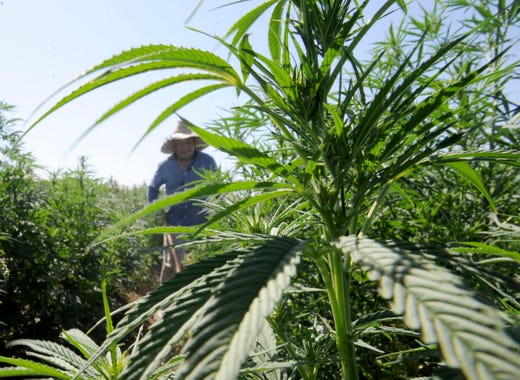
Martin Mota clears grass between rows of industrial hemp plants at McGrath Family Farms in Camarillo.
Martin Mota clears grass between rows of industrial hemp plants at McGrath Family Farms
in Camarillo. JUAN CARLO/THE STAR


Ventura County could become one of the largest hemp-growing areas in California now that commercial production has been legalized and the first season's crop is being harvested, officials say.   
Agricultural Commissioner Edmund Williams says the county could rank second or third among the 58 counties at a time when 40% of them have imposed moratoriums on hemp production.
"It's going to be a really good boost for agriculture in Ventura County," Williams said. 
He sees no need for a ban here as farmers and investors try to cash in on the demand for health-related cannabidiol or CBD oil products made from hemp bred for industrial use. Although industrial hemp belongs to the same plant species as marijuana, it must by definition have negligible intoxicant properties. 
The commissioner expects most of the hemp will be sold for CBD, a compound in over-the-counter lotions, salves, salts and oils used to relieve arthritis, anxiety, insomnia and pain. CBD is contained in edible products, too, but such use is prohibited by federal and state authorities. 
The U.S. Food and Drug Administration has not approved CBD for any type of pharmaceutical use except two rare and severe forms of epilepsy. Still, customers say it works.
CBD oil can fetch prices of $30 to $300 for 1 ounce, a likely factor in estimates showing industrial hemp could produce $60,000 an acre before overhead. Strawberries bring an estimated value of $70,000 or even $75,000 an acre, but the overhead costs are much higher than for hemp, Williams said.
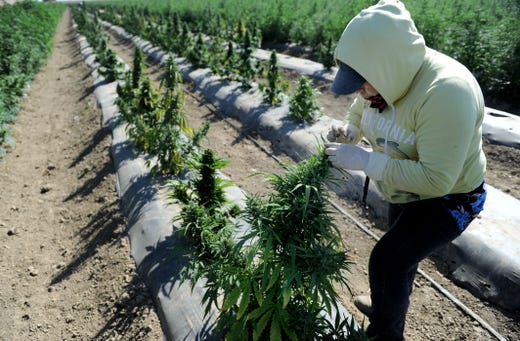
 
Juana Garcia inspects industrial hemp flowers for insects at McGrath Family Farms in Camarillo.
Juana Garcia inspects industrial hemp flowers for insects at McGrath Family Farms in
Camarillo. JUAN CARLO/THE STAR
 

$100 million expected

Williams expects hemp to be lucrative. If no one loses a crop in the 4,100 registered acres in Ventura County, the gross estimated value would reach at least $100 million this year and likely much more than that, he said. 
He said hemp could be ranked among the top five or six top-value crops in the county, running near traditional top sellers such as avocados and raspberries in the first year of commercial production.
Fields filled with the spiky green plants are nearing harvest now in western Ventura County. One stand of more than 100,000 hemp plants lies along the south side of Highway 101 in Camarillo on land owned by organic grower Phil McGrath. The smell is mild but is expected to grow more pungent when the plants blossom, an issue that regulators and growers say normally lasts just a few weeks.
McGrath has teamed up with the Ventura Seed Co., which is growing more than 1,000 acres of hemp in Ventura County and New York. The business was started by Riki Trowe and Akasha Ellis, two men who say CBD helped family members facing major  illness and injury.
Trowe says regular, high doses of CBD along with other medical treatments helped his paralyzed son get out of his wheelchair and walk again after a diving accident. Ellis said his 76-year-old father has survived stage 4 throat cancer for five years with help of CBD.
"He couldn't eat much but he survived," Ellis said. 
The two men came to Ventura County last year because of the potential of growing hemp year round, said Vanessa Ramirez, Ventura Seed's vice president of operations.
McGrath said the new crop can be harvested by machine and requires little water — a plus for farmers grappling with labor shortages and limited water supplies. Another advantage is that hemp is grown in the summer, supplementing the normal fall to spring production season for crops such as strawberries and celery, he said.
"I think the crop has a ton of great potential economically and environmentally," he said. 
 

Voters weigh in

Hemp was once heavily grown as an agricultural crop in the U.S., but production dropped and then ended in the late 1950s because of legislation, anti-drug sentiment and competition from synthetic fibers, according to a 2014 report from the Congressional Research Service.
The situation started turning around in the middle part of this decade, partly because California voters allowed hemp to be grown as a commercial crop when they passed a 2016 proposition legalizing personal use and cultivation of marijuana. 
Then late last year Congress legalized hemp and allowed the plant to be transported across state lines. Williams said he understands that at least two states, Kansas and Idaho, are awaiting regulations from the U.S. Department of Agriculture before they comply, but that is not the case in California.
Now, businesses are filing registration documents so they can breed seeds and grow hemp in Ventura County and other areas of the state. Previously, it had only been allowed to be grown for research purposes, Williams said.
County registration records for hemp properties show much of the investment is coming from outside the county.
"Many of the registrations are (from) people we have never heard of before," said Andy Calderwood, the deputy agricultural commissioner in charge of the county's hemp program. "They are various partnerships and consortiums of investors. We don't really know beyond the name given to us who is behind all these registrations." 
Close to 40 registration applications — or permits — have been approved for breeding seeds or more commonly growing hemp. Proposed locations include the Ojai and Santa Rosa valleys, the Oxnard Plain, Moorpark, Camarillo, Somis, Ventura, Santa Paula and Fillmore.
It's not clear where the hemp will be processed. There's talk of opening processing plants in Oxnard, Thousand Oaks and the unincorporated area of Ventura County, but Williams knew of no plants operating in the county now. 
The biggest player in the county's hemp production appears to be HCG Partners of Las Vegas, which accounts for half of the 4,100 acres registered for hemp cultivation and seed breeding. HCG has linked up with several major growers in the county, some of them well known. 
"It's a who's who of the Oxnard Plain," Calderwood said. 
HCG Director Saul Milrod said the partnership came to the county because the area has the best climate for growing hemp.
The organization pays fees to the growers for planting and tending the crop on their land, but does the harvesting and takes the risk, he said. HCG, which has an office in Somis, is basically made up of two principals, including himself and two investors, he said.
Milrod, a former commercial airlines pilot who lives in Beverly Hills, said he hopes for  good results from the investment. But it's hard to know yet because it's just the first season, he said.
Other operations are on the small side. 
Fillmore resident Cindy Jackson says she jumped at the opportunity to grow hemp for Ocean Gold CBD, her business that manufactures lotions, salves and oils.
She has been buying CBD oil from area suppliers to make the products, but is starting to germinate seeds and cultivate hemp on her 4-acre farm in Fillmore.  
"I wanted to have more quality control," said the 54-year-old mortgage loan officer.
 

Bumpy rollout seen

Critics, though, say regulations should have been put in place to protect neighborhoods, churches and schools before the hemp was planted.  
"It has not been rolled out in a very careful way," said Ojai resident Pat Hartmann. "It's kind of haphazard with no restrictions."
She says hemp should not be planted near citrus, which requires spraying of pesticides that are off limits for hemp. She also objects to the smell, saying the odor resembles skunk.
In late August, the Ojai City Council prohibited growing of industrial hemp within the city. But cultivation is allowed in the nearby unincorporated areas under the Ventura County Board of Supervisors' control.
Ojai Mayor Johnny Johnston has asked the board and the agricultural commissioner to stop registrations of industrial hemp-growing properties until regulations can be put in place. Included could be setbacks from schools, parks and residences and regulation of strains to ensure the odor is minimized, he said. 
Williams said he is enforcing state rules regarding testing of the plants, the varieties that can be grown and registration of acreage, but has not instituted any county restrictions. 
"We want to see how it all plays out," Williams said. 
He did not know of complaints from any city besides Ojai, but said that officials in Fillmore and Piru are asking questions about the new crop. 
County Supervisor Steve Bennett, who represents the Ojai area, said he was not prepared to propose an emergency moratorium to the rest of the board at this time. The permits to grow hemp last for only a year, he said.
"I need more information about this before I would feel comfortable trying to sell four supervisors on an emergency moratorium, particularly when the impacts are temporary and we can reverse them after one year," he said. 
In Camarillo, the hemp growing on Phil McGrath's land should be ready for harvest by the middle to end of October, ranch manager Dave DiNapoli said.
DiNapoli said the plants will be picked, then dried and taken to a processing facility where the CBD compound will be extracted. 
More than 25,000 products can be made from industrial hemp, said Oli Bachie, a UC Cooperative Extension farm adviser in Imperial County who is studying hemp production. The plant can be used for fiber, feed, textiles and oils, but most if not all of the strains of hemp being planted in the county are for CBD, apparently because of the large profits that are expected. 
Bachie would not be surprised to see that happen around the state.
"There is a huge interest in this because people want to grab the first economic benefit out of it," Bachie said. 
Motorists driving around the county may have spotted the new crop if the fields were near roads. Signs warn there is "No THC" to keep out any trespassers confusing the hemp with marijuana.
The plants look the same, but industrial hemp cannot have any appreciable level of THC, the primary intoxicant in marijuana and hashish. The THC level must be tested at less than three-tenths of a percent for the crop to be harvested. Otherwise, it must be destroyed, Williams said. 
Looking ahead, it's hard to know how lucrative hemp will be and when the market could be saturated, officials said.
"Until that product hits the market, no one knows what it is going to be worth," said John Krist, CEO of the Farm Bureau of Ventura County.
 

Wednesday, September 4, 2019

Two Things Happening Right Now That Could Force U.S. Government To End Marijuana Prohibition

By Mike Adams
Source: forbes.com

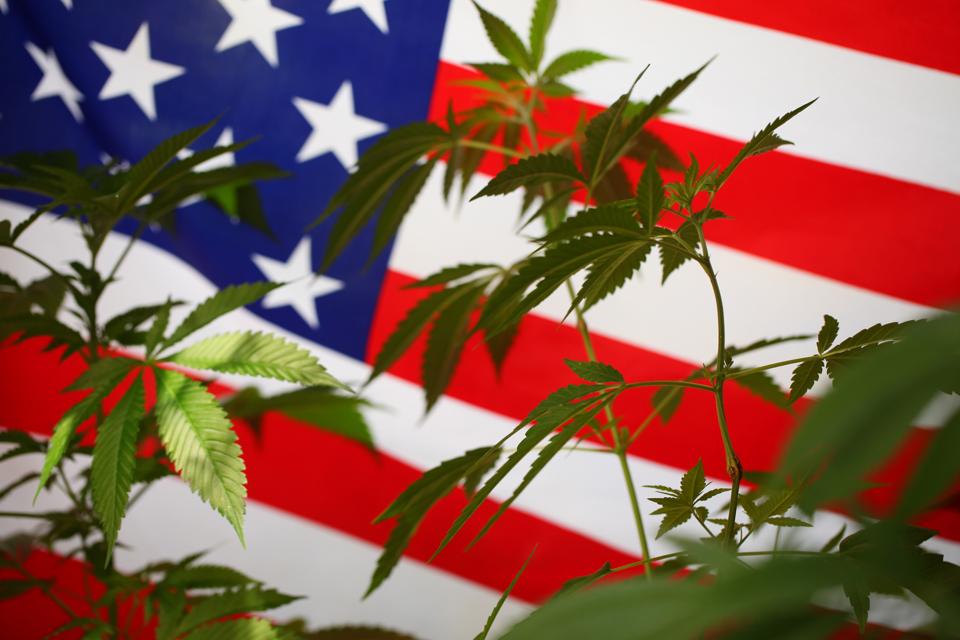
Is the United States on the verge of federal marijuana legalization?
Is the United States on the verge of federal marijuana legalization? GETTY


Ready or not, marijuana legalization is on the verge of happening nationwide. Or so they say.
Although Congress really hasn’t made much progress on the issue of cannabis reform in the past nine months, some federal lawmakers still insist that the nation is close to tearing down the walls of marijuana prohibition in the United States, potentially before the end of the year. 
Representative Earl Blumenauer of Oregon, one of the founders of the Congressional Cannabis Caucus, recently told a Portland television station that the stars were aligning on Capitol Hill with respect to legal weed.
The lawmaker is as confident as ever that we still have a fighting chance of seeing it come to pass in 2019.
"We are in really great shape," he told KATU-TV. "We’ve got things keyed up. I think there’s a great chance of doing it this Congress—maybe even this fall—depending on how crazy things get.”
So, smoke 'em if you got em!
From where I am setting, however, it seems highly unlikely that the same grey-haired Congress that hasn't yet managed to pull it together on a simple banking bill is all of a sudden going to rise up and legalize the leaf nationwide as its Christmas gift to the nation.
Sure, the SAFE Banking Act has a heck of a lot of sponsors in the House of Representatives — and more Republican support than you might imagine — but there is still no sign that Senate leadership, a crucial component to all of this bill passing business, is prepared to embrace any pot-related legislation.
As far as we know, Senate Majority Leader Mitch McConnell still isn't willing to make even the slightest move toward legal weed, especially if it means assisting the Democrats in furthering their “socialist” agenda.
In fact, earlier this year, McConnell called himself the “Grim Reaper” when pledging to put a stop to any Democratic proposal that crosses his path. "They won't even be voted on,” he said.
However, McConnell only has so much control. 
There have been some wicked, unforeseen developments to fester to the surface of the cannabis scene over the past month or so that could twist the arms of prohibitionist dregs and force old Uncle Sam to throw his hands up with respect to marijuana prohibition and legalize once and for all.
The following are two of the most pressing matters that might give Congress absolutely no choice but to surrender to marijuana legalization in the interest of public health and safety. 
 

Law Enforcement Confusion Over What Is Hemp and What Is Marijuana

When Mitch McConnell made it his mission last year to legalize industrial hemp in the United States for the first time since 1937, he probably didn't think for a second that it was going to inadvertently lead to marijuana legalization. But ending pot prohibition at the federal level might be the only way out of the conundrum that he has created.
You see, law enforcement can’t seem to distinguish between legal hemp and marijuana. After all these decades, the cops still don't have the technology to tell the difference between the two plants.
And that spells trouble.
It is already causing a slew of problems in states like Colorado, Tennessee and Texas. So much, in fact, that some prosecutors are now abandoning pot-related cases simply because they cannot prove whether an alleged offender is mixed up with illegal marijuana manufacturing or if they are simply part of the new legal hemp industry.
Sure, at least one state Attorney General has stepped up and offered to prosecute pot crimes using federal statues for states mixed up in this mess. But how long can such a thing go on? 
As more states move to establish their own hemp laws, which is inevitable, the confusion is only going to become more problematic, creating a situation where felonious marijuana-related crimes can no longer be tried fairly in a court of law. And if pot cases can no longer be prosecuted, well, what's the point of it being illegal? 
There is none.
 

Fake Cannabis Vapes Leading To Health Epidemic

People all across the United States are developing potentially life-threatening lung issues as a result of using marijuana vaporizers. There have been hundreds of cases reported nationwide where vape users have been admitted to Intensive Care Units of local hospitals for pneumonia-like respiratory infections.
In some instances, victims have fallen into comas and have needed machines to keep them alive and kicking. At the time that this article was written, there has been at least one death connected to this scourge. This health problem is a direct result of federal cannabis prohibition.
Just like the days when alcohol was outlawed in the United States, back when thousands of people died every year as a result of tainted liquor produced in the underground, black market criminal organizations are counterfeiting popular cannabis brands.
These knock offs are being sold all over the country — even in states where weed is legal – and it could get worse before it gets better. 
As I pointed out in my last column for Forbes, as much as 80 percent of all package cannabis vapes are imposters and not to be trusted. Even if a vape product appears to be legit – and many of them do — that doesn't mean that they are fit for human consumption.
The only way to curb (or stop) this sort of thing from happening is to end marijuana prohibition at the federal level and allow weed to be taxed and regulated like tobacco and alcohol. It is conflicting state and federal law that has allowed the black market to swell into the monster that it has become. So, if fake cannabis vapes end up spawning a vicious health epidemic that puts more Americans at risk of life threatening health issues, that might be enough to inspire the federal government to make a change.
Let’s just hope that something happens, though, before more people end up sick or dead. 
 

Tuesday, September 3, 2019

CBD Makes Everyone Feel Better—But No One Knows Why

By Cory Steig
Source: refinery29.com

Image result for refinery29.com+CBD

"Someone said, I’ve got 99 problems, and CBD fixes 86 of them," recalls Bethany Gomez, managing director of Brightfield Group, a market research firm that specializes in cannabis and CBD. She’s referencing an often-Instagrammed meme, but if you talk to anyone who swears by CBD, they’ll probably say something along the lines of that quote. Jay-Z would likely turn his nose up at this lyrical adjustment of his iconic 2003 song, "99 Problems." But, then again, even Jay-Z is involved in the CBD industry. CBD, which stands for cannabidiol, is the non-psychoactive compound found in marijuana and hemp, and it’s 2019’s go-to wellness panacea.

Technically, CBD can only definitively “fix” one problem: epilepsy. In 2018, Epidiolex, a drug containing a purified marijuana-derived form of CBD, was approved by the Food and Drug Administration for preventing seizures caused by two rare forms of pediatric epilepsy. All the other uses for CBD are up in the air as far as their effectiveness. That fact hasn’t stopped people — 22 million consumers in 2019 — from experimenting with variations of this drug to self-treat symptoms ranging from endometriosis to attention deficit hyperactivity disorder, migraines, insomnia, generalized anxiety disorder, and more.
Some promising research on humans has demonstrated CBD’s ability to reduce social anxiety, psychotic symptoms in people with schizophrenia, and cravings for heroin — but the results of these studies haven’t been conclusive, explains Jeff Chen, MD, MBA, and the executive director of the UCLA Cannabis Research Initiative. This lack of data, however, hasn’t stopped this new industry from flourishing.
Cannabis’ standing in the cultural zeitgeist shifted from a stigmatized drug to a powerful plant containing one of the most beneficial molecules of all time to those who swear by it.
To understand why CBD is everywhere right now, you have to go back and look at the Farm Bill of 2018. Every five years, our government passes a new Farm Bill or Act, which covers everything from farming, food, forestry, and rural communities. Last year, however, this Bill was particularly contentious due to President Trump’s tariff fight with China, which resulted in farm workers seeing huge declines in the profits from their products. (The Asian nation is one of the largest importers of U.S. agriculture.) While this Bill mainly covered things such as insurance protections for farmers and funding for farmers markets, it also differentiated hemp, a variety of cannabis, from the illegal drug marijuana, and reclassified it as an agricultural commodity, subsidizing some of the money farmers were losing due to tariffs.
At the same time, the Goopy world of wellness exploded into a $4.2 trillion dollar industry. Women — who historically have been disbelieved by doctors and have had their chronic pain conditions dismissed — started to seek out alternative ways to treat their ailments. Enter crystals, Whole30, celery juice, elaborate self-care routines, sleep coaches, infrared saunas, and of course, CBD. Cannabis’ standing in the cultural zeitgeist shifted from a stigmatized drug to a powerful plant containing one of the most beneficial molecules of all time to those who swear by it. But when it comes to self-experimentation in wellness, it doesn’t really matter that nobody knows how or if CBD actually works. This willingness to believe the unknown and the 2018 Farm Bill created the perfect storm for enterprising individuals to sell us anything and everything embossed with the three-letter acronym. Before the Bill, CBD was promoted exclusively through word-of-mouth advertising, and sold through independent channels. Now, it’s on track to becoming a $23 billion dollar industry by 2023.
I first heard about CBD last year from a friend who, like me, gets chronic migraines. She suggested I try a high-potency, full-spectrum CBD tincture from a company called Lazarus Naturals, which provides discounted CBD products for veterans, individuals on long-term disability, and low-income households. It helped her significantly reduce the frequency of her headaches, so I was hopeful it would work for me, too. Surprisingly, it kinda did. No, it hasn’t quelled my pain completely, but it does help reduce some of the physical discomfort and accompanying anxiety I get whenever a migraine strike. I enjoyed it so much, I started trying other CBD brands even when I didn’t have a migraine — such as Lord Jones Royal Oil Tinctureand Sunday Scaries Vegan Gummies — and found that, with regular use, I’m calmer and have an easier time focusing.
April Ann, a 31-year-old from Los Angeles, started taking CBD at the end of the day to wind down after work and high-intensity workouts. As a "naturally high-energy" person who drinks a lot of caffeine, but isn’t into drinking alcohol, she liked that CBD made her feel relaxed, but not sluggish or intoxicated. "I can tell the CBD is working," she says. "I'm not looking at email or thinking about work, but just sitting down and watching my favorite TV shows, and not worrying about the stress of the day or what I have to do tomorrow."
Elizabeth Andreassen, a 26-year-old in New York City, started using a CBD tincture during a period of time when she was experiencing anxiety, and feeling a constant sinking feeling in her stomach. "That went away within minutes after taking the tincture drops under the tongue," she shares. Megan Tatem, a 27-year-old also in New York, says she can tell when CBD is working because she’s "no longer moody." There have also been reports of people ditching their prescription psychiatric and pain medications for CBD without the blessing of their physicians.
But others find that CBD doesn’t affect them at all. Jay K.*, a 34-year-old real estate broker in New York says he purchased CBD oil and capsules at a trendy coffee shop, and felt nothing, even after taking seemingly high doses. "After several attempts at feeling something and seeing how it was marketed, I realized it was snake oil," he says. I fed a few Lord Jones CBD Gumdrops to my mom, who suffers from chronic insomnia, and not only did it not help her sleep issues, but she also felt nothing.

If someone really believes that CBD is “working” — whatever that means for them — then they’re more likely to experience the effects.
 
Researchers haven’t been able to pinpoint the exact physiological mechanism that makes CBD "work" so well for so many issues, explains Flávio Kapczinski, MD, PhD, professor of psychiatry at St. Joseph’s Healthcare Hamilton McMaster University. In simplest terms, it’s thought that CBD acts by modulating the endocannabinoid system, which is a complex network that’s responsible for maintaining bodily homeostasis and modulating pain and inflammation. Cannabinoids, such as CBD, can bind to specific endocannabinoid receptors and make you feel different ways. "There are a lot of expectations about the therapeutic effects of cannabinoids," Dr. Kapczinski says. "These expectations are probably inflated right now."
Exaggerated expectations and the placebo effect can go a long way, though. The different ways that people use CBD are all over the place, and there are no codified dosage recommendations, so all people can really rely on to show that CBD is effective are their own experiences. If someone really believes that CBD is “working” — whatever that means for them — then they’re more likely to experience the effects. And if people really believe that they’re feeling the results that they want to, then they’re more likely to trust the product and tell their friends.
 
 
There are very few side effects associated with taking CBD, even in large doses. And, in the short term, Dr. Chen from UCLA says it’s relatively safe. But there are still a lot of question marks, including how CBD affects pregnant people, whether CBD interferes with other drugs, and especially the potential long-term effects. (CBD has been shown to boost the effects, good and bad, of other drugs.) Some people argue that humans have been safely using cannabis for decades, so in theory CBD should be fine, too. But that’s not an easy comparison to make.
"CBD sold online or in stores isn’t regulated by any state or federal agency," Dr. Chen says. "So, it really could have a very different amount of CBD in it that’s labeled, or it could contain contaminants." (The Food & Drug Administration, which evaluates and approves all prescription drug products, hasn’t approved any other CBD products besides Epidiolex. However, the organization "recognizes the significant public interest in cannabis and cannabis-derived compounds, particularly CBD.")
As a CBD-user, you have to be careful about the products you’re choosing to ensure that you’re getting the safest, most effective form. Dr. Chen recommends buying CBD from larger retailers that you already trust — such as Whole Foods, CVS, Walgreens, or Kroger — so you have some level of certainty that these stores have done their due diligence to make sure the products they're selling are as safe as can be and properly dosed. Or, if you have the option in your state, go to a legal cannabis dispensary to get CBD, because those products are regulated tightly. "If you want to buy outside those parameters you have to do your own research," he says. (Obviously, letting your doctor know that you’re using CBD can be beneficial as well.)
There’s no telling what the future of CBD will look like. Hemp farmers and CBD manufacturers are still waiting for official rules and regulations around hemp growing and cultivation to be finalized and released from the USDA. There are also different rules for different strengths of CBD in different states, and while it’s technically legal to travel across state lines with hemp-derived CBD products containing less than 0.3% THC, the TSA only recently said it’s cool to travel with it.
CBD brands meanwhile are waiting eagerly to see how states harmonize with the upcoming USDA regulations, and how that change affects the way they do business, explains Dylan Summers, Director of Government Affairs for Lazarus Naturals. "The ideal scenario is that we'd like to keep the trend alive for as long as possible," he adds. "We’re certainly in a good spot; sales are climbing."
These sales are climbing mainly due to millennials and Gen Z, who are buying and using CBD with great fervor and reporting even greater success. In the end, in today’s hectic and manic world, it simply makes them feel better. That there’s little scientific proof to back up their own experiences is irrelevant. These demos will only get older and develop more ailments that’ll need some sort of treatment. For now, CBD seems to fit that bill.
* Name has been changed to protect identity.