Saturday, September 29, 2018

How Fly Whisks, Often Made of Hemp, Symbolize Life and Authority

By SCHWILLY
Source:
marijuana.com


Through a core virtue of Eastern religions, hemp wasn’t only a way of life for ancient humanity — hemp was used to protect it.
 
 
In “Shiva and Parvati on a composite cow made of assembled women,” the married god and goddess ride a cow bearing the images of several women. Behind the procession is the elephant-head god Ganesh, holding a fly whisk. The artist is unknown and the work dates to about 1775 to 1800, according to Google Arts and Culture. (Public domain image from Wikimedia Commons)
Ahimsa, or nonviolence, is a core tenet of Hinduism, Jainism, Taoism and Buddhism. Ahimsa stems from an earlier Sanskrit word for “no harm.” The principle was first vaguely mentioned in Vedic texts dating back thousands of years, but by 500 BC, Ahimsa had become a central concept making its way into the beliefs of most Eastern faiths.
In Jainism, Ahimsa became such a central concept of importance it was listed as the first of the five fundamental vows known as anuvratas, or small vows, taken by all members of the faith. Jains aspiring to be monks or nuns, must accept the same five vows but swear to a stricter pledge called mahavratas, or the “great vows.” To uphold this great vow of nonviolence, Jain monastics sought to protect all life no matter it’s size.
These Jain monks and nuns chose not to wear the animal-derived wool and silk cloths of their communities, but instead chose the animal-free option of cotton or hemp. [1] To further aid in this great vow, Jain monastics turned to an ancient tool to protect life: the fly whisk.
A fly whisk is a ancient fly swatter that mimics an animal’s tail to safely shoo away pesky flying insects. Early fly whisks were typically made with short wooden handles using animal hair or hemp for the ends. Jain monastics again chose hemp.
Daruma, the Japanese name for Bodhidharma, Zen Buddhism’s founder, raises his arms over his head. He is holding a fly whisk used during meditation in this 1800s copper kozuka by Toshiyuki. (Image from Wikimedia Commons)
Not wishing to accidentally harm life while walking, the monks and nuns also used their whisks to brush away any small creature that may be in their path. So worried over the unintentional loss of life, the monastics dawned cotton or hemp masks over their mouths to protect from accidentally breathing in any unseen creature.
In this photograph from R.V. Russell’s “The Tribes and Castes of the Central Provinces of India, Volume 1,” published in 1916, Jain ascetics wear cloths over their mouths and brandish fly whisks to avoid harming small creatures. The cloths and whisks were usually made from hemp or cotton, rather than animal-derived wools or silks. (Public domain images from Wikimedia Commons)

The Fly Whisk in Buddhism

It is believed that Buddha at his birth arose upright on a lotus flower. The newly born Buddha was protected on the lotus only by a parasol (umbrella) and fly whisk. [2] This whisk came to symbolize not only royalty but also taught the lesson to sweep away of all mental distractions and ignorance.
According to the Binaya Zoji, a early Buddhist text used by the Nichiren sect, Buddha not only ordered all Buddhist monks to use fly whisks at all times but also proclaimed they should be made from one of five materials ‘sheep’s wool, finely shredded fabric, old rags, tree branches/twigs or hemp’. [3]
Known in Japan as a hossu, the fly whisk became symbolic of a Zen Buddhist authority to teach and transmit Buddha Dharma, or teachings, to others. The hossu is frequently only passed from one master to the next. In Taoism and many Chinese Buddhist sects, the presiding master must hold the fly whisk during all religious debates.
The teachings of the fly whisk became of such importance within the various Eastern religions, its image became one of the eight Ashtamangala, or important symbols, in many sects of Hinduism, Jainism, and Buddhism. Held by many deities, these symbolic teaching tools represent the necessary qualities to find the path of enlightenment.

Fly Whisks: A Global Icon

Somehow, fly whisks found their way into many cultures around the world. In Africa, the fly whisk has become a sign of royalty still displayed as regalia by leaders such as the former Kenyan statesman Jomo Kenyatta (1891-1978).
In the Middle East, the whisks are used in markets during summer months to shoo away the onslaught of flying insects. These modern whisks are constructed of a wooden handle with plant fibers attached to them, just like the hemp construction of ancient fly whisks.
The fly whisk even made its way to the Polynesian islands, where it has become a prop during celebrations to represent the ultimate symbol of authority. During the design for the flag of American Samoa, the fly whisk was the chosen symbol to be carried in the talons of the iconic American bald eagle.
A member of a dinner party holds a fly whisk in the background in this illustration from an account of Edward William Lane’s observations of Egypt, published in 1836. [4] (Wikimedia Commons; used with a Creative Commons Attribution-ShareAlike 2.5 Generic license)

Footnotes:
[1] Gazetteer of the Bombay Presidency Vol. 22, p. 118, 1884
[2] Renou, Louis L’Inde Classique, p. 470
[3] Binaya zoji 6 (T. 1451, XXIX, 229b, li. 15 ff.); quoted in BD 1589. Cf. Zimmer, The art of Indian Asia, II, Pl. 50
[4] Lane, Edward William. “An Account of the Manners and Customs of the Modern Egyptians, Written in Egypt During the Years 1833, -34, and -35, Partly from Notes Made During a Former Visit to that Country in the Years 1825, -26, -27, and -28. Volume 1”. Charles Knight & Co.: London, 1836. p 178 ( https://commons.wikimedia.org/wiki/F…6)_-_TIMEA.jpg )

American Women

By The American Women
Source: The American Women

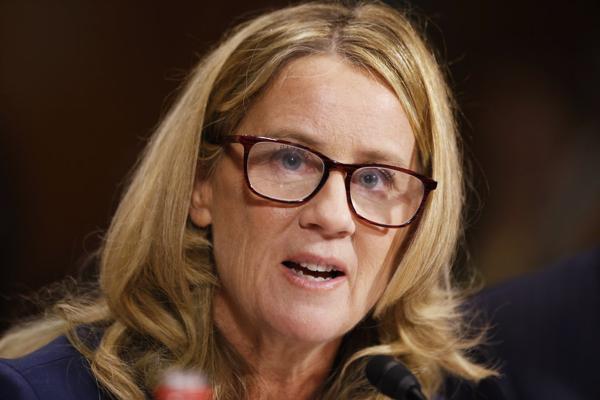
WASHINGTON, DC - SEPTEMBER 27: Dr. Christine Blasey Ford speaks before the Senate Judiciary Committee hearing on the nomination of Brett Kavanaugh to be an associate justice of the Supreme Court of the United States, on Capitol Hill September 27, 2018 in Washington, DC. A professor at Palo Alto University and a research psychologist at the Stanford University School of Medicine, Ford has accused Supreme Court nominee Judge Brett Kavanaugh of sexually assaulting her during a party in 1982 when they were high school students in suburban Maryland. (Photo By Michael Reynolds-Pool/Getty Images)  - xxxx xxxx
Dr. Christine Blasey Ford


Image result for the elevator women heroes

These two heroes, who confronted this morning, just changed the course of the Kavanaugh process. We❤️you so much, and Maria Gallagher.

Monday, September 17, 2018

Coca-Cola Is Eyeing the Cannabis Market

Image result for coke cannabisBy Jen Skerritt and Craig Giammona
Source: bloomberg.com

Drinks maker in talks with Aurora Cannabis, BNN Bloomberg says

Company watching growth of CBD for use in wellness beverages


The world’s largest beverage company may be the next industry giant to jump into the cannabis drinks business.
Coca-Cola Co. says it’s monitoring the nascent industry and is interested in drinks infused with CBD -- the non-psychoactive ingredient in marijuana that treats pain but doesn’t get you high. The Atlanta-based soft drinks maker is in talks with Canadian marijuana producer Aurora Cannabis Inc. to develop the beverages, according to a report from BNN Bloomberg Television.
“We are closely watching the growth of non-psychoactive CBD as an ingredient in functional wellness beverages around the world,” Coca-Cola spokesman Kent Landers said in an emailed statement to Bloomberg News. “The space is evolving quickly. No decisions have been made at this time.” Landers declined to comment on Aurora.
Pot stocks Tilray Inc., Cronos Group and Canopy Growth gained in pre-market trading Monday in response to Coca-Cola’s interest. Tilray jumped 6.8 percent, adding to its 40 percent gain last week; Cronos rose 3.1 percent and Canopy’s U.S. shares climbed 2.9 percent.
Coke’s possible foray into the marijuana sector comes as beverage makers are trying to add cannabis as a trendy ingredient while their traditional businesses slow. Last month, Corona beer brewer Constellation Brands Inc.announced it will spend $3.8 billion to increase its stake in Canopy Growth Corp., the Canadian marijuana producer with a value that exceeds C$13 billion ($10 billion).

Molson Coors Brewing Co. is starting a joint venture with Quebec’s Hydropothecary Corp. to develop cannabis drinks in Canada. Diageo PLC, maker of Guinness beer, is holding discussions with at least three Canadian cannabis producers about a possible deal, BNN Bloomberg reported last month. Heineken NV’s Lagunitas craft-brewing label has launched a brand specializing in non-alcoholic drinks infused with THC, marijuana’s active ingredient.
 
Coca-Cola has already been diversifying as consumption of soda continues to decline. The company, with its iconic brands ranging from Coke and Sprite to Powerade, announced it will acquire the Costa Coffee chain for $5.1 billion in August, and has expanded into other products including juice, tea and mineral water over the past decade.
The discussions with Aurora are focused on CBD-infused drinks to ease inflammation, pain and cramping, according to the BNN Bloomberg report. CBD, or cannabidiol, is the chemical in the pot plant often used for medicinal purposes, and doesn’t produce the high that comes from THC, or tetrahydrocannabinol. There are no guarantees of any deal between Aurora and Coca-Cola, according to the report.

Aurora Comment

Heather MacGregor, a spokeswoman for Aurora, said in an emailed statement that the cannabis producer has expressed specific interest in the infused-beverage space, and intends to enter that market, BNN Bloomberg’s David George-Cosh reported.
While marijuana remains illegal at the national level in the U.S., there is growing acceptance of the use of CBD derived from marijuana to treat illnesses ranging from chronic pain to anxiety and epilepsy. The first-ever medical treatment derived from a marijuana plant will hit the U.S. market soon, after regulators in June gave an epilepsy treatment by GW Pharmaceuticals Plc the green light.
Aurora is Canada’s third-largest pot company, with a market value of C$8.7 billion. The Edmonton, Alberta-based company has soared along with other pot stocks in Canada as the country gears up to become the first Group of Seven nation to legalize cannabis on Oct. 17. The BI Canada Cannabis Competitive Peers Index has more than doubled in the past 12 months, though has dropped 24 percent in 2018 on concern that the stocks are overvalued.

Sunday, September 16, 2018

The first country to legalize pot is taking it slow

By Talib Visram
Source: cnn.com

uruguay cannabis


The first country to legalize recreational marijuana is still going through growing pains in setting up its market.

Uruguay, which legalized the drug nationally in 2013, is in no rush. The Latin American country wants to do it the right way, and that means, at least initially, a lot of restrictions.
"They're very aware that they're the first in the world to do this," said John Walsh, director for drug policy and the Andes at the Washington Office on Latin America. "They've run with a tightly controlled model to show the world that they have control over the system."
That heavy handed approach means only around 14 pharmacies in the entire country sell marijuana. Most of them are clustered around the capital, Montevideo. Many other pharmacies are weary of getting into the pot-selling business, primarily because of a major financial hurdle.

Teething problems

Pharmacies across the country act as points of sale for pot that's been grown by just two state-licensed companies, Symbiosis and Iccorp. Buyers can purchase up to 40 grams per month. As of May, there were 24,324 registered buyers, according to IRCCA, the state department dedicated to the regulation and control of cannabis.
But because Uruguay's economy runs on dollars, most pharmacies are routed through US banks. Those banks are forbidden by US law to serve accounts that "involve the manufacture, importation, sale, or distribution of a controlled substance."
"The big US-based banks sent a memo to their Uruguayan counterparts, telling them they'd have to close their accounts if they proceeded," Walsh said.
The existing pharmacies are left to resort to cash-only transactions, similar to the situation in US states like Colorado and Washington, which are managing legal marijuana industries of their own. It's also a deterrent for other pharmacies that might have otherwise jumped on board.
"Had the obstacle not occurred, more pharmacies probably would've taken the plunge. Maybe dozens of others," he said. "There aren't nearly as many as was expected by this point."
IRCCA is discussing how to overcome this hurdle, and Walsh said the most popular solution is to set up dispensaries separate from pharmacies. That'll mean more points of sale, and more even distribution.
But when that happens, Walsh said, the supply could run short. Marijuana production has been erratic so far, because there are only two governmentally contracted suppliers. Uruguay is relatively inexperienced in marijuana farming, meaning some trial batches had to be rejected and recultivated.
Residents are permitted to register as "homegrowers" or form "grow clubs" to cultivate up to 480 grams per person each year. But these homegrowers can't sell to pharmacies.
But all things considered, the project is going well, said Hannah Hetzer, senior international policy manager at the Drug Policy Alliance. "It's too early to make any concrete evaluations," she said, "but the sky hasn't fallen."

Beating the black market

Regulated cannabis seems to have hindered the black market, which was one of the main aims of legalization. According to IRCCA's May figures, about 55% percent of marijuana users are partaking within the regulated system. "It takes a while for the illicit market to reduce," Hetzer said.
The government controls the pricing of the product at pharmacies, and has priced it on a par with its rate on the black market -- at around $1.40 per gram.
The low price discourages illegal competition because there's not much profit to be made, said Michael Komorn, a criminal defense lawyer and president of the Michigan Medical Marijuana Association.
But the black market may still thrive with tourists. Uruguayan law forbids non-residents from purchasing marijuana.
Still, the experts agree that the early signs are positive, even with the banking issue.
That problem may even be solved by working with Canadian banks, an opportunity reinforced by Canada becoming the second country to legalize recreational pot in June this year.
Along with Canada, Uruguay has taken the role of an international leader in this field, Komorn said. "It's going to be good for the country," he predicted. "It's the beginning of the spark of an economic renaissance."

Thursday, September 13, 2018

U.S. official: Canadian marijuana users, workers and investors risk lifetime border ban

By Luiza Ch. Savage
Source: politico.com

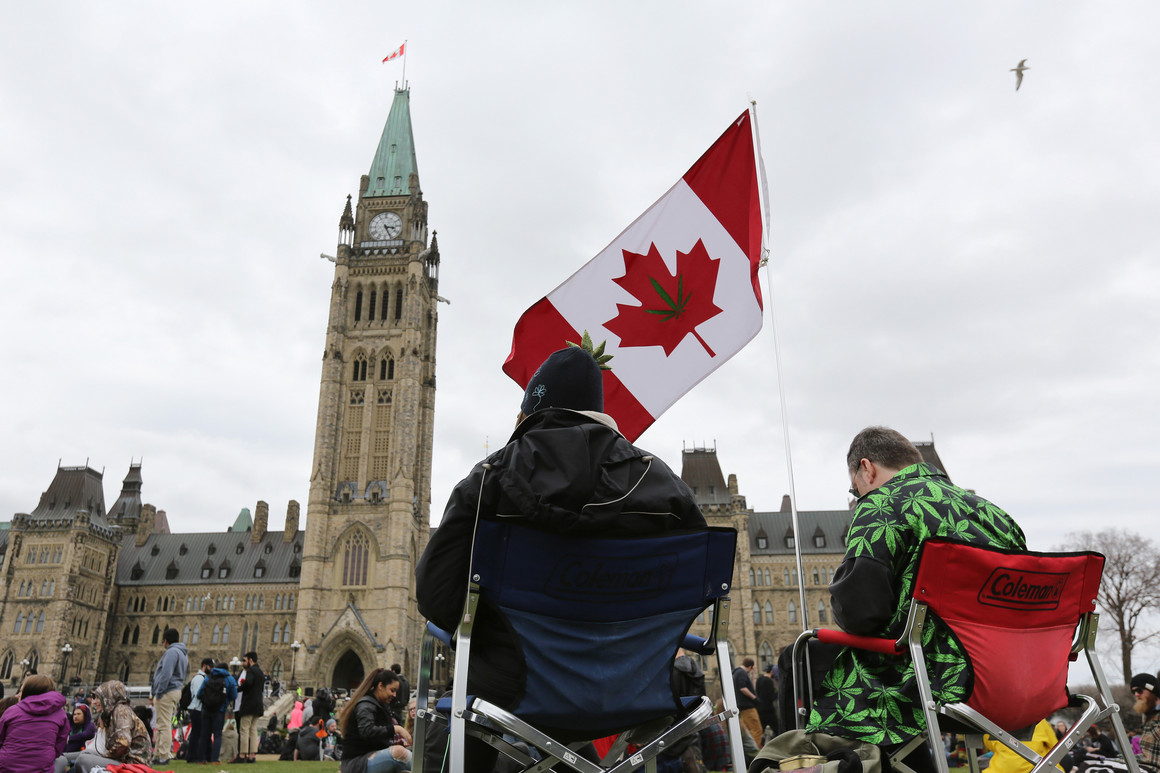
People sit on Parliament Hill waiting for the clock to hit 4:20 p.m. on April 20, 2017, in Ottawa.
People sit on Parliament Hill waiting for the clock to hit 4:20 p.m. on April 20, 2017, in Ottawa. | Lars Hagberg/AFP/Getty Images

Canadians who work in the marijuana industry — and those who invest in the booming pot sector — risk a lifetime ban on travel to the U.S., according to a senior official overseeing U.S border operations.
As Canada prepares to become the world’s only major industrialized nation to legalize retail marijuana sales starting Oct. 17, the Canadian cannabis sector is projected to generate billions of dollars of revenue in coming years and Canadians have flocked to take jobs and buy stocks in the burgeoning industry. But the move has potential to disrupt border crossings between the U.S. and Canada for travelers who run afoul of American drug laws, even if their activities are legal in Canada.
The U.S. Customs and Border Protection agency will continue to apply long-standing U.S. federal laws and regulations that treat marijuana as a banned substance — and participants in the cannabis industry as drug traffickers — who are inadmissible into the U.S. Although some U.S. states have eased marijuana laws, the U.S. continues to maintain a federal prohibition that applies at the border, said Todd Owen, executive assistant commissioner for the Office of Field Operations, who gave POLITICO a detailed preview of how CBP will apply longstanding rules.
Here’s exactly how it would work at the border: CBP officials are not planning to go out of their way to interrogate every Canadian traveler about marijuana use. However, other factors may cause them to raise the topic.
“Our officers are not going to be asking everyone whether they have used marijuana, but if other questions lead there — or if there is a smell coming from the car, they might ask,” Owen said. Likewise, marijuana residue, which can linger for weeks inside a car, could be detected by CBP inspection dogs and lead to further questioning, he noted. If asked about past drug use, travelers should not lie, he said. “If you lie about it, that’s fraud and misrepresentation, which carries a lifetime ban,” Owen said.
If a traveler admits to past use of any illegal drugs, including marijuana, the traveler will be found to be inadmissible into the United States. CBP typically will allow them the opportunity to “voluntary withdraw” from the border — or face an “expedited removal.” Whether or not the traveler enters the U.S., a record will be kept by CBP and that traveler will not be allowed to return to the U.S. The traveler will have the opportunity to apply for a waiver from a lifetime ban, which costs U.S. $585 and requires several months to process. The waivers are issued at the discretion of CBP.
CBP agents commonly ask travelers what they do for a living. Canadians who work in the marijuana industry will not be permitted to enter the U.S. “If you work for the industry, that is grounds for inadmissibility,” Owen said.
Likewise, investors in marijuana companies are considered inadmissible. “We don’t recognize that as a legal business,” Owen said. Already, marijuana investors from other countries, such as Israel, have been denied entry into the U.S., he noted. CBP did not specify any minimum level of investment that could trigger a ban.
“Facilitating the proliferation of the legal marijuana industry in U.S. states where it is deemed legal or Canada may affect an individual’s admissibility to the U.S.,” Owen said.
Marijuana use could be particularly risky for professionals whose livelihoods depend on trusted traveler programs such as NEXUS to enable frequent and fast crossings into the U.S., such as truck drivers or Canadian nurses who work in U.S. hospitals. CBP has been alerting trucking associations in Canada that drivers will lose their NEXUS privileges because of marijuana use.
The criteria for inadmissibility to the United States are laid out in Section 212 of the U.S. Immigration and Nationality Act. The statute lists criteria that make foreigners ineligible to receive visas and ineligible to be admitted into the U.S. These include anyone “who is determined to be a drug abuser or addict,” as well as anyone who “is or has been an illicit trafficker in any controlled substance,” or who has assisted in trafficking, or obtained financial benefit from the activity.
The possession of marijuana at the border will also remain illegal — even when crossing into a U.S. state with more liberal drug laws. A traveler found carrying marijuana at the border is subject to referral for prosecution by federal, state or local authorities. If authorities choose not to prosecute, the traveler will face a $5,000 penalty from CBP. First-time offenses are often mitigated to $500. According to Owen, “Mitigation, if any, is based on the totality of the circumstances.”
Canadians made more than 42 million same-day and overnight trips into the U.S. last year, according to Statistics Canada. Whether marijuana-related scrutiny will translate into longer wait times at border crossings remains to be seen. Owen said the marijuana legalization could lead to more frequent secondary inspections at ports of entry. “How much is unknown,” he said.