Monday, April 2, 2018

A Flourishing Hemp Industry Is Growing in Colorado

By Michael Maharrey
Source: fee.org

Image result for foundation for economic education


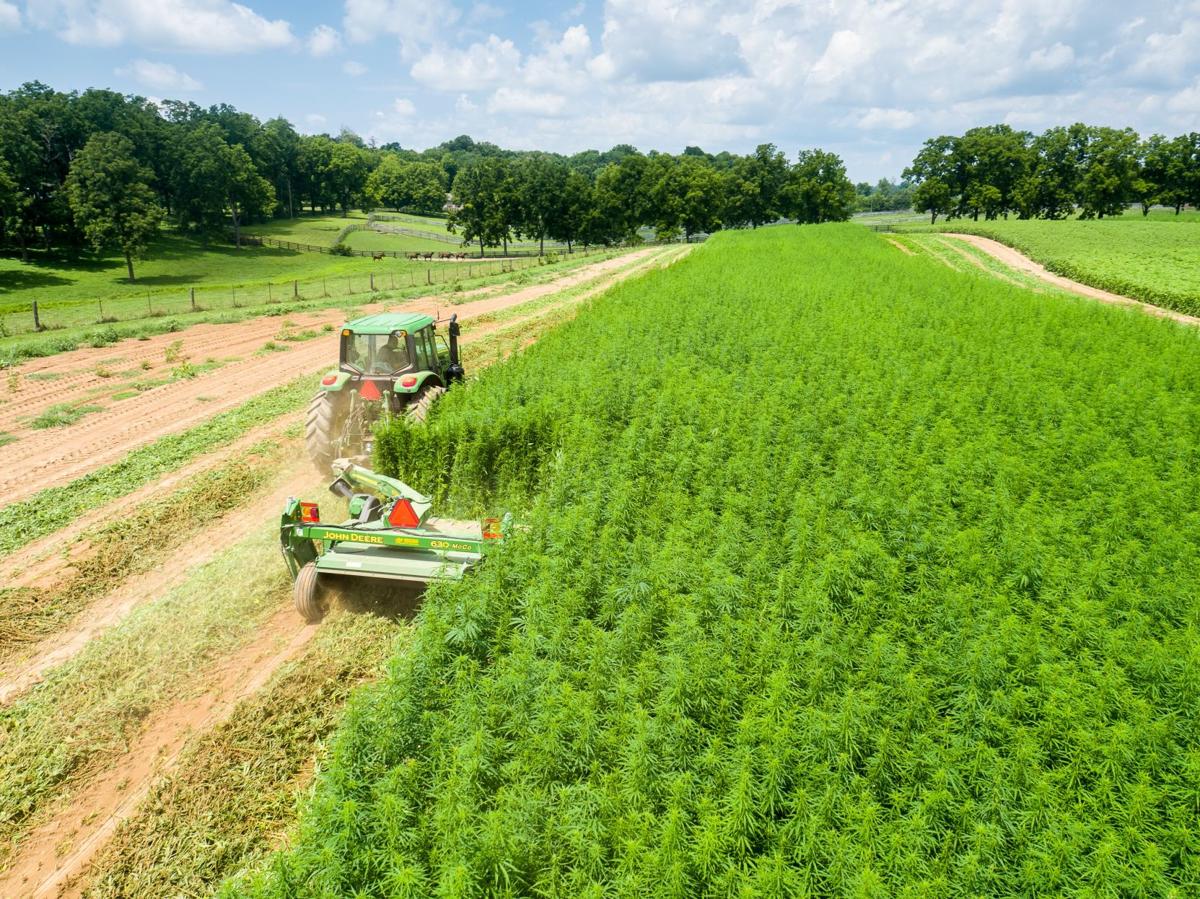
Image result for hemp farmer

There is one thing that sets this state apart from most of the others: an almost total disregard of federal law.


olorado's industrial hemp industry continues to grow despite ongoing federal prohibition. The early successes in creating a viable hemp marketplace hinged on the state's willingness to ignore federal law, along with the actions of farmers and entrepreneurs who have taken advantage of the relaxed state legal structure.
The Centennial State legalized industrial hemp production for commercial purposes in 2012. This was before the federal government loosened laws to allow hemp cultivation within pilot programs for research purposes. At the time, the federal government maintained almost complete prohibition of the plant. People could legally grow hemp, but they had to get a permit from the FDA, a nearly impossible feat.
There is one thing that sets Colorado apart from most of the others: an almost total disregard of federal law.
The Colorado law simply ignored the federal ban and set up a legal framework under which farmers could grow hemp anyway. By legalizing hemp, the state removed a layer of laws prohibiting hemp production. But it went even further by legitimizing the crop and creating a legal structure to facilitate the development of a viable market.

Legitimizing the Hemp Market

Colorado farmers walked right through the door opened by hemp legalization. And despite the threat of federal prosecution, they started growing hemp. Since then, the fledgling industry has grown at a steady pace, despite ongoing federal prohibition.
Farmers in southeastern Colorado began harvesting hemp in the fall of 2013 and the acreage devoted to the crop's cultivation has grown steadily since. By 2015, farmers were growing 3,600 acres outdoors along with 571,000 square feet of indoor production. The amount of acreage used to grow industrial hemp in the state increased in 2016 to nearly 5,000 acres and then nearly doubled in 2017.
According to the Telluride Daily Planet, to date 386 licensed growers produce industrial hemp in Colorado. There are 12,042 outdoor acres of hemp, along with 2.35 million square feet licensed for indoor cultivation.

Why the Centennial State Is Different

A number of states have legalized hemp, but none have been as successful as Colorado. And there is one thing that sets this state apart from most of the others: an almost total disregard of federal law. While most hemp states have tried to operate their programs within federal parameters, Colorado has not. It simply set up its own commercial licensing system and let farmers go to work.
Last year, Colorado accounted for more than half of the country's hemp production.
According to a Marijuana Business Daily story cited by the Daily Planet, Colorado has, “more acres in hemp, more farmers growing the crop, more processors extracting CBD from hemp and more market opportunities for selling the plant than any other state."
In fact, last year, Colorado accounted for more than half of the country's hemp production. The Daily Planet pinpoints one of the main reasons why.
"The success of the industry perhaps stems from the state’s 'look the other way' stance on hemp seed acquisition. That flies in the face of federal direction to get approval from the U.S. Drug Enforcement Administration."
The early success of Colorado's hemp industry traces directly to its willingness to simply ignore federal law.

Federal Prohibition

In 2014, Congress cracked the door open for limited hemp farming in the U.S. with an amendment to the 2014 Farm Bill. The law allows hemp cultivation for research purposes but prohibits “commercial” production.
The “hemp amendment” in the 2014 farm bill allows:
“...State Agriculture Departments, colleges and universities to grow hemp, defined as the non-drug oil-seed and fiber varieties of Cannabis, for academic or agricultural research purposes, but it applies only to states where industrial hemp farming is already legal under state law.”
In 2016, the U.S. Department of Agriculture and Drug Enforcement Agency released a “statement of principles” to guide interpretation of the Farm Bill's hemp section. It states:
“The growth and cultivation of industrial hemp may only take place in accordance with an agricultural pilot program to study the growth, cultivation, or marketing of industrial hemp established by a State department of agriculture or State agency responsible for agriculture in a State where the production of industrial hemp is otherwise legal under State law.”
In short, the current federal law authorizes farming of hemp—by research institutions, or within state pilot programs—for research only. Farming for commercial purposes by individuals and businesses remains prohibited.
The definition of “commercial” and the extent to which sales and marketing are allowed under the rubric of “research” remains murky. This has created significant confusion.
The statement of principles also asserted that industrial hemp programs are limited to fiber and seed. It didn’t mention the CBD oil or other edible hemp products. The DEA has apparently interpreted that to mean they remain illegal. The agency has flat-out said CBD cannot be sold under any circumstances. An Indiana TV station interviewed DEA spokesman Rusty Payne who said, “It’s not legal. It’s just not.”
Payne says cannabis plants are considered a Schedule I controlled substance, and medicinal oils derived from cannabis plants are illegal according to two federal laws: the Controlled Substance Act and the Food, Drug, and Cosmetic Act. He said confusion surrounding the Agricultural Act of 2014 (better known as the “Farm Bill”) is frequently cited as legal justification by those who want to manufacture, sell or use CBD oil. The DEA believes the Farm Bill permits only CBD research — not CBD marketing and sales. “Anybody who’s in violation [of the federal laws] always runs that risk of arrest and prosecution,” he said.
With federal shackles locked tight by state policy, these states are not legally allowed to develop any kind of commercial market.
The DEA's declaration notwithstanding, CBD continues to soar in popularity. The hemp-derived oil has proven effective in treating a number of medical conditions, including seizures, pain, and anxiety. According to Marijuana Business Daily, Cannabis research firm Brightfield Group estimates that the U.S. market for CBD oil hit $291 million in 2017 and will swell to $1.65 billion by 2021—a nearly sixfold increase.
Hemp producing states are scrambling to meet the demand, including states that claim to allow only hemp research programs within the scope of federal law.
Several states with federally-compliant structures for hemp production, such as Kentucky, North Dakota, Minnesota and New York, have grown significant acreage under federally-approved research programs. With federal shackles locked tight by state policy, these states are not legally allowed to develop any kind of commercial market.
And yet, that is exactly what these states are doing. This is because many of these “federally compliant” programs are not actually federally compliant. Any state program producing CBD oil for the general market is operating outside the law.
The commercial sale of edible hemp products violates federal law, according to some federal officials. Even so, more than half of Kentucky’s hemp acreage has been cultivated for CBD. And you can walk into virtually any health food store in the commonwealth, or even many major grocery chains, and find edible hemp products on the shelf.
This reveals a dirty little secret: you simply can't develop a legitimate hemp industry while remaining bound by federal rules and regulations. Colorado has had success developing a vibrant hemp industry due in large part to its willingness to cast aside the pretenses and simply push forward to develop a commercial hemp industry no matter what the DEA says.

Moving Forward

According to the Daily Planet, one of the biggest challenges facing the budding hemp industry is the lack of processors and the need for more end-users. Farmers won't benefit unless there are people processing the plant, businesses developing and producing products, and customers to buy them.
People in Colorado are stepping up to fill that void, even though the feds say it's against the law.
In spring 2015, the PureVision Technology processing plant in Ft. Lupton began hemp processing. Ed Lehrbuger runs PureVision Technology, and he gave an ABC 7 reporter a tour of the facility. It processes hemp stalks into pulp that can be made into paper, and sugar that serves as a basis for biofuel. “Our tagline is pioneering the hemp revolution,” Lehrbuger said.
People in Colorado are stepping up to fill that void, even though the feds say it's against the law.
At the time, company officials said the pilot plant would initially process a half-ton of hemp each day. The plan was to scale up to 25 tons a day by the fall in a larger facility as the hemp harvests grow.
Paradox Ventures recently set up shop in an old schoolhouse. The company plans to install machines for extracting medical-grade CBD oil from hemp. It also plans to provide seedlings and to offer harvesting equipment, oil processing and fiber processing from the facility.
In the long-term, the real success or failure rides on the shoulders of entrepreneurs developing products to meet the needs of the market. Processors told the Daily Planet more of these "end-users" will make hemp truly valuable, thereby encouraging more farmers to give it a go.
Scott Abrahams counts among Colorado's growing number of hemp entrepreneurs. He founded Kind Life Farm Institute, a licensed hemp cultivation company that specializes in seed banking, breeding, and tissue culture services. Abrahams offered Mary Jane’s Medicinals as an example of the kind of end-user that the industry needs to create more demand for industrial hemp.
Dahlia Mertens founded Mary Jane’s Medicinals and it produces salves and other topical medications.“We need more Dahlia Mertens,” Abrahams said. “More processors are needed.  We need more value-added resellers; otherwise, we’ll create a back stock of material.”
Another creative entrepreneur founded RXCBD, a Ridgway-based company that specializes in CBD-infused products for pets.John Lyons was all set to retire when the hemp bug bit him. After attending a conference, he founded The Colorado Hemp Institute. Lyons hopes to develop an all-in-one center for doctors, growers and scientists to research hemp, as well as treat patients. According to Westword, the company will primarily focus on non-psychoactive hemp and CBD, but will also offer some medical marijuana products.
The facility will include a walk-in clinic, two or three doctors who can see patients in fifteen to twenty rooms, and an assisted-living center where visitors can receive cannabis treatment plans; there will also be an end-of-life facility to treat terminally ill patients.
People like Lyons, Abrahams and Mertens serve as the backbone of the successful movement to nullify federal hemp prohibition in Colorado. The state can open the door by creating a favorable environment for a market to develop, but ultimately the movement needs people to step through that door and actually create and expand markets. These people are doing just that.

HEMP WILL SAVE US FROM FIRE, COCKROACHES, HEAT, AND MICROPLASTICS

By Mona Zhang
Source: theoutline.com


Hemp has been illegal for decades, but it’s a huge improvement over many common materials.

I got my first introduction to hemp a few years ago when I went to a High NY Meetup. “Hemp: The Technology that will Save our Planet,” the event was billed. Jim Savage, who was in the midst of crowdfunding a tiny hemp home, was evangelizing this building material called hempcrete – made by mixing the inner core of a hemp plant with a lime binder and water. Hemp homes are virtually fireproof, he explained, playing a video of someone taking a blowtorch to a hempcrete wall.
 
As the man held a flame to the wall, the material became charred, but didn’t catch on fire. Savage went on to explain that in addition to being resistant to fires, hempcrete was also resistant to pests like mice and cockroaches. “They should be building all NYC apartments out of hemp,” I thought, as images of mice and cockroaches swam in my head. At the time, the East Village apartment I was living in had a literal mouse hole in the wall, like something out of a cartoon, but real-life mice were decidedly less endearing than their cartoon counterparts. They were cuter, however, than the army of cockroaches that had made our apartment building their home.
 
Hemp is a great insulator, explained Savage, because the walls breathe, reducing indoor humidity in the summer and keeping it in during the winter. Not only did hemp capture carbon from the air while it was growing, it could reduce a home’s energy costs.
 
I did not understand. There’s a building material that is a great insulator, and it could cool down my gross apartment during sticky city summers? Anyone who has lived in a pre-war apartment in New York City knows how extremely not-breathable those buildings are (and has probably winced at a Con-Ed bill once their A/C went up in the windows).
Why aren’t all of our buildings made out of hempcrete?
THANKS TO ITS LONG ASSOCIATION WITH MARIJUANA, GROWING THE CROP HAS BEEN EFFECTIVELY OUTLAWED IN THE U.S. SINCE THE ‘30S.
Hemp can be used in a whole host of consumer goods like cars, textiles, and cosmetics. But thanks to its long association with marijuana — the same species as industrial hemp — growing the crop has been effectively outlawed in the U.S. since the ‘30s.
 
The tides are finally changing. Senate Majority Leader Mitch McConnell announced on Monday that he would introduce legislation alongside Senator Rand Paul to legalize hemp by removing it from the list of controlled substances, where cannabis sits alongside psilocybin mushrooms, MDMA, and heroin. That two Republican senators from a Bible Belt state are championing this issue shows just how far we’ve come on issues of cannabis.
 
Kentucky hemp farmer Mike Lewis credits the Kentucky senators for inserting language into the Farm Bill that legalized hemp production for agricultural pilot programs or academic research. The bill passed in 2014 — about a month after the first marijuana dispensaries opened in Colorado. Even then, Lewis had to contend with the DEA and wary family members.
 
“For the first two or three years…  I experienced this stigma that we’re farming pot,” said Lewis, who is a military veteran and the founder of Growing Warriors.
After a brief legal battle with the DEA, which tried to prevent a shipment of hemp seeds to the state, Lewis started farming hemp and has been advocating for the crop. Still, he deals with similar challenges as his counterparts in the state-legal marijuana industry: “The big thing was having a couple of our bank accounts shut down,” he said. “That’s the most difficult challenge.”
 
COTTON IS ABOUT 2 TO 3 PERCENT OF GLOBAL AGRICULTURAL PRODUCTION, BUT USES 25 PERCENT OF THE PETROCHEMICAL INPUTS,”
— Mike Lewis, Kentucky hemp farmer


Lewis says his crops are mostly going producing textiles and grain. “Cotton is about 2 to 3 percent of global agricultural production, but uses 25 percent of the petrochemical inputs,” much of which goes towards the fast fashion industry, he explained. Unlike cotton, hemp is not heavily pesticide-dependent and requires significantly less water to produce. (It would also provide an alternative to acrylics, which are popular in fast fashion but add microplastics to our water every time they are laundered.)
 
But using hemp to make textiles wasn’t easy. Lewis said it took a year to figure out how to use hemp to produce textiles locally. “It wasn’t difficult because we had to take on the federal government,” he said. “It’s difficult because the entire textile industry is built on cotton.”
 
“Humans are adding 40 billion tons of CO2 to the atmosphere every year,” said Bruce Dietzen, the CEO of Renew Sports Cars. The retired Dell executive-turned entrepreneur constructed a custom sports car out of hemp and thinks that it’s the best solution we have for mitigating climate change.
 
“Making everything we possibly can from crops like cannabis hemp including our cars, our fuels, our homes, our clothing and thousands of other things could well be our most effective means of sequestering CO2 out of the atmosphere,” said Dietzen. If just one-third of the amount of stuff humans produce were made with plant materials, we could pull out more than 3 billion tons of CO2 per year out of the atmosphere, according to his calculations.
 
Even if the feds legalize hemp, the barriers of mainstream adoption remain. Whether it’s homes or cars or clothes, producing consumer products out of hemp is more expensive (for now). Automotive companies are not mass manufacturing cars out of the hemp — although automakers like BMW have incorporated the material into some parts of its vehicles.
 
Consumers haven’t been able to shell out cash to buy one of Dietzen’s custom cars, and most banks are unwilling to finance it. “Most people don’t have $50,000 lying around,” said Dietzen, so his next project — a cannabis e-bike – aims for affordability. “There has to be financial incentives to do this… Instead of subsidizing oil companies, give tax breaks to companies to build greener cars,” he said.
 
Simply legalizing hemp won’t be enough.
 
“There’s this myth that if we all just start growing hemp, we’ll save the planet,” said Lewis. But simply planting more hemp doesn’t change the infrastructure problems that exist in the production of these consumer products.
 
“At the end of the day, it’s going to be us changing as people and not just changing what we’re using.”


North Carolina Tobacco Farmers Are Making the Switch to Hemp

By Stephanie Hollander
Source: marijuanatimes.org

NC-tobacco-farmers-switching-to-hemp


North Carolina’s agricultural history includes a relationship with the big tobacco industry. Over the past hundred years, thousands of pounds of tobacco have been produced in the state annually. As a result, North Carolina became a top producer in the country for tobacco – which was great, until people stopped smoking cigarettes.
Because of this, the state has seen a decline in the value of growing tobacco. According to the North Carolina Department of Agriculture, tobacco only made up 6.3% of the source of farm cash receipts in 2016. This is a 0.4% difference from the year before, which doesn’t seem like a big difference until you look closely at the facts. In 2015, tobacco farmers received $790,292 in cash receipts. The following year, they collectively received $121,969 less in revenue streams.
So what is a tobacco farmer in North Carolina to do?
They can consider being a part of North Carolina’s hemp pilot program. The state’s government passed a set of temporary rules defining their program in January 2017. And since the opportunity to grow hemp is only a year old, farmers involved in the program still have a chance to make history.  
East Coast Hemp Supply is making a name for itself in the state by utilizing their license to grow to hemp, using local resources and the rules of their state’s hemp pilot program, to increase opportunities for tobacco farmers to profit off their land.
I chatted with Thomas Laudon from East Coast Hemp Supply to learn about the struggling tobacco industry and what his company is doing in Dunn, North Carolina.
According to Laudon, Dunn is a town filled with large fields, drying barns, pre-civil war plantation homes, and residents that have seen and/or worked in the tobacco industry. Until recently, the only other major crop in the area – besides tobacco – was cotton.
They are slowing winning generational tobacco farmers over by offering contracts, being a source to buy plants, and recycling equipment and old growing spaces.
North Carolina farmers are in an interesting place. A crop they have been growing since before the Civil War is losing value. Their government has laid out some structure for a new hemp industry. Is learning something new worth the risk? Sometimes it’s hard to let go of the past.
Change is an investment, so it’s inspiring to see a company help others adapt to the times. East Coast Supply Company is utilizing vintage farm equipment and old buildings in the area to provide repurposed tools and updated growing spaces for cultivating hemp. Farmers can take advantage of their tobacco drying barns and greenhouses to generate new cash receipts. Only time will tell how many farmers make the transition to hemp.
 

The Cannabis Catch-Up: Will the Feds Legalize Hemp Cultivation?

By Sasha Goldstein
Source: sevendaysvt.com


LUKE EASTMAN

Vermont legalized the cultivation of hemp in 2013 and several states have followed suit in the years since.

One of those was Kentucky, the home state of U.S. Senate Majority Leader Mitch McConnell (R-Kentucky). The Bluegrass State legalized the plant in 2014 and and now ranks third in the country for the most acres of hemp under cultivation. And wouldn’t you know it, McConnell is reportedly ready to allow all states to decide whether to legalize the stuff — even though it’s still illegal on the federal level. He wants to include a provision in this year's farm bill to leave it up to states to create their own programs.

“Hemp has played a foundational role in Kentucky’s agricultural heritage, and I believe that it can be an important part of our future,” McConnell said on Monday, according to Politico. "I believe that we are ready to take the next step and build upon the successes we’ve seen with Kentucky’s hemp pilot program.”

Hemp has incredible utility, and in Vermont, production has skyrocketed as interest grows in cannabidiol (CBD), a hemp extract considered to have medicative qualities. Federal legalization would eliminate the threat of law enforcement action against growers, but could also have other impacts on Vermont’s hemp market. The farm bill must be passed by the end of September.

Here are some other stories about cannabis we read this week:

March 28: Looking forward to July 1, when weed will be legal in Vermont? You might want to make sure your landlord is chill before you invest in a grow setup. [Jess Aloe, Burlington Free Press]

March 28: A lawsuit involving an Addison County hemp grower and the Vermont Hemp Company will be allowed to proceed, a judge ruled. But the judge also tossed an individual liability claim against VHC’s founder and CEO, Joel Bedard. [TG Branfalt, Heady Vermont]

March 28: The creator of Blue Moon beer is trying his hand at cannabis — not alcohol — infused drinks. You’ll have to head to Colorado to get a taste. [Trevor Hughes, USA Today]

March 29: Iowa’s got a new cash crop and it ain’t corn. A company called Med Pharma is opening the state’s only licensed medical cannabis facility, in Des Moines. You’d think they’d have come up with a less corporate-sounding name. [Megan Stewart, KMTV] 

March 30: There’s already a cannabis clash out in California. A group of artists and the Oakland City Council have thwarted a bid by a marijuana-related real estate firm to evict artists living in rent-controlled apartments from a building the company wanted to use for weed cultivation. [Thomas Fuller, New York Times]