Sunday, January 7, 2018

Save The Trees, Grow Hemp Please

By  Kenny Schweickart
Source: columbusfreepress.com
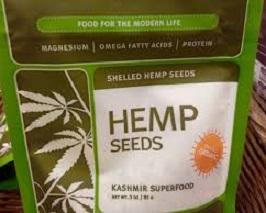
Green bag with white background and words Hemp Seeds and pictures of five leaf plants

Welcome to the anniversary of the Great Cannabis Comeback. 20 years ago it seemed industrial hemp’s eminence here in the state with the heart of it all seemed not so far away. A few years tops, advocates thought. The subject was in the news regularly, pop culture was catching on and products ranging from textiles to food and cosmetics were becoming mainstream. It wasn’t just a fad.
There was a big problem with the poll numbers though, with Ohio voters being a walloping 40 percent undecided. This resulted in the funding plan for the industrial hemp and medical use initiative going up in smoke. The ball had to be handed off to the people to whom it would matter the most: The farmers. This is what the politicians were asking for with any hopes of a legslative bill.  
Considering all plastics can be made from the cellulose and its seed more nutritious than a soybean, it shouldn’t be that hard of a position for them to advocate. It’s not marijuana.
In line with national strategy, gears shifted to convince the powers that be to allow universities to study the crop. Activists pie-in-the-sky visions of grandeur of mass fields everywhere sprouting up with all but a wave of a magic wand and a prompting of presto had to be put on the shelf.
A series of meetings with farmer groups were organized, a Canadian farmer came down to present the latest news straight from the forefront where they have been supplying North America’s demand. Two new economic feasibility studies were complete from North Dakota and Kentucky and all the right players were given copies. Cover letters were printed on hemp paper, courtesy of wholesalers, the Ohio Hempery, a thriving business integral to the cause. The Ohio Farmers Union added it to their agenda resulting in a resolution supporting alternative crops. All the tools were now in the hands of the primary stakeholders to take the issue on themselves.
Nothing happened. A proposed DEA ban on all industrial hemp products was not successful but was cause for dampened enthusiasm.
2014 became the most important year to date, gaining the most momentum with the passage of an industrial hemp clause in the federal Farm Bill, which, for the first time, legitimized research and a new wave to chalk up support dovetailed. None were had, with explanation being the need for the issue to actually be certified for the ballot in order to provide further consideration.
Other than official resolve to support alternative crops from the 1990’s, the same problems surfaced as before and was an attributing factor putting an end to the second attempt to place industrial hemp on the ballot. Nobody in the activist community tackled industrial hemp as a singular issue and always attached it to its therapeutic cousin. They are two different plants named for the same genus species.
Meanwhile other states made tremendous strides. 2017 was a huge year for hemp expansion. To date, 33 states have defined industrial hemp as distinct and removed barriers to its production. Taking immediate advantage of the research and pilot programs are Alabama, Arkansas, California, Colorado, Connecticut, Delaware, Florida, Hawaii, Illinois, Indiana, Kentucky, Maine, Maryland, Michigan, Minnesota, Montana, Nebraska, Nevada, New Hampshire, New York, North Carolina, North Dakota, Oregon, Pennsylvania, Rhode Island, South Carolina, Tennessee, Utah, Vermont, Virginia, Washington, West Virginia and Wyoming.
If Indiana, the most politically conservative place of all, can do it, certainly Ohio can. Someone must step up to the plate. Vote Hemp found that state licenses to cultivate hemp were issued to 1,424 farmers; and 32 universities conducted research. Votehemp.org is the best resource for the subject.
Widespread growth hasn’t happened because it is still prohibited by the federal government, and hemp farmers face logistical and legislative hurdles that hinder the full scale commercial cultivation to supply American consumers. Farmers rely on imported certified hemp seed from countries such as Canada and Italy, and the DEA has obstructed interstate commerce of U.S. grown and manufactured hemp seed oil and protein powder. This is why the cost is so seemingly expensive on store shelves. It needs more affordability.
The popularity of seed products has been driving the market but plastics, paper, building materials, hard bio-plastics for airplanes and car parts, energy efficient hempcrete, graphene used in super capacitator batteries and textiles are next. Ohio is the perfect place to grow, process and manufacture industrial hemp.
As this article is being published, a new well-funded full legal effort is being drafted that will include industrial hemp. 2018 can very well become the real year of the great cannabis comeback, to make this happen three key things are an absolute must. Education, education and education.
If interested in being involved with industrial hemp advocacy in Ohio, please email savehumancivilization@gmail.com

2018 The Year Hemp Assumes it’s Rightful Place on the Throne of Therapuetics

Source: ciitech.co.uk

2018 The Year Hemp Assumes it’s Rightful Place on the Throne of Therapuetics

Hemp boomed in 2017, with U.S. acreage devoted to the plant more than doubling to about 25,000 acres.
At least six states started industrial hemp programs, pushing the total number of hemp states to the mid-30s.
Hemp’s growth wasn’t limited to the United States.
Canada’s hemp growers learned in November that they’ll soon be allowed to process hemp flower for CBD – a decision that will unleash a huge new market opportunity.
And in Europe, hemp-derived cannabidiol products exploded alongside smokable hemp products.
The hemp boom can be explained in three easy letters – CBD. Agronomists report that hemp rich in cannabidiol can produce as much profit as an acre of corn. High-CBD flower is selling for more than $100 a pound.
And CBD products are sold in many states where medical marijuana is not. The World Anti-Doping Agency announced in September that it would remove CBD from the list of substances banned at the Olympics and other international sporting competitions. And the UN’s health agency, the Switzerland-based World Health Organization, said in December that CBD should not be a scheduled drug.
Markets are responding. Cannabis research firm Brightfield Group estimated that the U.S. market for hemp-derived CBD market hit $291 million in 2017 and will balloon to $1.65 billion by 2021 – an increase topping 500% in just four years.


Elixinol Global eyes new cannabis opportunities after raising $20 million

Source: proactiveinvestors.com.au

The company already manufactures and distributes hemp-based products in the U.S.

hemp food products

Elixinol Global Ltd (ASX:EXL) is the latest cannabis company to be admitted to the ASX and will commence trading from Monday, 8 January 2018.
The company has raised $20 million via an initial public offer of shares at $1.00 each.
Elixinol is already established in the U.S., where it manufactures and distributes industrial hemp-based nutraceuticals, dietary supplements and skincare products.
The company also owns Hemp Foods Australia, which was founded in 1999 and manufactures and distributes industrial hemp-derived products in Australia.
Elixinol’s strategy is to capitalise on the opportunities provided by being invested in a range of emerging cannabis related sectors including hemp, CBD (cannabidiol) nutraceuticals and wellness products.

New favourable cannabis regulation in Australia

Favourable legislative changes in Australia mean that Hemp Foods Australia is now permitted to sell hemp food products, offering the potential to expand distribution channels and grow its market.
In the medicinal cannabis sector, new legislation has been passed in Australia to enable the cultivation of cannabis for medicinal and related research purposes.
Earlier this week, the Australian federal government decided to allow export of medicinal cannabis in a bid to strengthen supply amid growing demand domestically and worldwide.

Elixinol US is an expert in CBD derived products

Subject to obtaining the requisite licences, Elixinol Australia can leverage Elixinol US’s expertise in extraction and processing of CBD derived products.
Each of the businesses within the Elixinol Group was co-founded by Paul Benhaim, a pioneer in the Australian industrial hemp sector.
Benhaim has over 25 years’ of experience in industrial hemp legislation, cultivation, manufacturing, production, sales and marketing in Europe, North America and Australasia.


Pennsylvania universities want to be at forefront of hemp

By Andrew Wagaman
Source: wisfarmer.com

WSF 1215 Hemp 5
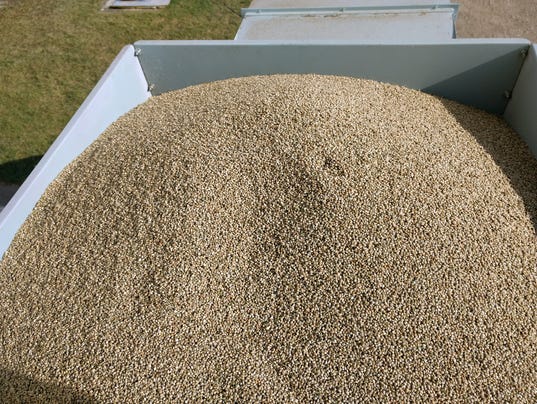
Industrial hemp seeds

If you believe the enthusiasts, industrial hemp could be the comeback story of our time - if only given a chance.
Potential uses abound for the plant, a primary cash crop as clothing, oil and rope from the time of Pennsylvania’s founding in 1681 to the mid-19th century but a casualty of the war on the cannabis plant. Among the new uses for the plant are beauty products, car parts, building materials and housing insulation, energy storage devices for electronics, pest resistance and weed suppression.
It does not get you high.
Now, as legal and cultural barriers begin to fall, advocates are confronting perhaps the most difficult hurdle: developing from scratch the institutions and supply chain to sustain a stable market.
Thanks to an expansion of a state-run hemp pilot program, Lehigh University, Thomas Jefferson University and the nonprofit Pennsylvania Hemp Industry Council are exploring a partnership aimed at becoming a locus for the nascent U.S. industry.
The research alliance — yet to be formalized, both universities emphasized — would seek a federal “center of excellence” designation, giving it first dibs on U.S. Department of Agriculture funding. It also seeks relationships with international companies that own the harvesting equipment and processing technology to develop a viable market.
It could deliver an economic boon for the Lehigh Valley and Southeastern Pennsylvania. Geoff Whaling, president of the Pennsylvania Hemp Industry Council, led a coalition last month to Europe, where it made a pitch to HempFlax, a Netherlands-based processing company with an eye on the U.S. market.
The company appreciated the holistic approach Lehigh and its partners are taking, said Cameron McCoy, Lehigh’s assistant vice president of economic engagement. Rather than merely selling equipment, HempFlax could gain from the alliance’s research and its relationship with existing manufacturers.
Whaling said the company needs at least 3,000 acres of hemp to make an investment worthwhile. He hopes to get commitments from regional farmers by the Jan. 19 deadline for the state pilot program to show that the alliance is more than talk.
Industrial hemp and marijuana come from the same fibrous cannabis plant, but hemp has a negligible amount of THC, the psychoactive substance that gets you high.
The market has grown despite legal constraints. Imports of hemp, seeds, and fibers were nearly $78.2 million in 2015, up from $5.6 million in 2005, according to industry estimates. Those imports contributed to U.S. retail sales of hemp products of nearly $600 million in 2015.
To understand the possible future of industrial hemp, consider the petroleum refinery, said Ronald Kander, dean of Jefferson’s Kanbar College of Design, Engineering and Commerce.
Refineries don’t process crude oil for a single use, such as gasoline; that wouldn’t be economically viable. Instead, crude oil is converted into many products. And investors need to calculate the time and resources to make a given product and the value it will create.
Likewise, before farmers commit to hemp farming, they need to know they can make money. That requires buyers.
Researchers must decide which applications make the most sense to develop, Kander said.
There are four key questions: Does the hemp-derived product outperform what’s currently used? Is it less expensive to produce? Is it more environmentally sustainable? Will the consumer look past hemp’s relationship to marijuana? Kander thinks you probably need two affirmative answers to make development worthwhile.
Jefferson launched the Lambert Center for the Study of Medicinal Cannabis and Hemp last year with to a donation from an Australian banker, who also brought the industrial hemp company Ecofibre to Kentucky. Jefferson considers its expertise in medicine and applied research harmonious with Lehigh’s engineering strengths. Both have supply-chain management programs.
State and federal restrictions still must change before the industry can thrive.
After the 2014 farm bill, the federal government has permitted growing hemp for research, and farmers can cultivate industrial hemp for commercial purposes in at least 20 states, according to the National Conference of State Legislatures.
Legal barriers remain. The federal Controlled Substances Act still classifies hemp under its definition of marijuana as a drug with no accepted medical use and a high potential for abuse. This complicates interstate commerce and blocks access to financial services.
But a bill in the U.S. House would exempt hemp from the act.

Cannabis in Kansas: A lost history uncovered

By
Source: agdaily.com

It’s common knowledge that government agencies and private companies influenced the prohibition of cannabis and industrial hemp. However, something many do not know is hemp was studied at great length in agriculturally-centric states such as Kansas. What better location to research crops than one of the largest remaining prairie ecosystems in the world?
Ironically, as one of the last places to abolish its prohibition, what ultimately matters most was who funded and guided those studies. Historical information I recently uncovered shows that institutional proof exists about the importance of industrial hemp, and why its reintroduction is crucial for a number of reasons.
Farmers care deeply about the environment, and decisions are based on markets, therefore understanding these lessons of our past are more important now than ever. For decades, America’s Heartland was a large contributor to the hemp industry. In fact, according to a state agriculture report, Kansas even ranked first in the U.S. for bushels per acre in 1863. When I was young, my father told me he participated in a project studying eradication methods of hemp in Riley County while earning his biology degree at Kansas State University during the 1970s. After searching for the report on and off for years, I finally found the work my father participated in, along with two others, in September 2017.
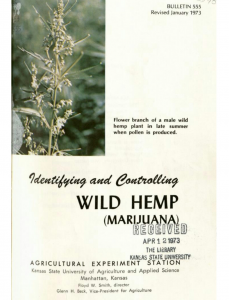
While citations can be found on the internet, full versions are restricted except by going through thousand-dollar paywalls requiring login information. After a challenging process, complete with archivists looking through original documents in a vault and sending them electronically, within a couple weeks I had one of the only (if not the first) digitized copies of “Identifying and Controlling Wild Hemp (Marijuana).”
What I found was that the reports helped legitimize the “war on drugs,” which led to the incarceration of millions of people, in addition to the use of taxpayer dollars for entering farmers’ lands to eradicate a plant. These efforts however, were not based on thoroughly vetted evidence. When looking closely, the research projects were funded by and benefited a crop protection and pharmaceutical manufacturer. The authors also gave acknowledgements to the state’s Marijuana Control Steering Committee. Plus the works originated from and referenced medical research, even though the intended purpose was ag-based.
Much of the wording reflected what the aforementioned influencers wanted to categorize the plants as: a single, weed-causing infestation that had to be eliminated (since they believed embracing it would impact their profits as well as industries such as cotton and wood paper). These conflicts of interest can no longer be ignored by environmentally conscious, farming communities: One of the most important and damaging of all findings claims a farmer could either practice deep plowing — which we know to be economically inefficient and damaging to soil health — or farmers could use chemical products “without disturbance of the soil profile.” A final and crucial finding admits the varieties of cannabis that grow throughout Kansas are not only low in potency, but they do not fluctuate in cannabinoid content. This means authorities knew at the time of its ratification there was not an objective or scientific justification to outlaw hemp based on the sole argument that it was thought to be a drug.
Thanks to modern genetics, it is becoming more commonly accepted that cannabis cultivated for medicinal purposes cannot be grown anywhere near industrial hemp, since cross-pollination is proven to always result in decreased potency. Variations between fiber and “drug” types come in many forms, ranging from physical appearance and time of harvest, to expression of certain traits. Taking into account limitations during the early years of cannabis research and biases, this data allows us to rediscover the importance of scientific integrity. Together we have the collective responsibility to identify and accept inconsistencies we find, and prevent the suppression of information that does not result in beneficial policies for our citizens or
environment.
Farmers know industrial hemp grows well in many climates and requires fewer overall resources compared to other commodities like corn and soybean. Even as a rotational option to improve successive yields of other crops, hemp is proven to help in multiple aspects. Its cultivation promotes ways of regenerative and sustainable agriculture that are desperately needed, especially in places like Kansas, where irrigation has taken its toll. Simultaneously, our soil and ecosystems need remediation. Through embracing modern science to reduce harm and improve our environment, farmers are in a unique position to right the wrongs of the past and help limit unfounded restrictions that hold back progress among all populations.

An extended version of this article first appeared here on Medium.com.

What Sessions Move on Marijuana Means for Hemp, CBD

Source: wholefoodsmagazine.com

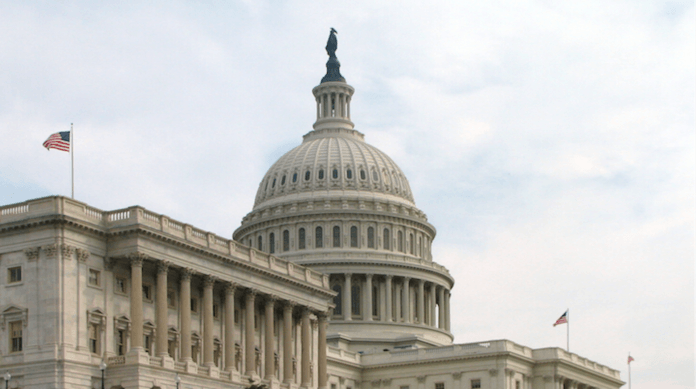
Capitol Hill

Attorney General Jeff Sessions’ decision to rescind the 2013 Obama administration memo saying it would not stand in the way of states that legalize marijuana may scare investors, but should not affect hemp-based businesses or the retailers that sell their products.
That’s the opinion of Sean Murphy, founder and publisher of Hemp Business Journal.
“CNN calls it a seismic shift—I don’t think it is—but if it is then it’s only a seismic shift for marijuana companies—not hemp companies,” Murphy said.
“If a company is a ‘hemp-derived CBD’ company — as both CV Sciences and CW Hemp are—then it should not truly affect them much from a business/operative perspective but it may cause their investors to get jittery/nervous because they don’t understand that the Cole Memo applies to marijuana companies—not hemp companies,” Murphy said.
The Cole Memo was originally drafted by former US Attorney General James M. Cole and de-prioritized the use of funds to enforce cannabis prohibition under the Controlled Substances Act towards a more hands-off approach.
For hemp companies, the more impactful legal item in this realm of regulations and oversight is the DEA New Drug Code for Marihuana extracts. Oral Arguments between HIA/Hoban Law vs the DEA are set for February.
The ruling from this will have a more direct impact as it relates specifically to DEA stepping its regulatory control from the marijuana regulatory environment into the hemp regulatory environment, Murphy noted.
One Wall Street analyst downplayed the impact of the decision, saying the legalization movement won’t be affected, CNBC reported.
“We don’t view this as terribly disruptive, as enforcement decisions will seemingly be left to state-level AG’s,” Cowen analyst Vivien Azer wrote Thursday. “In legal adult use cannabis states, given the tax revenue generation, we believe local governments and AG’s are largely on-board with legalization.”
Colorado was among the first to legalize marijuana and has raised nearly $200 million in pot revenue last year alone. Just this week, recreational use of marijuana became legal in California.

Thursday, January 4, 2018

Legal pot comes to California – thank Jack

By Paul Danish
Source: boulderweekly.com


Jack Herer (left) with fellow activist Dana Beal at a marijuana festival in 1989.

On Monday, California became the sixth state in which recreational marijuana is sold legally — with the same absence of fanfare that marked the start of legal sales in Colorado four years ago.
Good tempered crowds lined up at the few dozen dispensaries that opened on New Year’s Day to make the first buys in what is expected to be a $7 billion-plus market by 2020.
As the San Jose Mercury News reported, “The sky didn’t fall. Stoned zombies didn’t crash cars. U.S. Attorney General Jeff Sessions didn’t jump out of the bushes with handcuffs.”
The relaxed normality of the day was the perfect counter-point to the decades of hysterical viciousness that have defined the war on marijuana. In California it had been going on for more than a century; the state first banned pot in 1913.
Legal marijuana in California is going to be Huge. California is the most populous state in the country with some 39.5 million people, representing about 12 percent of the country’s population.
With the start of legal sales in California, the number of Americans living in states where they can buy recreational pot legally more than doubled overnight, to close to 60 million.
(Eight states have legalized recreational sales, but two, Massachusetts and Maine haven’t let them start yet.)
Statewide, more than 400 cannabis businesses currently hold licenses (mostly medical), with an additional 1,800 license applications (mostly recreational) awaiting processing. About 165 cultivation licenses have also been issued, with more expected.
In Berkeley, Mayor Jesse Arreguin and state Senator Nancy Skinner were on hand for a ribbon-cutting ceremony at a dispensary.
It’s a shame that Jack Herer didn’t live to see it.
Herer, who died in 2010, was a Southern California head shop owner who devoted his life to getting marijuana legalized. In 1985, he wrote a book titled The Emperor Wears No Clothes, which was a Whole Earth Catalog of marijuana and hemp lore.
The book contained a trove of information on the history of marijuana and hemp, the medical and economic benefits of cannabis, the conspiracy that made marijuana illegal and the breath-taking damage that marijuana prohibition had done, and a clarion call for re-legalization. 
It has now gone through 12 editions, sold more than 600,000 copies and is arguably the single most influential book in the struggle to get marijuana legalized.
The late New York Senator Daniel Patrick Moynihan once famously said, “You are entitled to your own opinion, but you are not entitled to your own facts.” Jack’s book un-earthed the facts about cannabis and hemp that vermin like Harry Anslinger, William Randolph Hearst and their successors had successfully suppressed for two generations. It really did change the prevailing paradigm as far as marijuana was concerned.
In addition to publishing The Emperor, as he called his book, Herer was the dean of marijuana legalization activists. In 1974, when he and his friend Edwin “Captain Ed” M. Adair III were 34 years old, they swore an oath “to work every day to legalize marijuana and get all pot prisoners out of jail, until we were dead, marijuana was legal, or we could quit when we turned 84.”
Herer was true to his oath and worked for legalization until the day he died. He traveled the country, gave scores of speeches and interviews and even ran for president twice,as the Grassroots Party candidate, (getting 3,875 votes in 1992).
I met Jack two or three times when he spoke in Colorado. He genuinely believed that hemp could save the world by being an alternative source of food, fiber, fuel and medicine.
During one of his speeches at CU, he cited anecdotal evidence and obscure studies that indicated marijuana had both anti-cancer and anti-arthritic properties — claims that were considered over-the-top by “serious people” at the time. I had never heard them before and started chasing them down myself. To my surprise, they checked out. Today a growing body of rigorous research is validating them.
In retrospect, Herer was the Thomas Paine of marijuana. The Emperor was the Common Sense of the marijuana revolution. Like Paine, Herer was passionate, idiosyncratic and relentless.
When legal sales began in California at 12:01 a.m. on New Year’s Day, he should have been at the head of the line.