Wednesday, January 3, 2018

Illinois Farm Bureau Plans Another Push to Legalize Hemp

Source: wsiu.org

Images

Making it legal to raise industrial hemp has been a topic of discussion in Illinois for years. Wisconsin is the most recent state to allow farmers to grow it.  Will Illinois be next?
Back in 2014, the federal farm bill authorized states to grow hemp for research purposes… and effective in 2015, Illinois allowed specific state universities to do so.
But it’s still not legal for farmers to grow… whether it’s for research or another cash crop… and it’s not for a lack of trying by the Illinois Farm Bureau says Bill Bodine. 
“For farmers it’s an opportunity to possibly diversify into a new crop. It’s something different than maybe the traditional crops you see grown in Illinois. It would be an opportunity for them to diversify and possibly make some new income off a new crop.”
He says to  expect another try in 2018.
“We’re likely to see legislation introduced that would legalize industrial hemp production in the state. That legislation is something the Illinois Farm Bureau will be supportive of.”
Hemp is related to cannabis, but contains low levels of THC, the mind-altering component in marijuana.  It’s still on the Drug Enforcement Association’s controlled substance list, although it has been used for centuries to make products like rope, clothing and more.  

True Leaf Exercises Option to Purchase 40-acre Site in Lumby, B.C. to Build Cannabis Production Facility

Press release
Source: businessinsider.com

VERNON, BC--(Marketwired - January 02, 2018) - True Leaf Medicine International Ltd. ("True Leaf") (CSE: MJ)(FRANKFURT: TLA)(OTCQB: TRLFF), has exercised its option to purchase 40 acres of land that encompasses its facility in Lumby, British Columbia, Canada, through its wholly owned subsidiary True Leaf Medicine Inc.
The option was exercised on December 22, 2017 at a total cost of $3.3 million CAD. An up-front fee of $100,000 CAD was paid to the vendor for the purpose of securing the option. True Leaf now has 30 days from that date to complete the purchase.
On November 30, 2017, True Leaf launched its Regulation A+ offering to raise $10 million CAD that was qualified by the Securities and Exchange Commission (SEC). This offering enables underwriters to solicit orders from the general public in addition to traditional accredited investors and institutional investors. The company will use a portion of the funds raised from the offering to build phase one of the True Leaf facility. Boustead Securities, LLC is serving as lead underwriter for the offering.
True Leaf's application to produce and distribute cannabis under Health Canada's Access to Cannabis for Medical Purposes Regulations (ACMPR) has completed the security clearance stage, and the company has permission to build a production facility.
True Leaf anticipates that the first phase of the build will include annual production of 2,500 kilograms of dried cannabis once the facility passes Health Canada's inspection and the company becomes a licensed producer.
Now that the option has been exercised, True Leaf's ownership of the land will allow it to go ahead with plans to demolish an existing building to make way for phase one: the construction of a 16,000 square foot hydroponic grow building and a 9,000 square foot building housing offices, extraction facility, laboratory and packaging areas.
The company expects site and foundation work to begin in the coming weeks to be completed by summer 2018. The Government of Canada is committed to legalizing marijuana for recreational purposes by July 2018.
Commenting on this latest milestone, True Leaf CEO Darcy Bomford said, "In addition to purchasing the 40 acres of land to build our facility, the proceeds of the Regulation A+ offering will also be used to acquire the best talent and technology available to help us fulfill our commitment to producing premium products."
True Leaf benefits from the support expressed for the company's license submission by the Mayor of Lumby, Kevin Acton, and the community. The company expects to become a significant employer in Lumby, a hard-hit logging community of 1,700 in the northeast corner of the Okanagan Valley in southern British Columbia.
About True Leaf
Founded in 2013, True Leaf has two main operating divisions: True Leaf Medicine Inc. and True Leaf Pet Inc. The Company's goal is to provide federally-approved, safe and effective cannabis products that will be sold across Canada and the United States. True Leaf Medicine Inc. was launched in July 2013 to become a licensed producer of medicinal cannabis for the Canadian market. True Leaf Medicine Inc. has been given approval by Health Canada to build its grow facility and will be subject to a Health Canada security inspection upon completion to allow for the cultivation, manufacture, and distribution of cannabis products. Currently, True Leaf does not have a license to produce cannabis.
Established in 2015, True Leaf Pet Inc. markets safe, hemp-focused products for the pet industry. The Company launched the True Hemp™ pet supplement line in Canada, the United States, and Europe, becoming one of the first hemp-based pet product lines to be marketed worldwide. True Hemp™ North American products are free of CBD and THC, making them the first federally legal products to be marketed in Canada and the United States.

Industry Experts Say Most Farmers Still Face Barriers To Growing Industrial Hemp

By Hope Kirwan
Source: wpr.org

industrial hemp harvest
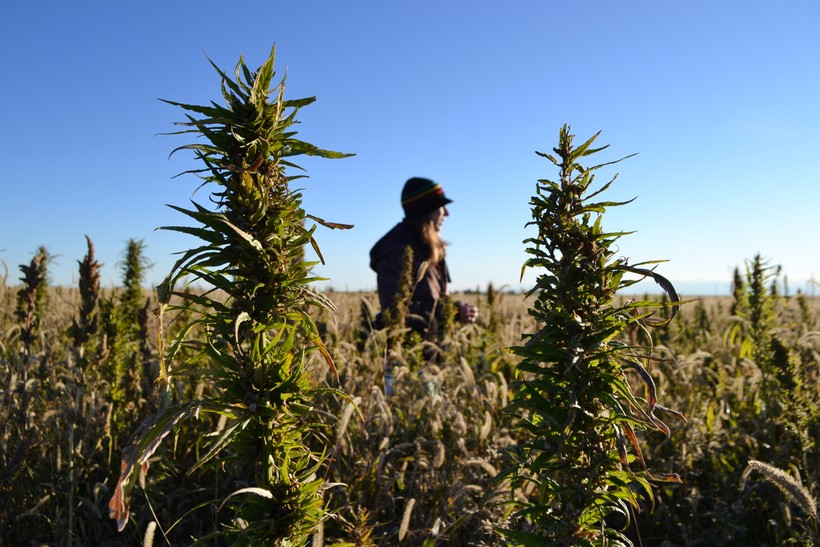
A volunteer walks through a hemp field at a farm in Springfield, Colo. on Oct. 5, 2013, during the first known harvest of industrial hemp in the U.S. since the 1950s. P. Solomon Banda/AP Photo

While The Ban Has Been Lifted, Hemp Industry Faces Unknowns Heading Into 2018 Season

As Wisconsin farmers start planning for next year's growing season, industrial hemp is an option for the first time since lawmakers lifted a ban on the crop this fall.
But even if farmers are interested in growing hemp, it may not be as simple as planting and harvesting it for most producers next year.
"Before we plant it, we’ve got to have a market for it," said Adam Kuzcer, a farmer who is interested in growing hemp on his farm near Pulaski. "There will definitely be people trying to get on it but it's going to be a limited number (based on) what the processor will be willing to give out contracts for."
Kuzcer, who is also on the board of directors for the Wisconsin Farm Bureau, said farmers need to have a contract before growing hemp because they can't count on selling their crop to the closest grain elevator. At least not in 2018.
"If it starts to be a bigger crop, we can develop more infrastructure. But this first year is definitely going to be experimental," Kuzcer said.
Despite this uncertainty, Ken Anderson, president of the seed company Legacy Hemp, estimates 50 farmers will grow hemp grain in Wisconsin in 2018.
Anderson said growing hemp is similar to other popular grains and requires the same equipment.
"The difference is it's profitable," Anderson said. "A crop that is not subsidized and profitable, that is kind of an American agriculture anomaly."
Anderson said his company plans to build a processing facility in the state next year.
But whether or not farmers are planting hemp in the spring will largely depend on the state Department of Agriculture, Trade and Consumer Protection.
DATCP has until March to put in place regulations for the hemp industry.
Allison Pratt-Szeliga, researcher from the Michael Fields Agricultural Institute, said it’s likely the state will create an application process and require farmers to obtain hemp seeds through DATCP.
"I suppose technically it's possible that folks could be planting in spring," Pratt-Szeliga said. "If the regulations are out and the application process is in place and people go through that process and are approved and are able to purchase seed within our planting windows. So there might be a little bit of a rush."
Pratt-Szeliga said there are still a lot of unknowns, but she expects it will be easier for farmers to participate in 2019.

Tuesday, January 2, 2018

Sydney-based Highland Hemp moves production off-island

By Chris Shannon
Source: capebretonpost.com


Quebec hemp crop yields 963 kg of cannabidiol oil for German customer

SYDNEY — A hemp manufacturing business originally set up in Sydney two years ago with plans to grow hemp seeds locally has turned to Quebec to cultivate crops as the company significantly alters its business strategy.
Highland Hemp Manufacturing and Exports is moving away from the use of hemp seeds as health food to producing cannabidiol (CBD) oil from the hemp plant for use by commercial customers.
Among its uses, the oil has been proven to manage chronic pain and is being studied for its effects on people suffering from seizures.
When Highland Hemp was awarded an industrial hemp commercial licence from Health Canada in March 2016 to produce hemp seed oil and related products, it was the belief of Sydney businessman Parker Rudderham that the best use of the crop was to harvest it, then cold-press it for its oil, which would be sold in capsules or whole oil in overseas markets.
Early on, the hemp crop was cultivated on two acres of land at the former coke ovens site near Open Hearth Park in Sydney, and on 60 acres in an undisclosed location just outside of Sydney.
It was sold as a health food product to customers for retail sale in Europe. A total of 22,000 bottles of hemp seed oil were shipped to the continent late last year.
However, Rudderham, who is not only the president and CEO of Highland Hemp but also owns and operates the Montreal-based Pharmacy Wholesale Services Inc., said he was looking at the best way to optimize growth in a sector that already has substantial worldwide competition.
Rudderham announced in February Highland Hemp had secured a large-scale $14-million order of CBD oil to an unnamed Brazilian pharmaceutical company. With that order now complete, a second order of CBD oil with a German company was assured in the fall.
He said it’s been a struggle to keep up with the demand, even as Rudderham has hired an independent contractor and rented a warehouse and is using a nearly 1,000-acre hemp crop in La Prairie, Que., located south of Montreal to fulfil the Brazilian order and now the contract with the German firm, which he also didn’t name due to proprietary business practices.
“Part of it has gone to Germany and we have another shipment that’s going … sometime in January to fulfil our purchase order,” he said in an interview last week.
“Quite frankly, as a business decision, there’s a lot more money and a lot more demand for the CBD oil.”
This year Highland Hemp has produced 963 kilograms of CBD oil for its German client. Rudderham said it’s sold between $5,000 and $8,000 per kilogram based on the quality of the oil.
The CBD oil is cultivated from a different strain of the hemp plant than the hemp seed. It does not contain the psychoactive component tetrahydrocannabinol (THC) people associate with cannabis use to reach that euphoric “high.”
Hemp has lower concentrations of THC and higher concentrations of CBD, which decreases or eliminates its psychoactive effects.
Commercial production including cultivation of industrial hemp has been permitted in Canada since 1998 under licences issued by Health Canada.
The only presence Highland Hemp now has in Cape Breton is Rudderham’s office on Stable Drive across from Open Hearth Park. There are no full-time employees working out of his office. The company did grow a 46-acre crop in Inverness County last year to clear up back orders for the hemp seed oil product.
Meeting customer demand specifically with the CBD oil has proven to be a steep learning curve, he said.
“We actually had to buy some CBD oil from other growers to fulfil our orders.”
Rudderham said it’s difficult to predict when his company may restart cultivation of hemp in Cape Breton.
“We have nothing in the pipeline in terms of CBD oil production for Cape Breton in this coming year — not because we don’t want to, just because we’ve been so darn busy to try to get this thing off the ground,” he said.

Scotland in line for multi-million pound boost from new cannabis industry

By Alan Simpson
Source: heraldscotland.com

Scotland is set for a multi-million pound boon from the cannabis industry after a worldwide health agency confirmed that the drug provides medicinal relief for a range of ailments.

SCOTLAND is set for a multi-million pound boon from the cannabis industry after a worldwide health agency confirmed that the drug provides medicinal relief for a range of ailments.
Researchers have examined the health properties of Cannabidiol (CBD) – which is the non-psychoactive ingredient in marijuana – and ruled that there is now evidence to support claims it may help treat epilepsy and “a number of other medical conditions”.
Available legally on the open market, CBD is often administered in the form of oils, drops or capsules.
Last month, a World Health Organisation report revealed that CBD oils may help successfully treat symptoms relating to Alzheimer’s Disease, Parkinson’s Disease, MS, pain, anxiety, depression, cancer and diabetic complications.
Furthermore, research suggests that Cannabidiol oil – whose legal classification will be debated next year in the Scottish Parliament – may be a successful an anti-inflammatory as well as encouraging the release and uptake of dopamine and serotonin.
Now, cannabis oil producers in Scotland believe the WHO ruling will provide a fillip to the UK industry, which already serves a 250,000-strong community, according to the Cannabis Trades Association UK.
David Lewington, of CDB oil supplier Scothemp, based in West Lothian, said the Scottish farmers had become interested in large-scale cultivation of hemp from which the ‘medicinal’ oil can be produced.
“Several farmers are in talks about growing hemp but there is still a reputational drawback that puts many off,” he said. “I believe that would change if the health benefits were accepted and the products licensed as such.”
“We are a bit behind countries such as the USA and Australia at the moment, but the Medicines and Healthcare products Regulatory Agency are currently carrying out their own investigation so they could change their current guidance.
“The Scottish parliament is also ahead of the UK on the subject and after we made representations to Holyrood were are hopeful the Scottish Government will legislate accordingly.”
Speaking about the WHO ruling, Mr Lewington said: “This is potentially very good news and could see Scotland become a major producer of hemp based products.
“The industry already turns over £50million and supports more than 200 jobs but if we are allowed to market the products as having medicinal benefits then the impact could be huge.”
Tony Calamita, of London-based supplier Love Hemp said: “The cannabis oil market has exploded in the last 12 months and we are seeing an increasing demand for our products.
“We welcome the WHO report and are not surprised by its findings.”
According to the WHO “cannabidiol should not be scheduled for international control on the basis of current evidence, and that a fuller review will be carried out next year, when other cannabinoids are discussed.”
The organisation’s Expert Committee on Drug Dependence (ECDD) found “no evidence of public health related problems associated with the use of pure CBD.”
HeraldScotland:
Drug can be used to ease the symptons for a variety of conditions
HERE is how the CBD is being used in medicine worldwide:
Multiple Sclerosis
This is the only condition for which cannabis can be used legally in the UK. MS sufferers have been able to get Sativex – an oral spray containing the drug – which has only been prescribed by a handful of doctors due to its cost since 2010. It started being trialled in hospitals a year later.
Users say cannabis helps control painful tightening muscle spasms, chronic pain and, in certain cases, can help them keep mobile.
Glaucoma
Cannabis can treat and prevent the eye disease that increases pressure in the eyeball, damaging the optic nerve. Smoking the drug can decrease pressure inside the eye and help prevent blindness, says the National Eye Institute.
Epilepsy
Stories of cannabis helping seizures have been around for 150 years, but a recent study by New York University’s Langone Medical Centre found a third of patients with a treatment resistant epilepsy had fewer seizures when they were given an extract of 99 per cent cannabidiol alongside their medication. Since Canada’s new drug rules were brought in last year, cannabis can now be used in hospitals for epilepsy sufferers.
Arthritis
Cannabis has been shown to alleviate pain and reduce inflammation in arthritis sufferers. A Nottingham University study, in collaboration with two US universities, found cannabinoid can help reduce pain in arthritis suffers without activating any psychological or pharmaceutical effects.
Alzheimer’s Disease
A 2014 study by Professor Gary Wenk, of Ohio State University, showed moderate use of cannabis can help delay the onset and progression of Alzheimer’s and other neurodegenerative conditions.
He said: “Using low doses for prolonged periods of time at some point in your life, possibly when you’re middle-aged to late middle-aged, is probably going to slow the onset or development of dementia – to the point where you’ll most likely die of old age before you get Alzheimer’s.”
Anxiety Disorders
Deryn Blackwell was initially given cannabis to treat anxiety. Researchers at Harvard Medical School found the drug can cut anxiety in small doses, but excessive use can cause paranoia. Cannabis is legally used to treat Post Traumatic Stress Disorder in some US states.
Inflammatory Bowel Disease
Sufferers from inflammatory bowel diseases, such as Crohn’s and ulcerative colitis, could benefit from cannabis use.
Nottingham University found its chemicals including cannabidiol and tetrahydro-cannabinol, interact with cells that play an important role in gut function and immune responses.
Stroke Recovery
Studies appear to show the drug can reduce the size of the brain area affected by a stroke and other neurological conditions, like concussion.

New Research Indicates Cannabidiol A Potential Schizophrenia Therapy

By Gillian Jalimnson
Source: hempgazette.com

CBD in schizophrenia treatment

A King’s College London clinical trial involving the cannabis compound CBD has shown it may be beneficial in treating psychosis in schizophrenia.
While cannabis can pose a risk to people with schizophrenia, this is thought to be primarily due to the effects tetrahydrocannabinol (THC), the psychoactive component that can induce paranoia, anxiety and trigger psychosis. However, another cannabinoid called cannabidiol (CBD), which can also be extracted from industrial hemp, appears to have opposite effects.
In a King’s College London trial examining the safety and effectiveness of CBD in patients with schizophrenia., 88 patients with psychosis were administered either CBD or a placebo for six weeks in addition to any existing antipsychotic medication.
Results indicate patients treated with CBD experienced a lower level of psychotic symptoms than the placebo group and these patients were more likely to have been considered “improved” by their psychiatrist.
Additionally, there was indication of improvement in cognitive performance and general function – and all this without any significant side effects. The lack of side effects was an important finding as some patients are resistant to taking conventional medication due to side effects that can be severe.
The researchers state the positive effects of CBD don’t appear to be dependent on dopamine receptor antagonism and may represent a new class of treatment for schizophrenia.
The new research, which was the first placebo controlled trial of cannabidiol in patients suffering psychosis, was published in the American Journal of Psychiatry.
“The next steps are to carry out larger trials of CBD to confirm these initial promising findings, and to assess the effectiveness of CBD in other types of patient,” said Professor Philip McGuire, lead author of the study.
Professor McGuire’s team has been funded by the National Institute for Health Research (NIHR) to conduct a UK-wide trial of cannabidiol in people at high risk of developing psychosis.
Previous research has also indicated the potential for cannabidiol in treating psychosis, and earlier this year we reported on Australian research suggesting cannabidiol could help alleviate cognitive impairment in patients with schizophrenia.
In June, neuroscientists at Indiana University also found cannabidiol (CBD) could provide protection against some of the potential negative effects of THC.

Mainers Can Again Apply to Grow Industrial Hemp

Source: usnews.com

Related image

Mainers who want to grow industrial hemp can apply for the 2018 growing season.
The Maine Department of Agriculture, Conservation and Forestry acknowledges that would-be hemp growers face barriers that make it tricky to grow the crop legally.
Maine has allowed industrial hemp since 2016. But federal law requires a permit for the cannabis plant, regardless of whether it's grown for fiber or marijuana.
States and higher education institutions can seek permits for hemp grown for research purposes. But Maine's agriculture department doesn't plan to apply for such a permit, and isn't aware of universities seeking a permit.
Maine law also requires industrial hemp growers to certify their seed source.
Despite such barriers, the department says it signed 33 agreements with hemp growers this year, up from two in 2016.