Friday, December 1, 2017

13 Reasons why Industrial Hemp Will be Part of Industry 4.0

By Juliet Childers
Source: edgylabs.com

Hemp has long been plagued by the stigma attached to the female strand of the plant that produces a popular psychoactive substance, but the hemp fiber that is primarily gathered from the male plant is incredibly strong and useful.

While it is a strain of Cannabis Sativa, hemp was one of the first plants spun into fiber almost 10,000 years ago. Now, along with other compounds found in high concentrations of the flowers of the female plant, like CBDs, it has many industrial and medicinal applications. Hemp also happens to be great for the economy and environment.
Here is a quick rundown of 13 reasons why industrial hemp will be part of industry 4.0

image of textiles for article 13 Reasons why Industrial Hemp Will be Part of Industry 4.0
Engin_Akyurt | Pixabay

1. Textiles (Including Clothing)

This is an obvious option for this list. Clothes made of industrial hemp aren’t a new concept, but textiles using hemp is a bit newer. It isn’t just about hemp fabrics vs. other more common textiles such as cotton. It is about the economics of production.
Hemp needs about half the amount of water cotton needs to produce 200 – 250% more yield than cotton can produce. Cotton relies on pesticides while hemp does not. Hemp is pest resistant naturally and its dense foliage makes it difficult for weeds to sprout. The deep roots help maintain soil quality, too.

2. Animal Feed

The second item on the list of 13 reasons why industrial hemp will be part of industry 4.0 is related to livestock.
image of cows and livestock for article 13 Reasons why Industrial Hemp Will be Part of Industry 4.0Capri23auto | Pixabay
As early as 2014, the government gave farmers permission to grow hemp in limited quantities. In February of this year, the Colorado Senatepassed a bill allowing a study to measure the possibilities of hemp use in animal feed.
The bill ended up becoming law in March. While Colorado is among one of the first states to test this, hemp used in animal feed has been a bit of an open secret.
As early as 2004, cattle farmers such as David Wise utilized hemp in their cattle feed. His biggest complaint at the time was that he couldn’t grow his own hemp.
One more way hemp could help the economy: giving farmers another cash crop and a more self-sustaining growing model.

3. Food for Human Consumption

Hemp seeds are very nutritious. One seed contains 25% protein and more omega-3 oils than walnuts. Not only could the oil be a dietary supplement, but you can add hemp leaves to your salads, too.
While cultivation of industrial hemp is limited thanks to the conflation of hemp with marijuana, you can find guides on how best to incorporate hemp into your diet.
image of hemp seeds for article 13 Reasons why Industrial Hemp Will be Part of Industry 4.0ulleo | Pixabay

4. Beverages

You might be familiar with hemp used to produce hemp milk as an alternative to dairy. But hemp can be used for less practical beverages, too.
Not only can hemp be distilled into mostly any alcoholic beverage? Hemp and Hops are what you would call “sister species” derived from the family Cannabinaceae. Due to its hardy and quick grow cycle, hemp beer is a no-brainer. But you can make any of the following beverages using hemp:
  • Cider
  • Rum
  • Vodka
  • Wine
  • Fruit brandy
You can even make iced tea with hemp. Check out this list for a more comprehensive breakdown of hemp beverages you can get right now. Here’s a tip though: you won’t derive any extrasensory experiences outside normal beverages with the hemp versions.

5. Fuel

One of the more unexpected items on our list of 13 reasons why industrial hemp will be part of industry 4.0 is hemp as a biofuel.
Biofuels, as a concept, have been around since 1895 when Rudolf Diesel used peanut oil to power a diesel engine. Henry Ford even backed the use of ethanol. Hemp oil is among the contenders for biofuel use.
Again, due to rapid and robust grow cycles, hemp makes perfect sense as a super crop. But many allege that, due to its reputation and lack of widespread cultivation, hemp is not an option in the biofuel industry.
Despite this setback, people have endeavored to showcase hemp’s value as a biofuel and economic value in creating jobs. Some took it a step further and made cars out of hemp, as in the video above.

Image result for hempcrete
Hans | Pixabay

6. Building Materials and Insulation

In the search for better materials after the tragedy of Hurricane Katrina in 2005, builders wanted better materials. No one expected that solution to be hemp, but it is toxin free, virtually fireproof, and pest resistant.
One of the biggest inhibitors beyond the misconception that hemp is psychoactive. Pro-tip: it is NOT.
As a building material, its status is as an unknown. Tim Callahan, a North Carolinaarchitect, told the New York Times: “If you show them two-by-fours filled with fiberglass, they know what they’re dealing with, but you mention hemp, and they scratch their heads.”
Due to its sustainability and other virtues, however, hemp has made its way into the building industry. Companies such as American Lime Technology and Black Mountainoffer hemp alternatives. Beyond that, there’s also hempcrete.
image of Bioplastic Feedstock Alliance for article 13 Reasons why Industrial Hemp Will be Part of Industry 4.0Bioplastic Feedstock Alliance

7. Plastic Alternatives

Humans are aware of the harmful environmental and biological effects of most plastics. While increasing recycling efforts is a great start to amending this issue, hemp could be a solution, too.
Hemp ameliorates the lack of degradation, the leeching of chemicals, and other factors of plastic. Hemp plastic can be molding into almost any shape, injected, or even used as a resin. It is a natural fit in the world of bioplastics.
Thanks to its aforementioned growing capabilities and economic impact, hemp is also a natural fit for Industry 4.0.

image of Fukushima for article 13 Reasons why Industrial Hemp Will be Part of Industry 4.0
Greg Webb | IAEA

8. Chemical Cleanup

Cleaning up nuclear disasters such as Chernobyl or the Fukushima Power Plant leaks require unique tactics. Hemp presents one such unique solution in how it can recover the soil in affected areas. The process, known as phytoremediation, uses live plants to clean up existing radiation.
Due to hemp’s quick growth cycle and toxin resistance, it is a natural solution to these human-created problems. Some suggest that hemp could also be useful in cleaning up oil spills by absorbing cadmium.
Speaking of hemp’s soil benefits:
image of soil for article 13 Reasons why Industrial Hemp Will be Part of Industry 4.0terimakasih0

9. Soil Aeration

Soil aeration is number 9 on the list of 13 reasons why industrial hemp will be part of industry 4.0. Hemp features deep roots. These combined with the natural process of growing helps to aerate the soil with carbon dioxide deposits.
Due to this feature, a new crop can be planted immediately after hemp harvest. There is no need to leave the ground fallow.
Since hemp also grows in a variety of soil types and climates, this could have huge implications for farming on a global scale.
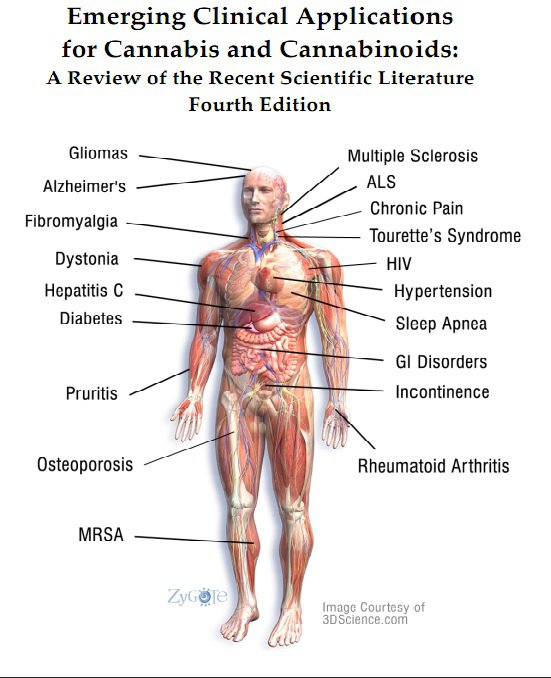
Image result for hemp medicine

10. Medicinal Uses

Here at Edgy Labs, we have previously covered the medical benefits of something known as CBD or cannabidiol. Not only can it help heal bone fractures as we covered, it can be better than migraine medicine for headaches.
THC is the cannabinoid found in high concentrations in the female Cannabis sativa plants that gets you high. Hemp typically refers to the male plant that has significantly lower concentrations of cannabinoids. The male plant only has .2 – .3% THC, but can have up to a 20% level of CBD. Combined with its many other benefits, you can see why this multitasking super crop fits in an Industry 4.0 future.

Image result for hemp paper

11. Paper

Hemp paper is another obvious item on this list of 13 reasons why industrial hemp will be part of industry 4.0. Though it has been around for close to 2,000 years, hemp paper only comprises .05% of the paper industry. It takes 12 trees to make one ton of tree paper.
Americans use roughly 700 pounds of paper or paper products every year. That’s roughly two-thirds of a ton of paper per person per year — in only America.
While hemp paper doesn’t need to replace tree paper, it could present a solution to the harvesting of so many trees for paper product annually.
It could also cut down on energy use in the paper industry (which is the third highest energy use industry). Due to dated processing and manufacturing techniques, however, hemp pump is still more expensive than tree pulp.
If the processes were updated, what would the figures look like?
image of hemp organic lipstick for article 13 Reasons why Industrial Hemp Will be Part of Industry 4.0Hemp Organic Lipstick | Pure Body Solutions

12. Cosmetics

Cruelty-free brands such as Cover FX and Josie Maran are all the rage in 2017. Vegan lines such as Pacifica are also popular. As mentioned earlier in this article, hemp oil has numerous uses. One of the most recent ones is in skincare and cosmetics.
You can find cheeky listicles about “needing weed in your routine”, but there are legitimate benefits to using hemp. It is is a more sustainable and conscious way of garnering better skin and fun makeup.
Products range from entire lines with oils, shampoos, and more to lipsticks, too. You can even get a perfume using cannabis accord. Claimed benefits include anti-aging, acne reduction, moisturization, and more.
image of hemp oil for wood varnish for article 13 Reasons why Industrial Hemp Will be Part of Industry 4.0Miss Mustard See | YouTube

13. Wood Stain & Varnish

The final item of our list of 13 reasons why industrial hemp will be part of industry 4.0 is wood stains and varnish. This process can include toxic chemicals such as polyurethane. As we move toward a greener and more sustainable future, hemp oil is a great option.
It is 100% natural and offers a decent array of color finishes. It is also entirely food safe, so you could even use it on a cutting board.


Welcome, Wisconsin: State joins hemp farming ranks

Source: thecannabist.co

Image result for wisconsin hemp

Republican Gov. Scott Walker has quietly signed a bill that allows Wisconsin farmers to grow industrial hemp.

Walker signed the bill Thursday.
The bill passed the Legislature unanimously. The measure’s sponsor, Republican Rep. Jesse Kremer, tweeted Thursday that the bill will make Wisconsin a leader in hemp production. His tweet included the hashtag “AmericasHempland.”
At least 30 other states have legalized hemp farming. Supporters say hemp has a wide range of uses and legalizing it gives farmers another profitable crop.
Under the new law, hemp plants couldn’t contain more than 0.3 percent THC. Prospective farmers with drug convictionswould not be eligible for state-issued licenses to grow the crop.

Walker signs bill legalizing hemp farming in Wisconsin

Source: startribune.com

Republican Gov. Scott Walker has signed a bill that allows Wisconsin farmers to grow industrial hemp.
Walker signed the bill Thursday.
The bill passed the Legislature unanimously. The measure's sponsor, Republican Rep. Jesse Kremer, tweeted Thursday that the bill will make Wisconsin a leader in hemp production. His tweet included the hashtag "AmericasHempland."
At least 30 other states have legalized hemp farming. Supporters say hemp has a wide range of uses and legalizing it gives farmers another profitable crop.
Under the new law, hemp plants couldn't contain more than 0.3 percent THC, the active ingredient in marijuana. Hemp farmers with drug convictions would not be eligible for state-issued licenses to grow the crop.

From beer to bedding, hemp products are easily found at some stores that may surprise you

By Beth Warren
Source: courier-journal.com

Odds are, you've zipped your shopping cart past plenty of hemp products hiding in plain sight.
We're not just talking about the obvious places like natural food markets and nutritional supplement stores.
Think bigger. As in, retail giants.
You may have strolled down the towering aisles of Home Depot and passed hemp linen arm chairs, bedding, rugs and carpets. Orhemp rope clock.
The Kroger grocery chain also offers several hemp products, including hemp milk, hemp heart seeds, soaps and other products without the psycho-active ingredient THC. They even have hemp beer. 
Walmart stores have dozens of hemp products, including bronzing moisturizer, colorful cords, a moisturizing oil for curly hair and crunchy Kashi GoLean peanut butter hemp bars. 
Walgreens drug stores' hemp products include a jewelry making kit.
And in the southeast corner of Louisville Slugger Field, Against The Grain Brewery & Smokehouse offers locally brewed "Knot Beer," which its website describes as a pale ale with an earthy edge ... "a beer with a story." 
Kentucky is one of the nation's top hemp producers. Here are some things you should know about it.Jeff Faughender/Louisville Courier Journal
Many people may have been surprised when hemp seed products debuted at last year's Kentucky State Fair.
Alongside funnel cake and corn dog vendors, the Kentucky Cattlemen's Association introduced Hemp Dawgs. A dash of hemp seed oil added a roasted nut flavor to traditional bratwursts and a sprinkling of crushed hemp hearts added bite to quarter-pound bratwurst.
It's not much of a surprise to find hemp at Rainbow Blossom. The natural food stores in Kentuckiana have several types of CBD (cannabidiol) hemp oils, rubs and pills with negligible amounts of THC. They also sell "superfood" hemp seed products like dark chocolate hemp bark and bourbon peach jams.

With legalization, Wisconsin could become 'America's Hempland'

By Rob Schultz
Source: lacrossetribune.com

Hemp


Wisconsin has the potential to become America’s Hempland after Gov. Scott Walker signs a bill allowing the state’s farmers to grow industrial hemp, experts say.
“The rest of the country is on notice. We used to lead the country in industrial hemp production and we will again,” said Ken Anderson, a hemp seed producer and hemp grain processor who lives in Prescott. “I think Wisconsin is going to show America how hemp is done.”
Walker is expected to sign the bill as soon as Thursday after both the Assembly and Senate unanimously passed the bill earlier this year. Wisconsin will join more than 30 other states that have already signed similar legislation to grow the plants.
The state was one of the country’s leaders in industrial hemp production before the industry died at the end of World War II and production was later outlawed. While federal law still generally outlaws growing and possessing cannabis plants, states were allowed to authorize pilot programs to grow and research industrial hemp — a non-psychoactive cousin of the cannabis plant that produces marijuana — following the passage of the 2014 federal farm bill.
Wisconsin will jump back to the forefront of industrial hemp production and the creation of jobs that come with it because the state has the agricultural know-how to learn how to create ingredients for products from every segment of production much like it does for cheese and dairy production, Anderson said. That’s key because industrial hemp has a myriad of high-tech, health, manufacturing and food applications, many of which are untapped.
“I get more excited when hemp is just another input into other products. When hemp is an ingredient, then we move it out of the niche market and into the mainstream market,” said Anderson, the owner of Legacy Hemp, which has certified hemp seed production facilities in three states and is setting up processing facilities in North Dakota and Minnesota.
“I’m excited to see what Wisconsin does with this. I think Wisconsin is the state to say that your protein powders are nice, but let’s see it in cereal, let’s see it in ice cream. There’s all kind of stuff you can do with this.”
Organic farming also is a key player in hemp production, according to Anderson. “The hottest market in industrial hemp, by far, is the organic market. Wisconsin is second only to California in organic production and its production costs are much less.”
Organic farmers have earned more than $1,000 per acre from hemp grain sales and non-organic farmers have been in the range of $300 to $400 per acre, Anderson said.
That’s great news for farmers who have been suffering through several years of low prices for corn and soybeans.
“Farmers are looking for alternatives. Corn and soybean prices are terrible. They see hemp as a good rotational crop. If they can make a little more profit by growing hemp, by all means they should,” said Rob Richard, senior director of government relations for the Wisconsin Farm Bureau Federation.
Organic Valley, an independent cooperative of organic farmers based in La Farge, is excited about the possibilities of industrial hemp for its farmers, according to its mission executive, Theresa Marquez. “Would we encourage our farmers to diversify and find ways to make themselves more profitable? Absolutely,” she said.
Richard expects about a dozen farmers to grow hemp for profit in 2018 and more than 100 in 2019 before it explodes in 2020. Farmers also will grow hemp for seeds and grain harvest, which is unlike 75 years ago when farmers profited from the harvest of the hemp stalks.
The seeds have been created to produce high grains in good northern soils, according to Anderson. “The soils we have in parts of Wisconsin are very conducive to growing great hemp crops,” he said.
Anderson warned farmers not to start growing hemp without a contract from a processor. “Farmers can’t grow it on spec thinking at the end of the day somebody is going to buy it from them. There’s a gluttony of hemp on the market in North America because of bad contracts with Korea, China, other countries,” Anderson said.
But there are U.S. processors that are willing buyers. Anderson owns some of them and plans to open a processing facility somewhere in Wisconsin that will be ready for the 2018 harvest. He sees a future for the industry in the state that could see farmers someday profiting again from hemp stalks and that will open more possibilities for other industries to profit.
“There’s opportunity here for Wisconsinites to take and run with,” he said. “I’m excited.”

Effects Of Medical Cannabis Being Tested On Pets

By Angela Musallam
Source: sacramento.cbslocal.com

Image result for "Pot for pets"

Pot, for pets?
It’s becoming a big trend for pet owners who claim medical cannabis is a more natural route for pain relief and anxiety.
The UC Davis School of Veterinary Medicine  is conducting a first-of-its-kind survey to learn more about the effects of medical cannabis on pets.
Pet owners say they aren’t just using medical cannabis for cats and dogs, but also for horses, bird, and rabbits. It’s being processed in the form of oil and treats.
Six-year-old “Ein” is one big ball of energy, Sometimes too much for Emily Duesbury to keep up with.
“One of the best investments I’ve made is starting to use CBD oil with him,” said Emily.
CBD oil is extracted from the hemp plant.
Emily uses it on her four-legged pup at least twice a day, not just for his anxiety, but to also help with pain.
“We’ve noticed that he doesn’t hop and skip as much, he has an easier time taking longer walks,” Emily said.
“Unfortunately we don’t have a lot of research that has been published on the doses that are appropriate in animals,” said Dr. Jamie Peyton, with UC Davis.
Dr. Peyton recently launched a survey to begin researching the effects of medical cannabis in pets. 
“What are they seeing, what benefits are they seeing, and what side effects so we can get information,” described Dr. Peyton.
So far, about 400 pet owners responded, these were the top reasons why they say they chose the greener alternative:
“Pain control, anxiety, seizure disorders,” listed Dr. Peyton.
CBD oil and treats are a hot item at the Western Feed and Pet Supply in Sacramento.
“We go through them once a week, we have people ask about them almost every time they come to the counter,” said Ian Powell, an employee at the pet supply.
According to Powell, the oil is non-psychoactive, which means your pet won’t get high.
Pet owners like Emily who swear by the benefits of CBD are now paving the way for big changes in veterinary medicine.

Flower power: Canada’s new hemp rules boost CBD production, but limits remain

By Kristen Nichols
Source: mjbizdaily.com


Canada’s hemp market is about to skyrocket under new regulations that allow the nation’s farmers to use the plant’s flower for cannabidiol extraction.
The proposal has farmers and cannabis companies scrambling to capitalize on the change.
“This changes everything,” said Jenn Larry, president of CBD Strategy Group, a Montreal-based consulting firm for cannabis companies.
“We’ve been growing hemp forever, and we’ve been throwing out the flowers forever, but now we can work with the whole plant. Right now, all eyes are on Canada when it comes to hemp.”
Canadian hemp currently can be used only for seed and fiber, with the leaves and flower unusable for CBD extraction without a special license from the national health agency.
The proposed hemp regulations in Canada’s larger marijuana plan – expected to become law next summer – would also allow hemp farmers to sell the flower and leaves to licensed processors in the marijuana market.
Because only trace amounts of cannabidiol are found in hemp stalks and seeds, much of the value of Canada’s hemp crop currently goes in the trash.
Market estimates for the value of hemp-derived CBD in Canada are limited, but researcher Jan Slaski of InnoTech Alberta has predicted the overall Canadian hemp industry could be worth $1 billion a year by 2023.
Canada grew about 120,000 acres of hemp this year, 10 times the acreage of hemp in the United States.
Canada’s expanded hemp rules are a direct response to the global explosion of the CBD market, said Geoff Whaling, head of the National Hemp Association, which is based in Washington DC but has members in Canada and other countries.
“They’re actually a response to what we’re doing here in the United States,” Whaling said. “The Canadian hemp market has been limited to mostly seed and seed oil, and they’ve been missing out.”
Marijuana crossover
Don’t think Canada’s marijuana industry hasn’t noticed the change in the nation’s hemp rules.
The hemp expansion not only gives farmers another product to sell, it gives CBD producers a huge new source of raw plant material.
“We can be in an excellent position to get a whole lot more CBD out of this product,” said Jordan Sinclair of Canopy Growth.
The Ontario marijuana company recently announced an acquisition that will give it up to an additional 2,000 acres for hemp production – and that’s on top of an earlier purchase of a hemp-foods business.
Canopy Growth plans to use marijuana equipment it already owns to extract CBD from hemp. Other cannabis companies will do the same, said Richard Sharp, editor of The Hemp News in Toronto.
“It’s the starting gun for the neutraceutical industry when it comes to Canada for CBD,” Sharp said.
No free market
Canadian hemp farmers will be able to sell flower and leaves for CBD extraction – but only to the few dozen entities licensed to process and sell CBD.
The proposal limits the sale of hemp flower and leaves to “intra-industry” transactions.
In other words, a licensed producer of industrial hemp would need additional permits to process and sell CBD, or else the farmer could sell the flower to someone who does have those licenses.
“There’s an extreme regulatory burden that’s still being suggested,” said Kim Shukla, executive director of the Manitoba-based Canadian Hemp Trade Alliance.
“It’s important that farmers are able to sell their crops however they choose, and that is not possible under this proposal.”
Another component of the hemp legislation worth watching is something it doesn’t include – any mention of exporting CBD.
“You’re going to see a lot of lobbying for import/export potential” before the proposed rules become law next year, Sharp predicted.
Beyond Canada
Canada’s new hemp regulations could have ripple effects outside the nation’s borders even if exports aren’t addressed.
That’s because U.S. hemp guidelines are expected to get an update in the 2018 Farm Bill. In addition, Canada’s hemp changes could spark more interest in a languishing proposal to remove hemp from the list of controlled substances in the United States.
“It will not take a considerable amount of time for regulators to look at what is happening at Canada and think, ‘Well, why don’t we have that?'” Whaling said.
Another big international effect of Canada’s hemp expansion relates to seed development.
Because Canada has a long list of state-certified hemp seeds guaranteed to produce THC levels below 0.3%, the government has no need to test hemp crops to ensure they’re not marijuana.
The lack of such state-certified cultivars in the United States is a major roadblock because testing requirements add an expensive burden to cash-strapped state departments of agriculture, Whaling said.
Canada’s hemp expansion could spark U.S. agriculture officials to ramp up development of certified seeds, he added.
Finally, a boom in hemp-derived CBD production in Canada is likely to force down U.S. prices, even without clarity on exporting CBD products.
“Prices in the U.S. are very high,” Whaling said. “Competition is going to force those prices down.”