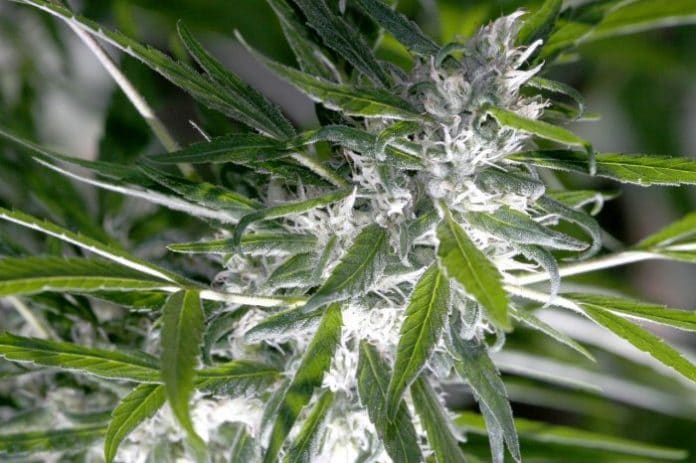
My blog is dedicated to the exploration of industrial hemp in America including the rich history of all forms of cannabis, the evolving law and politics of hemp and marijuana, the many products made from cannabis and the capacity, real or imagined, of hemp to re-industrialize rural America and revitalize the American family farm.
To be blunt, more brewers are experimenting with marijuana and hemp .
Marijuana and beer have always had a connection. Hops plants and cannabis are members of the same genus and have a closely related molecular structure. (And we won’t even get into how many brewers like to sample both.)
Those ties are slowly becoming more formal, though. In 2015 and 2016, Aurora, Colo.-based Dad & Dude’s Breweria offered tastings of General Washington’s Secret Stash, a cannabis-infused beer, at the Great American Beer Festival—to consistent long lines. And earlier this year, Lagunitas rolled out a limited run of Supercritical, an ale brewed with Cannabis terpenes, aromatic compounds of fragrant oils from the cannabis plant that give it distinctive flavors and aromatics.
Neither of the beers, it’s important to note, include any mind-altering THC. That’s stripped out before the brewing process. But the terpenes give the beer a different flavor profile. (In Supercritical’s case, it results in a tangy, bold earthy ale that has strong grass and lemon notes.)
Supercritical was officially a one-off for Lagunitas, but it came with all the hallmarks of a test balloon for a larger release. While the beer was only released on draft in California, samples were sent to reviewers. And while the company says there are no immediate plans to distribute it nationally yet, it will certainly be back.
“What I can tell you now is that we are planning to brew it again and we learn more as we move forward and there’s a whole big country out there,” says Karen Hamilton, director of communications at Lagunitas Brewing Co. “Right now we are going through some additional paperwork. When that’s complete, it will be determined when we are brewing it again.”
For some brewers, blending cannabis and beer is an opportunity to educate consumers about the two industries, while also attracting an audience that might normally opt for another beer choice.
“Doing this beer opened up a whole new consumer segment to us,” says Elan Walsky, co-founder of Coaltion Brewing, makers of Two Flowers IPA, a west coast IPA infused with hemp juice and CBD, a non-hallucinogenic chemical component of cannabis. “There’s a natural synergy between the two industries, in that there’s an emphasis on craft and locality.”
Oregon-based Coalition has a series of CBD beers, including the recently introduced Herbs of a Feather, a lemon and basil sour with CBD. Walsky and Phil Boyle, Coalition’s regional beer ambassador, say they’d love to widen the distribution of the product, which is available in local bars.
There’s a big hurdle standing in the way of every brewer who wants to blend pot and beer, though: the U.S. Drug Enforcement Agency.
In January, the DEA published a rules update that classified hemp extracts and CBD as Schedule 1 drugs, putting them in the same league as heroin and cocaine. Before that, CBD (which has less than 1% of THC as an active ingredient) had been available via mail order in all states. (The changes are being legally challenged by cannabis advocacy groups.)
Walsky says Coalition is able to continue making the beer because there’s an exemption for industrial hemp and the CBD it uses comes from a proprietary product that does not fall under the controlled substances act. Lagunitas says it does not use CBD or hemp in its beer, instead brewing only with terpenes, which remain legal.
Still, to be safe, the Brewer’s Association says no cannabis-infused beers will be poured at this year’s Great American Beer Festival, which gets underway Thursday in Denver.
The DEA’s rule changes have signaled the end, at least temporarily, of one beer. A year ago, General Washington’s Secret Stash was about to be distributed nationally, having already received approval from the federal Alcohol Tax and Trade Bureau. That fell apart after the reclassificaiton, forcing Dad & Dude’s to cease making the beer and take the fight to court.
Certainly, there are roadblocks for brewers who are looking to combine beer and pot, but as marijuana legalization and decriminalization spreads to more states, and as consumer interest in new tastes and styles of beer grows, it’s only a matter of time before the fusions become widely available.
Lesotho, a country of two-million people surrounded by South Africa, is perfectly situated to produce large volumes of high quality, low cost cannabis due to its expertise in high altitude cultivation.
For many years, Lesotho’s farmers have been growing cannabis for consumption at home and exporting their harvest across the border in South Africa. Similarly, in Swaziland, growing cannabis and exporting the herb to South Africa has provided for many families, despite the plant being outlawed.
Cannabis is not yet fully legal in South Africa, so citizens cannot legally cultivate, sell or smoke, and how the court ruling applies is still somewhat obscure, but it seems, globally, cannabis culture is becoming more tolerated.
Last month, Lesotho’s Ministry of Health has authorized Verve Dynamics, a South African company that manufactures herbal medicines and skincare products, to grow, process, and sell cannabis for medicinal purposes.
“Verve Dynamics is honored to be the first company in Africa to have been granted regulatory approval to begin the process of growing and producing high quality cannabis extracts commercially,” Verve Dynamics said in a statement.
“Lesotho is one of the most economically advantageous countries in the world to produce large volumes of high quality, low cost cannabis and hemp due to its expertise in high altitude cultivation, a knowledgeable and skilled labor force, and supportive forward-looking government,” the company added.
There is a global precedent for legalizing the herb under state regulation. The legal cannabis market in the United States generated $6.7 billion and has become one of the fastest growing industries since 29 states legalized medicinal cannabis. In Africa, selling cannabis could be a boon to the economy.
According to Quartz Africa, a publication in Africa, a number of other African countries, especially in the South African region, are considering making the production and use of cannabis for therapeutic purposes legal.
It’s not every day that a congressman from Kentucky and a farmer from Wisconsin ignite a national conversation on a specific issue. However, when it comes to industrial hemp no two states are more historically intertwined. We once defined and dominated hemp production in this country and we are poised to do it once again.
But first, a little history lesson.
Hemp has been utilized since 8,000 B.C. Early Colonial settlers in America were required to grow hemp because it was vital to their daily existence. It was considered legal tender and could be used to pay taxes. George Washington, Thomas Jefferson, and John Adams grew hemp on their farms and advocated for its commercialization, Even the Declaration of Independence was drafted on hemp paper.
Kentucky was a national leader in hemp production until the early 20th century. Research and processing innovations led to Wisconsin taking the top spot into the late 1950s. However, Wisconsin growers were dependent on getting their seed from Kentucky farmers who produced the finest seed varieties worldwide.
Image courtesy of Ken Anderson at Legacy Hemp
When our supply lines were cut off from Southeast Asia after the Japanese entered World War II, the U.S. Department of Agriculture championed hemp’s cultivation and use with its Hemp for Victory campaign. Grown extensively across the country, hemp fiber was used for rope, parachute webbing, soldiers’ shoes, and clothing, and various other uses to aid in the war effort. Unfortunately, a combination of cheap labor in foreign countries and regulatory stipulations in the Marihuana Act of 1937 brought an end to legal and profitable hemp production in the United States by the mid-‘50ies.
Understanding the past is worthwhile, but now we are looking to the future. With the passage of the 2014 Farm Bill, and under supervision of research universities or state departments of agriculture, states were authorized to “study the growth, cultivation, or marketing of industrial hemp.” Since that time more than 30 states have passed some form of legislation legalizing this type of research, but its full-fledged production and commercialization is extremely hindered by its current designation as a Schedule 1 controlled substance.
The United States is the only major industrialized country that cannot legally grow hemp as a crop, yet we are the largest importer of its materials with annual sales exceeding $600 million, most of it coming from Canada. This is not only a lost economic opportunity for America’s farmers, but also for the hemp processing and manufacturing industries that could flourish. There is a vast market for hemp in foods and beverages, cosmetics, personal care products, nutritional supplements, textiles, paper, construction materials, supercapacitor batteries, automotive products, and so much more.
That is why it’s so vitally important for Congress to pass HR 3530, the Industrial Hemp Farming Act of 2017. This federal legislation would treat industrial hemp as it should be — a crop. Wisconsin Representatives Glenn Grothman, Mike Gallagher, Gwen Moore, Mark Pocan, and Ron Kind already back the proposal, and we are asking the rest of the Wisconsin congressional delegation to join the effort.
Image courtesy of Ken Anderson at Legacy Hemp
As this federal legislation gains steam, Wisconsin is also moving forward to legalize the growing and processing of hemp. A large, bi-partisan group of legislators, led by State Rep. Jesse Kremer and State Sen. Patrick Testin, all recognize that the state has tremendous potential in joining Kentucky on the national forefront of hemp cultivation, research and manufacturing. We urge Wisconsin residents to contact their state elected officials to support Senate Bill 119 and Assembly Bill 183.
With the backing of the American Farm Bureau Federation, the National Association of State Departments of Agriculture, and the National Conference of State Legislatures, we believe we are at a tipping point as Washington, D.C., and statehouses across the country are openly accepting industrial hemp as a sustainable, eco-friendly and profitable crop. It’s time for us to once again embrace our hemp heritage and revitalize a dormant industry that has incredible potential in the 21st century.
Congressman James Comer represents Kentucky’s 1st Congressional District and is the primary author of the Industrial Hemp Farming Act of 2017.
Jim Holte, a grain and beef farmer from Elk Mound, is President of the Wisconsin Farm Bureau Federation.
The World Anti Doping Agency (WADA) has removed CBD from its list of prohibited substances effective January 1, 2018. WADA, which regulates prohibited substances for athletes, announced the move in a September 29th update.
WADA stated that cannabidiol was being removed because it is not a cannabimimetic and does not mimic the effects of THC. WADA further clarified that THC is still a prohibited substance and that CBD extracts can contain THC.
A number of professional athletes have reported using CBD as an alternative to narcotics including former Baltimore Raven, Eugene Monroe and UFC star Nate Diaz.
"This pain is never going away. My body is damaged," Monroe, 30, stated in a Washington Post article. "I have to manage it somehow. Managing it with pills was slowly killing me. Now I'm able to function and be extremely efficient by figuring out how to use different formulations of cannabis."
The WADA decision is further recognition that CBD should not be considered a controlled substance.
Thanks to new laws, hemp food products have the opportunity to become big business; now, two nonexperts hope to create a new category.
By
Kate Krader
Meet your local hemp farmers.
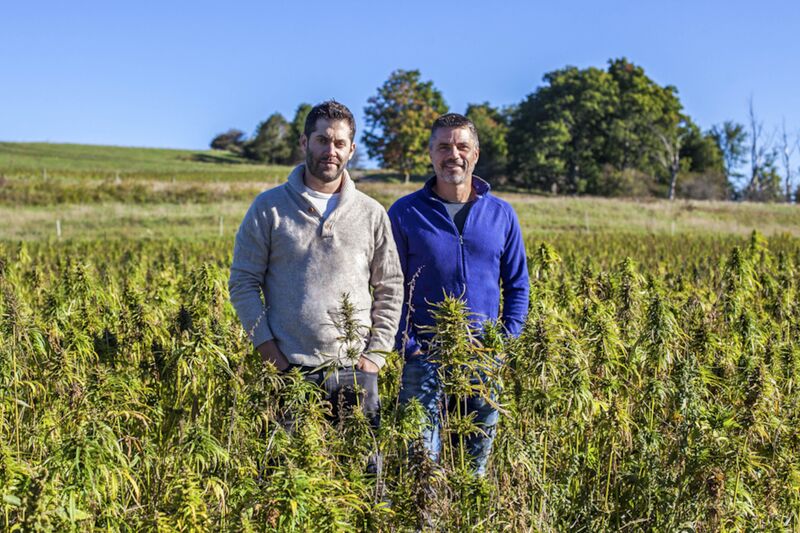
Before he started JD Farms, Mark Justh was a managing director for JPMorgan Chase & Co. in Asia. His co-founder, Dan Dolgin, worked in counterterrorism for various agencies in Washington.
Now these two men are partners in the hemp business. JD Farms specializes in top-quality food products—including baby greens salad mix, pasta, and cold-pressed oil—and its becoming a culinary sensation across the country.
There’s hemp out in those hills.
Photographer: Jessica Barthel
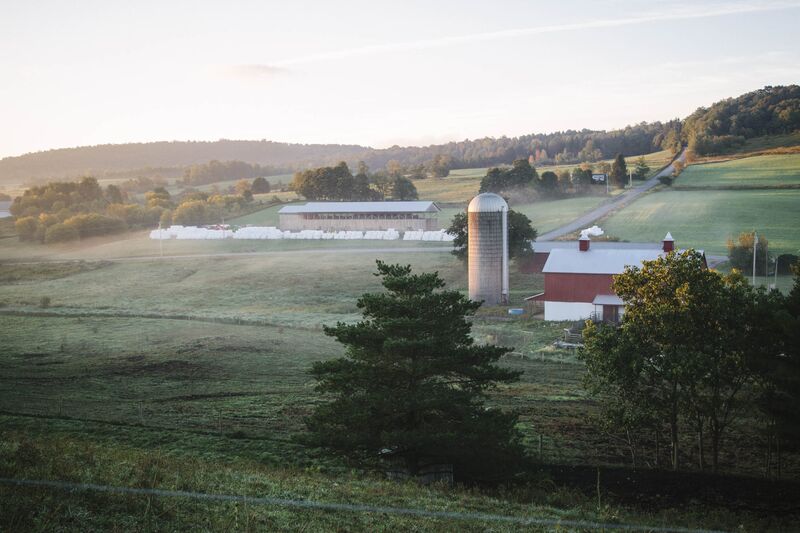
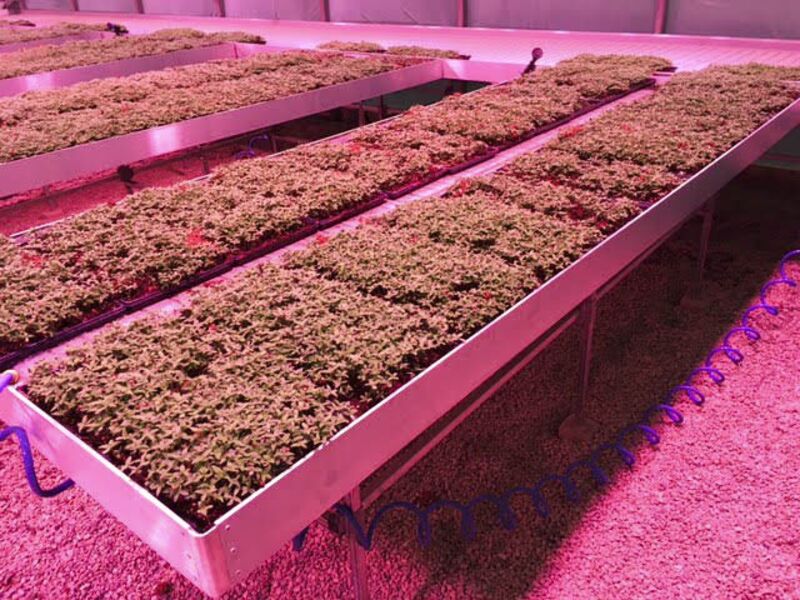
Located in Eaton, N.Y., about 30 miles southeast of Syracuse, JD Farms is the first legal hemp farm in New York in more than 80 years. It’s set on 1,500 acres of certified organic land, which Justh purchased in 2008 when he developed an interest in sustainable farming. “There was a tremendous agricultural infrastructure,” Justh says of the potential he saw. “The region had been a major dairy area, but the farms were neglected. Commodity milk prices had challenged the local economy.”
He’d originally planned to grow organic produce; hemp would simply be the cover crop, as protection against weeds. However, “hemp began to look very interesting,” he says. “Then Dan got involved, and we saw the possibility of hemp as a food product.”
Cybersecurity Farming
Field of dreams: Dan Dolgin (left) and Mark Justh represent the burgeoning hemp food industry.
Photographer: Jessica Barthel
Dolgin was a veteran of the Office of the Director of National Intelligence and the National Counterterrorism Center, both in D.C., before he got burned out on government jobs. He’d been working on cybersecurity projects in New York when he met Justh. “I grew up as a Jewish kid on Long Island,” Dolgin says. “I like the idea of making an impact in a depressed New York community, and of looking at agriculture in a new way. We began to consider hemp. Because of my regulatory background, I knew how government works—and doesn’t work.”
Justh, meanwhile, saw the financial possibilities. “I’d been approached about growing medical marijuana. But I thought, What can I produce that has a competitive advantage? How do I compete with the Midwest, with Ukraine? I realized it was a question of government regulation. And I have a partner who is very intelligent about regulatory issues.”
Although it’s constantly mistaken for cannabis, and it comes from the same plant, hemp is not the same product. While marijuana is bred to include potent amounts of THC, hemp has only trace amounts—it contains less than 0.3 percent of the hallucinogen. “You could smoke a football field of hemp and you wouldn’t get high, you’d get a headache,” is how Dolgin describes it. Still, when it planted its first seeds, JD Farms had to install an armed guard. (Until they’re planted in the ground, hemp seeds are considered a Schedule I narcotic, according to Dolgin.)
Hemp, the plant, is traditionally known for its use in textiles and ropes. That’s because of its strength: After about three weeks of growth, a hemp stalk will be so sturdy it’s almost impossible to break, because the fibers are so long and strong. But for culinary products, it’s the seeds that are all-important. After they’re pressed to produce oil, the resulting byproduct can be processed into a flour from which products like pasta can be created. JD Farms has also started cultivating young hemp leaves into salad mixes.
A New Old Industry
Hemp contains only trace amounts of THC.
Courtesy of JD Farms
For those unfamiliar with the status of hemp these days, Dolgin supplies the 30-second download: “In the ’70s it got caught up with marijuana in the anti-drug laws. It stayed that way for several decades, until the tobacco industry hit rock bottom and states like Virginia realized they need a new crop for farmers. In 2014 the passage of the U.S. Farm Bill allowed states to conduct hemp pilot programs. You could grow hemp if you were certified and licensed.” Because of the government work Dolgin had done, he was able to work closely with state senators and Governor Andrew Cuomo’s office to pass a series of bills that allowed JD Farms to grow hemp. The industry is currently a $688 million business in the U.S.
In March 2016, JD Farms became the first private farm certified to grow hemp under a New York state pilot program; it planted 100 acres’ worth. That, however, did not legally give JD Farms the right to sell its product. “There was a chance we were going to have to burn the hemp if the law didn’t pass,” Justh says with a worried laugh.
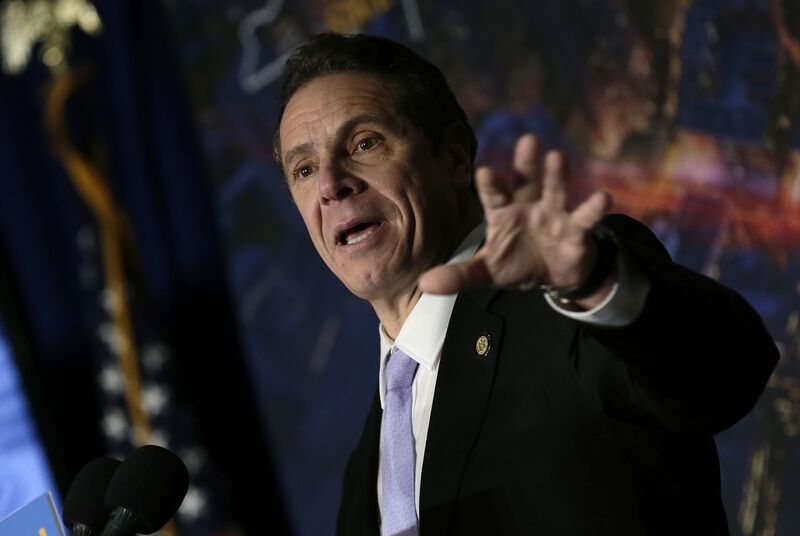
Governor Cuomo predicts hemp can be a billion-dollar business for New York state.
Photographer: Peter Foley/Bloomberg
In August, Governor Cuomo signed the bill that made it legal for JD Farms to sell its harvest. In his State of the State address in January, the governor noted that hemp had the potential to become a billion-dollar industry in New York. JD Farms’ bet had paid off.
Says Dolgin, who worked with state legislatures to help get the bill passed: “What we brought to the table is that we treated hemp as a big agriculture business, not as a few plants in a greenhouse like marijuana.” Justh adds, “For hemp to take its greater place in the agricultural landscape, it needs to be seen as a commodity.” Dolgin sums it up: “We’re very bullish about the food aspect of hemp. It’s right for an American farm to dominate that market, especially in the organic space.”
Hemp as Food
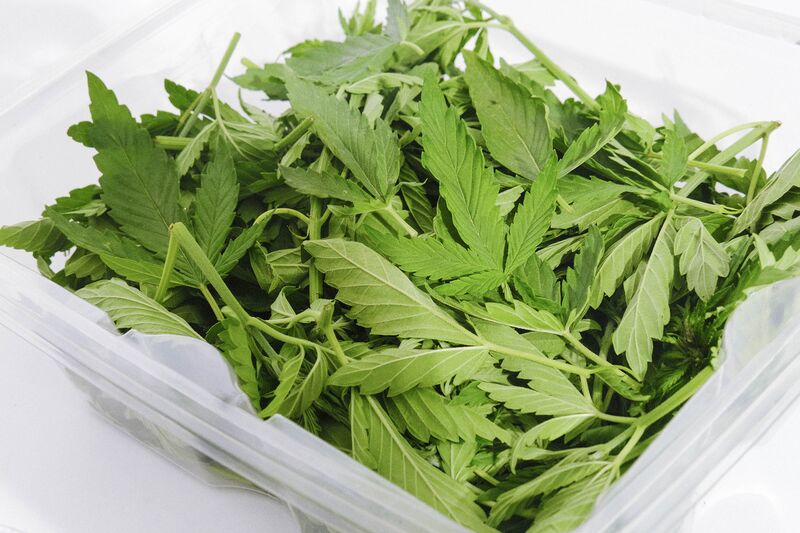
A box of good-for-you hemp.
Photographer: Evan Ortiz/Bloomberg
There was another reason hemp appealed to the pair: its potential to be the next runaway hit food product, the next kale. “Mark and I both live pretty healthy, active lifestyles,” remarks Dolgin. “We both knew that hemp was on its way to becoming a superfood, in that category of flax and chia seeds. We saw a sustainable long-term play in that market.” Hemp flour products are high in protein (only soybeans have more), and hemp contains 20 amino acids, including nine that the body doesn’t produce. Among its reputed health benefits: immune-system booster, weight suppressant (because it’s high in fiber), and an ability to lower blood pressure and cholesterol. It’s popular with vegetarians because it’s high in the fatty acids omega-3—found in good-for-you fish like salmon—and omega-6.
And then there’s the quality. JD Farms’ oil tastes fresher than other hemp oils because it’s produced in the U.S. The majority of hemp oil and seeds sold in America comes from plants grown in Canada. (According to the Toronto Star, in the first quarter of 2015, Canada exported $34 million worth of hemp seeds and oil.) Before hemp enters the U.S. it must be sterilized. (If it’s not, it counts as a Schedule I drug, along with substances such as heroin and ecstasy.) When it’s heated, hemp loses its pungent freshness and nuttiness. “It’s such an oily seed, heat speeds up the rancidity,” Justh says. “Plus, it’s just sitting around in vats. It’s got nothing in common with a product that is fresh from the field.”
At JD Farms, harvested seeds are cold-pressed. “We look at it like fine wine—you can taste the terroir, can taste the fields, which gives it earthy flavor. The product is so good, it can be used as a dipping oil; it doesn’t have to hide behind other ingredients.”
Restaurants Are Already Using It
Among the fans of JD Farms products is the dynamic chef Ignacio Mattos, of Estela and Flora Bar at the Met Breuer in Manhattan. “We are always pursuing new ingredients and flavors,” Mattos said in an email. “The leaves have quite a unique flavor profile, they’re grassy and sweet. The seeds are a bit nutty and sweet when they’re raw. The texture is quite fun when it’s toasted and a bit more savory when cooked.” He’s working on using the seeds in desserts and adding the oil to a tomato and mozzarella salad.
At the hit New York restaurant Sunday in Brooklyn, chef Jaime Young is using JD Farms hemp seeds in a togarashi-style spice blend he sprinkles on his fried chicken. “The seeds are great,” Young says. “They have a slightly floral character and wonderful texture, almost like cracked coriander.”
One company that’s paying attention to JD Farms is Whole Foods Market Inc. According to one of its senior global grocery buyers, David Lafferty, “shoppers are seeking out hemp products more than ever, thanks to both product innovation and the increased promotion of hemp’s nutritional benefits by food brands.” JD Farms has teamed with Satur Farms—the Long Island-based supplier of gourmet greens and vegetables—on a baby greens mix of kale and hemp that will be available at Whole Foods throughout the Northeast by the end of July. The salad’s sharp leaves are vaguely reminiscent of pot and have a similar sharp, almost minty flavor. Co-owner Paulette Satur describes the flavor as “lemony,” and is optimistic about the project. “We decided it fits in well with kale in terms of texture and its being chockablock with health benefits. And we’re the first to offer baby hemp leaves in the U.S., which is exciting.” Of the slight, physical resemblance hemp shares with pot leaves, Satur jokes, “Maybe this is a good way to get older kids to eat their vegetables.”
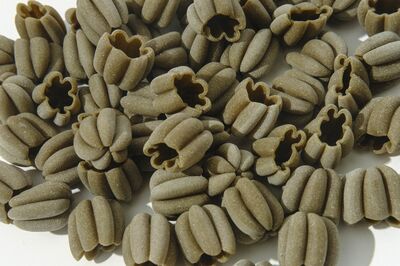
Another partnership, with Brooklyn-based Sfoglini, has resulted in charcoal-colored, nutty-tasting dried pasta in shapes like tubular Hemp Zucca and Hemp Radiators, which are available at sfoglini.com.
Earthy, nutty hemp-based pasta from JD Farms and Sfoglini.
Photographer: Evan Ortiz/Bloomberg
“As we researched hemp food products, the majority of it was as a base ingredient for shakes and smoothies,” says Dolgin. “We believe the next iteration of the hemp market is to go into snack foods, to give it wider penetration into households,” he says. “We’re looking at products like ice cream and beer. We already have a pretty broad product portfolio, and we want to get even more innovative.”
Northern Michigan University’s course in medicinal plant chemistry is under way, claimed to be the first undergraduate degree level training on medical cannabis in the USA.
The course, which began earlier this month, will prepare students for careers related to herbal supplements, fermentation science, food chemistry and environmental analysis, plus entry-level lab positions or graduate school.
Running over 4 years, the degree is a significant undertaking for students.
“No other 4-year undergraduate degree program in the world combines rigorous coursework in chemistry and biology with research and hands on instrumental analysis built into the curriculum to prepare its graduates for a career in the cannabis industry,” says the University.
As the program will comply with federal and state laws, hands-on work will be a little challenging – other plants will be used to practice extraction techniques.
The University is also calling for businesses to participate in its related internship program.
Regarding the situation in Michigan, in September 2016, the Michigan Legislature passedand its governor signed into law three bills that will see the creation of a licensing and regulatory framework for medicinal cannabis (referred to as medical marihuana in Michigan), which must be implemented by mid-December this year.
After December 15, parties can apply for grower, processor, transporter, provisioning center and safety compliance facility licenses.
Last week, the Department of Licensing and Regulatory Affairs (LARA) released an advisory bulletin announcing it intends to allow for co-location in a single facility. A potential licensee may apply for grower, processor and provisioning center licenses.
University of Maryland Course Cancelled
Another university that was set to offer a course relating to the cannabis industry, University of Maryland, has cancelled it. According to the Washington Post, the University made the decision after discussions with the Maryland attorney general’s office.
The situation presents a significant issue as the Maryland Cannabis Commission expects workers to be have relevant training and state law requires it.
Access to formal training is one of the many challenges facing the still-young industry in all US states.
Last December we reported on a small survey that indicated only 55% of dispensary staffhad some formal training for their position – and just 20% reported having gained medical/scientific training.