Sunday, April 2, 2017

NO-BAKE HEMP SEED BARS

Hemp Recepie
Source: spinach4breakfast.com

No-Bake Hemp Seed Bars

Hemp seeds are one of those super foods that we should all be trying to eat more often. They are full of omega-6 and omega-3’s, a great source of protein, and my favorite benefit, they make you feel fuller for longer, so you avoid overeating. ðŸ™‚ I love to sprinkle these babes over my smoothies, in my yogurt, or of course, make these delicious No-Bake Hemp Seed Bars for a grab-and-go snack or breakfast. Hope you guys enjoy!


 HEMP SEED BENEFITS
Ideal omega-6/omega-3 ratio (which is hard to find!)
Great source of plant-based protein
Contains all of the essential amino acids
High in soluble and un-soluble fiber to support digestion
Supports weight loss by helping you feel fuller longer and reducing sugar cravings

INGREDIENTS
  1. 1 1/2 cups of raw almonds
  2. 1 1/2 cups of hemp seeds
  3. 1/2 cup of natural peanut butter or almond butter
  4. 1/4 cup of melted coconut oil
  5. 1/4 cup of maple syrup
  6. 1 teaspoon of vanilla extract
  7. 1/2 teaspoon of sea salt
  8. 1/2 cup of cocoa nibs or mini chocolate chips
INSTRUCTIONS
  1. add the almonds to a blender or food processor and pulse until the almonds are broken down, but not a fine flour consistency.
  2. pour the almonds into a large mixing bowl, and mix in the rest of the ingredients until fully combined.
  3. line a 8x8 glass baking dish with parchment paper, and then pour the the mixture in.
  4. spread out until even, and then place a second piece of parchment paper on top and press down firmly.
  5. place in the freezer for at least 30 minutes.
  6. remove and cut into bars or squares.
NOTES
  1. store in the fridge or freezer


No-Bake Hemp Seed Bars

North Dakota Hemp production expands greatly in second year

By Lauren Donovan
Source: bismarcktribune.com

Hemp


Enough hemp will be seeded this spring to cover a good-sized farm in North Dakota.
The 3,124 acres accepted for the state’s second annual industrial hemp program is 45 times more than last year and involves 36 producers and one seed processor from 17 counties. Only five producers and 70 acres were involved in 2016.
The substantial increase will make real headway in understanding the various field and market conditions for the experimental crop, says state Agricultural Commissioner Doug Goehring.
Last year’s small program resulted in generally good yields, and producers realized net revenue of $500 to $800 per acre, selling the harvested seed for its oil, meal and fiber content.
Because of its botanical relationship to marijuana, hemp only can be legally grown through the department’s pilot program or by universities. These provisions were made possible through the 2014 federal farm bill.
Besides putting more acres in the program, the department also attached more fees to cover the cost of inspections and the THC, or tetrahydrocannabinol, testing required to ensure the hemp has low psychoactive content. Producers are required to pay $25 an acre to cover those costs.
“The thing that caught us off guard was the THC testing,” Goehring said. “Producers don’t like that they have to pay the $25 an acre, but at least they can recover that on the back end. These are the fees it will take to run the program.”
Pause
Current Time0:00
/
Duration Time0:00
Loaded: 0%
Progress: 0%
0:00
Fullscreen
00:00
Mute
The THC content has to be tested three times for every variety at $150 per test.
Producers in the hemp program hail from across the state, with all regions fairly well represented. The individual plantings will range from eight acres to 312 acres.
That ups the ante for research results based on everything from soil types to rainfall, Goehring said. Something else new this year is that about 400 acres will be dedicated to a seed production variety to determine if seed could be viable for future planting.
The seed could be stored in North Dakota and reused here, but will require diligent accounting and record keeping every step of the way.
“There are so many parts here. There’s nothing else that requires this much oversight,” Goehring said.
The department had 43 applicants for this year’s program, including one organic producer, and pretty much accepted everyone who made a complete and verifiable application.
Goehring said it’s possible hemp production could be expanded in the 2018 farm bill. American farm production is complicated by the fact that hemp is regulated as a Schedule 1 product under the federal Controlled Substances Act.

Vermont’s Lax Industrial Hemp Rules Driving Cottage Industry

By TG Branfalt
Source: ganjapreneur.com


A hemp cultivation permit is easy to come by in Vermont – for an annual fee of $25, anybody can register with the state to grow the crop so long as they verify that the plants fall below the 0.3 percent THC federal government threshold defining the plant as “hemp.”
These loose restrictions, codified in 2013, have led to a cottage hemp industry in the Green Mountain State – one that advocates say lays the groundwork for a more robust industry while allowing smaller operators to stake their claim in a still nascent market.
Concerned over potential federal interference in the 2018 farm bill which will either “blow [the hemp industry] wide open…or completely destroy it,” Joel Bedard, CEO and Founder of The VT Hemp Co., thinks this year’s grow is integral to the success of hemp cultivators in the state. The VT Hemp Company, which holds a hemp research permit from the DEA, works to link cultivators with processors, and ultimately get hemp-derived products to consumers.
“I recognize that [the hemp industry] is entirely white space – complete rebuild of an economic opportunity – but I also recognize that hemp is an international commodity crop,” Bedard said in a phone interview. “So it’s not like we can just make up new rules – it’s more like we have to take existing rules and translate them into a contemporary opportunity.”
Bedard and his team are hoping their partnerships solve two key issues for would-be hemp farmers: securing both seed and processing equipment. Vermont, Bedard explains, is not compliant under Section 7606 of the 2014 Federal Farm Bill. “That is to say that the state didn’t take on the role of vetting individual applicants and the state is not dealing with the DEA,” he said, adding that most people growing hemp in the state are in violation of federal, but not state, laws.
This violation makes it impossible to export hemp crops (legally) over state lines and makes even in-state sales risky, which has forced some permit-holders to cultivate primarily for research; albeit there are operators in the state hoping to cash in on the “gold rush” that is hemp-derived CBD, Bedard said.
Bedard’s permit from the DEA is as such that he can extend his license to others, putting them in compliance with federal rules and 12 farmers – in Vermont, New York, and Colorado – used that option last year, working with Bedard to produce textiles, hemp seed, and “any cannabinoids that we extract.”
Rye Matthews, 26, an ecological designer, partnered with Bedard to grow a half-acre test plot last summer which yielded about 300 pounds of seed but, lacking the necessary equipment, he didn’t process the straw. Matthews has since purchased 15 acres of land outside of Burlington and plans to use the seed derived from the test grow for a larger plot this summer rather than sell it off or process it for food or oil.
“We could have done a number of things, but it’s more important to build up our seed supply for the next year,” he said. “We haven’t made any money off of this but the couple years that we’ve been working at this we’re finally at a point where we can make this a real business.”
Matthews, who majored in environmental science at the University of Vermont and currently works in the sustainable building materials sector, indicated that he eventually hopes to help popularize hempcrete in the state but right now the cost to import the hemp is “prohibitive.”
Monica Donovan, publisher of Heady Vermont who grew her own research plot for CBD extraction last summer, said she has seen a “rapid growth of the CBD and hemp industry” in the state in the absence of either “a great medical system” or adult-use legalization. She said the number of CBD products available for sale in the state has “exploded” over the last year due, in part, to the proliferation of small hemp farms no larger than 10 acres.
“I think you’ll see that [CBD] is what most people are getting really into,” she said. “There’s definitely some fiber hemp going on – some oil seed – but I think the area of rapid growing interest is definitely CBD.”
Photo Credit: Rory Savatgy
Another factor Vermont cultivators need to consider is the sheer amount of space one would need to grow a viable, lucrative, fiber hemp crop. “You’d need hundreds of acres to even begin to compete with Kentucky,” Donovan said.
Heather Darby, professor of agronomy at UVM, said she “had to fight” to launch an industrial hemp research program at the university due to concerns that the school would lose its federal funding. The year-old research project, for which the university holds a DEA license that allows them to import seed, aims to evaluate the end-uses, planting and maturity dates, and cultivation methods of different hemp varieties grown worldwide. This year the research program’s scope will be expanded to include organic fertility management for hemp crops, she said, hopeful that ultimately they would discover the best variety for the state, already armed with information on controlling pests, mold, and yields. “I want agriculture to thrive in Vermont and I saw this as an opportunity for some farmers to be able to produce a value-added crop,” she said.
Darby explained that the UVM program has partnered with hemp seed companies in an effort to set up a certification program to help make more seed available to farmers and ensure they are planting federally legal crops. She said that there are “a few farmers” in the state growing between 10 and 30 acres of hemp for seed and grain; and, while many more “seem interested,” the “seed barrier is keeping the industry from expanding.”
“If we can do this [certification program] in Vermont they would have access to seed,” Darby explained. “Then you are able to start an industry…Some of the people are buying seed from God-knows-where doesn’t even fit into our growing climate and they’re paying a lot of money – and it’s dangerous – you don’t know if it’s federally legal.”
Much like the rest of the nation, the success, or failure, of Vermont’s hemp industry is dependent on action – or inaction – by the federal government. However, researchers and entrepreneurs are hopeful that this is just the beginning of a cooperative industry that will ultimately benefit the state’s farmers.
“Everything I can grow right now has already been sold,” Bedard said.

Canadian Broadcasters Deny Cannabis and Hemp Expo Ads

Source: ganjapreneur.com

At least two of Canada’s largest television broadcasters have denied ad buys by the Cannabis and Hemp Expo set to be held in Calgary, Ontario in May, CTV News Calgary reports. The rejections from Bell Media, which owns CTV, and Rogers Communications are due to laws that outlaw cannabis advertising in Canada; the logo for the expo also contains a hemp leaf and the word “cannabis.”
“CTV attempted to work with the client to ensure their creative conformed with statutes pertaining to promoting directly or indirectly the sale or disposal of a drug…however the client chose not to move forward with the campaign,” Bell Media said in a statement.
Terra Connors, a representative for Canwest Production, who puts on the event, said there won’t be any actual cannabis at the expo but it counts licensed producers, dispensaries, and headshops among the exhibitors.
“We understand to a point. I mean, nobody wants to portray illegal activity or anything but that’s not the case,” Connors said in the report. “We’re a legitimate business, promoting a legitimate trade show and we are not doing anything illegal.”
Broadcasters who break the cannabis advertising laws could be hit with fines between $250,000 and $5 million.

Hemp the answer to saving trees

By David Ivan Piccioni
Source: registerguard.com

Image result for hemp vs. trees


Do you want to save the trees but still need wood products? The answer is easy: hemp.

The only semi-valid argument against the hemp industry in Oregon was that hemp could pollinate smoking marijuana. Now that we’ve successfully legalized medicinal and recreational pot, if this is a problem we could import it from Southeast Asia or grow it with air filters indoors.

Some hemp strains reach the size of trees 20 feet in height; the plant has a continuous set of unbroken fibers from top to bottom. Wood’s fibers are shorter. For paper processing, wood requires sulphuric acid and bleach — four to seven times the amount of harmful chemicals.

The real gift of using pot instead of cutting our precious forests (i.e., the Elliott State Forest) is that in equivalent plots of land, hemp outproduces mass in the form of pulp and fiber four times faster than trees.

In Jack Herer’s “The Emperor Wears No Clothes,” hemp’s 50,000 uses are described in a very detailed way. They include paper, plywood, clothing, insulation, biodegradable plastics, paint, insulation, biofuel and human and animal feed.

Hemp uses no pesticides, whereas cotton uses half of all those used worldwide.

Its seeds are edible and most nutritious. They contain essential fatty acids (Omega 3 and 6) that are antioxidants and prevent free radical damage.

Growing this weed is so simple a solution that it’s often overlooked.

So, why haven’t we already made the smart leap to this agricultural miracle? It could be because of political and economic interests interfering with this bestower of environmental, financial and health gifts.

Image result for hemp vs. trees

Industrial Hemp Jobs: Hemp Vs. Cannabis

Source: cannarecruiter.com
Industrial Hemp Jobs

The rhetoric surrounding cannabis has long been blurred by politics, location and of course a heavy dose of hearsay and rumor. What are commonly referred to as different entities: “hemp,” “marijuana” and “cannabis” are all genetics of the same genus and species, Cannabis sativa L. Industrial hemp jobs involve working with the same plant as cannabis cultivators who sell their crop to medical and rec dispensaries. Only with hemp, the product is sold primarily for its structural properties and nutritional benefits.

Hemp and Cannabinoid Content

A notable difference between hemp plants and “marijuana”/”cannabis” is the lack of psychoactive cannabinoids. Hemp is legal to grow and sell for industrial uses – in order for it to be considered hemp, however, it must contain very little to zero percent THC. Hemp plants have been selectively bred to sustain regular levels of CBD, but nothing that encourages psychoactive effects.

What are Industrial Hemp Jobs?

Much like other cultivation positions, industrial hemp jobs involve more than just farming. The raw materials are cultivated, sure, but then they are sent off for additional processing to be used in everything from paper to fuel. Cannabis is truly one of the most versatile plants out there with strong marks across the board in medical benefits, psychoactivity, nutritional value and much more.

Hemp Vs. Cannabis Cultivation

Whereas hemp is primarily grown to be used as raw material for a variety of industries, cannabis has the weed consumer in mind. There are some differences in growing high THC buds vs. non-psychoactive plants. Since the end result of hemp is not about  the high, the focus can be placed instead on growing study plants. While psychoactive cannabis is grown to be fairly small (usually under six feet) hemp is grown more vigorously to produce as much pulp and other raw material as possible.

Hemp and Nutrition

Hemp seeds are unique as they contain an amazing spectrum of health benefits. For starters, the seeds are very high in protein, containing all 20 amino acids. Additionally, hemp seeds are a great source of “good fats.” Hemp seeds contain a range of vitamins and minerals including Vitamin A and Calcium in high concentrations.
Hemp is commonly infused into topical products to aid dry and damaged skin cells. Hemp seeds are said to have regenerative properties thanks to the presence of GLA (gamma-Linolenic acid). It also helps ease pain and inflammation when taken as a non-psychoactive oil.
The hemp sector of the cannabusiness is involved in the production of hemp seed oils and concentrated CBD oils. Industrial hemp jobs in manufacturing these products are gathering steam the world over.

Cannabis Extraction Technician

Industrial hemp jobs working as cannabis extraction technicians are important to ensure no psychoactive material carries over into products. Especially when formulating CBD oils and other health products, extraction techs use CO2 and other extractions to retain as much cannabidiol as possible, separating away THC and any unnecessary additives.
Cannabis extraction technician jobs can pay respectable salaries, depending on the employee’s level of responsibility. Regardless, it is an important position in legally providing CBD-rich products to customers around the country.

Cannabis Research

One of the more frustrating results of the oppressive scheduling of “marijuana” by the American DEA is that it makes legitimate, scientific cannabis research difficult to conduct. In addition to having to work against stigma and apathy from most doctors (even those who prescribe pharmaceuticals with THC and CBD isolates) it is hard to get any grant funding, since cannabis is still federally illegal. Nevertheless, there are brave cannabis researchers continually providing evidence for the manifold benefits hemp and cannabis genetics have in the world of medicine.

CBD Edibles

While you might think of edibles purely for its function in getting you high, turns out it is also extremely useful as a way to consume CBD. Edibles aren’t made using old-fashioned methods of cannabutter, rather the tasty treats are infused with CO2 extracts of cannabis flowers. The only difference between these edibles and the others is THC content. CBD edibles simply separate out the psychoactive matter, but keep the remainder of the cannabinoids and terpenes intact.
Industrial hemp jobs cooking CBD edibles are appearing in more commercial kitchens across western United States. Trained chefs and cooks are marching in droves to strut their stuff in the field of cannabis. Chefs are tasked with preparing exquisite products and infusing them with accurate concentrations of CBD. Of course, the end product also has to taste good. Because of the responsibility involved, edibles chef salaries are usually competitive and in some cases can reach six figures.

Medical & Recreational Cannabis

While there are plenty of industrial hemp jobs proliferating as more uses for the plant are revealed, the majority of new jobs in the cannabusiness are in the medical and recreational cannabis sector. Medical marijuana jobs aren’t exclusively about making products to get customers stoned, they also seek to help patients without access to helpful medical treatments.

Marijuana Dispensary Jobs

A large percentage of careers in the legal cannabis industry appear in marijuana dispensaries. Dispensaries are pot shops that sell cannabis flower and other products to customers. Believe it or not, cannabis dispensaries on the whole are pretty unassuming, appear in strip malls, busy metropolitan areas and small neighborhoods. The dispensary atmosphere is calm, yet professional for the most part, although each business is different.
Working in a legal dispensary if you did not grow up with legal weed is somewhat of a strange concept. On the one hand, dispensary workers are given the go ahead to sell products to customers, but they are constantly supervised should they fail to follow compliance measures perfectly.
Typical marijuana dispensary jobs include budtending, front desk/reception, management and security. Each job is important and can act as a critical springboard for further success in the cannabis business. Budtenders in particular have risen to fame as the faces of the industry, since they are the individuals responsible for directly selling cannabis to customers.
Budtenders are expected to retain a vast knowledge of cannabis strains and extracts. A good budtender will have personally tried as many products as possible to help accurately provide helpful insight. Additionally, these employees must be fully briefed on and confident in all the regulations in their city and state.

Product Manufacturing

Hemp appears throughout innumerable products that offer therapeutic remedies for the hair, skin  the and nails. Hemp seed oil contains many amino acids that are beneficial for damaged skill. It has been proven to be helpful in reducing symptoms of acne and eczema as well.
As well, hemp is often used as a milk, fat and protein replacement or supplement to be used in cooking, coffee and more. One of the most compelling uses of hemp is for fuel; once again the plant is often disqualified from being recognized as a valuable source because of its tumultuous history.
Throughout American history, hemp has been a major raw material used to make textiles. Hemp is fibrous and holds up well as clothing. What’s more, it’s not uncomfortable or awkward to wear! Hemp is not an especially difficult crop to grow and it has the potential to help so many people across the world. The only thing stopping the greater proliferation of hemp business are powerful corporations and government entities who riddle the Cannabis cultivation process with hurdles.

Cannabis and Pharmaceutical Industry

The legal positioning of hemp is not based on any hard facts separating one strain from another. It was only within the last fifty years that hemp became classified as containing less than 0.03% THC. This number has made it difficult for cultivators with slightly higher levels of THC in their hemp to have to undergo further measures to filter that compound out while retaining the other beneficial cannabinoids. However, this is expensive, causing farmers, manufacturers and consumers alike to pay more because of an arbitrary concentration requirement.
Ironically, the same cannabinoids that are scheduled as illicit drugs are frequently harvested to be used in pharmaceuticals. CBD and THC can appear pure thanks to crystal isolates and other methods. With all that said, these prescription pills are vastly less effective than when the same cannabinoids appear together in Cannabis sativa L. Furthermore, the reason cannabis can be so medically beneficial is because it is assisted by other compounds.

The Future of Industrial Hemp Jobs

The trend for industrial hemp jobs will likely follow its current path of growth as the legal cannabusiness expands further. While the politics surrounding cannabis legalization and regulation remains unclear, it is evident that a large consumer base desire products both from high THC “cannabis” and THC-free “hemp”. As we realize more and more of the benefits this miracle plant has to offer, the benefits it could bring to a more accepting society are innumerable.

NoCo to highlight hemp technology

Source: hemptoday.net

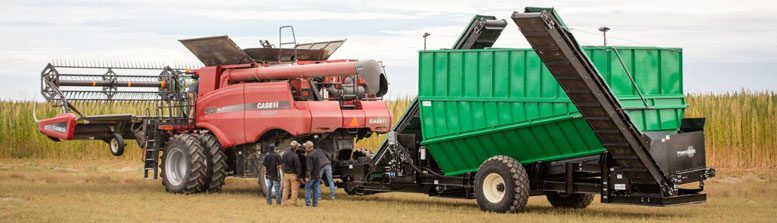
The GrassHopper, developed by Colorado-based Power Zone Equipment
The GrassHopper, developed by Colorado-based Power Zone Equipment.

A range of hemp technology will be highlighted at this year’s NoCo Hemp Expo, North America’s largest event dedicated to industrial hemp, organizers said. “Farming equipment and technology is something we have to figure out as a fledgling industry,” said Morris Beegle of Colorado Hemp Company, the NoCo organizer. Beegle said as hemp farming grows throughout the world,, processing equipment of all kinds is needed to keep the industry moving.
Among the technology that will be introduced at NoCo are:
– The GrassHopper, made by Colorado-based Power Zone Equipment, which collects and stores hemp. That technology will be demonstrated on-site at the Expo.
– The Multi-Combine HC 3400 — a large-scale harvester from Hanf Farm of Germany that can help hemp farmers realize the full promise of the plant on a massive scale.
– Henry’s Harvester, a self-propelled harvester from H8 Automation, also of Germany. Designed to meet the needs of small farmers. That project is already in the prototype stage.
The latter two machines will be shown in a film loop that will be running in the HempBoutique, a special booth (No. 57) that will showcase hemp products and developments from around the world.
A record 115 exhibitors will showcase their hemp products during this year’s Expo, which also expects record-breaking crowds, organizers said. The Expo runs Friday and Saturday.