Sunday, February 26, 2017

Uses for hemp you won’t learn from mainstream media

By Amanda Froelich
Source: nexusnewsfeed.com
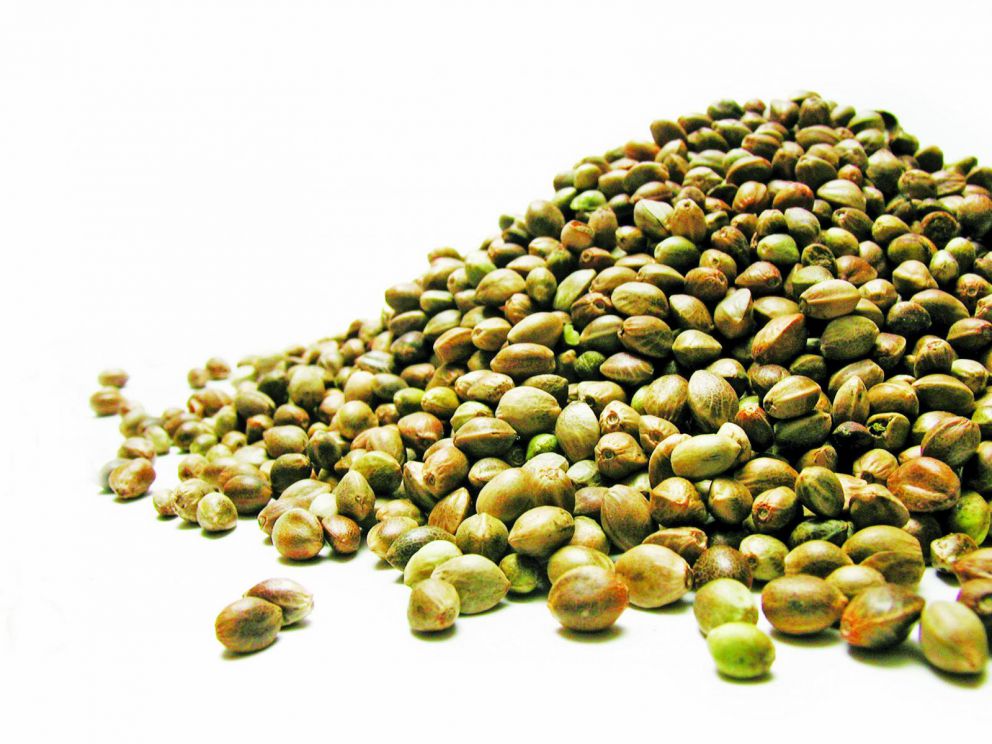


Though the negative stigma associated with cannabis has lessened in recent years – especially since CBD-rich oils to be a powerful aid in fighting cancer, it still hasn’t garnered full support from the public.
Such is unfortunate, as hemp is one of the most versatile (and longest cultivated) crops on the planet and can be used for a variety of practical and economical uses. According to some sources, the crop is humanity’s answer to eliminating smog from current fuels, creating a cleaner energy source that can replace nuclear power, remove radioactive water from the soil, and eliminate smog from skies in industrialized areas.

In addition, nationwide hemp production could eliminate deforestation by converting current paper to hemp paper which can be recycled up to 8 times. Compare this to wood pulp, which is recyclable up to 3 times. Finally, hemp seeds are incredibly nutritious and can even serve as a suitable feed for animals and livestock.
Obviously, numerous benefits could be derived from legalizing the crop and allowing it to be cultivated all over the world. However, people have been conditioned to view the herb as a negative addition to society. Such is largely a result of big business and political propaganda which began in 1915. Drug Warrant relays that even though the Declaration of Independence was printed on hemp paper and the crop was mandated to be grown in the U.S. in 1619, only in the last hundred years or so have people been demonizing the plant.
Perhaps if people knew the many ways hemp and marijuana, which are closely related but are not the same, can be used, their opinions on legalizing the crop would change. Considering that marijuana results in 0 annual deaths while pharmaceutical drugs are responsible for over 100,000, keeping an open mind is the least people could do.
Following are 9 benefits of hemp you won’t learn about from mainstream media:

1) Fuel
Similar to plants like corn, cannabis can be used to develop biofuels to power automobiles, generators, and pretty much anything else one can imagine. In fact, the University of Connecticut has been studying whether or not the fuel is actually viable, and the results are confirming that it is is.
One of the major problems with current biofuel production, according to Cheat Sheet, is that it often takes more energy to create than what it’s worth. Cannabis may be able to change that.
And, thanks to the growing interest in the cultivating the crop, developing a cannabis biofuel industry is speculated to be an easy task.
Professor Richard Parnas of the University of Connecticut says:
If someone is already growing hemp, they might be able to produce enough fuel to power their whole farm with the oil from the seeds they produce. The fact that a hemp industry already exists means that a hemp biodiesel industry would need little additional investment.

2) Batteries
According to AlterNet, cannabis could help improve the way we store energy. Researchers are discovering that cannabis may assist the process of producing more efficient supercapacitors.  Basically, nanosheets can be made by hemp fibers in the same way scientists have been able to use graphene in the past. An added bonus is that hemp is more economical, as it can cost thousands of times less than graphene or similar materials.
As it becomes more socially acceptable to work with hemp, engineers and scientists will have more freedom to develop other innovations with the material.

3) Building Materials
You may not know this, but hemp can be used to create various kinds of building materials. In fact, it’s likely that in the future, houses and even business structures will be comprised of hemp.
Not only can hemp be made into insulation, it can also be used to create engineered building products like fiberboard and pressboard. In addition, it can even be used to make ‘hempcrete’, which is a stronger, lighter, and more environmentally friendly version of concrete.

4) Livestock Feed
Livestock is often fed corn-based feeds, but cannabis-based options could soon become the norm. The change would not only reduce costs, it would spare more food for people who need it.
In addition, feeds with cannabis would cut down on transportation needs, as the crop grows practically anywhere.

5) Plastic Production
In the early 1940s, Henry Ford (below) produced a prototype car made out of hemp & soy plastic. Though it never went into production due to the influence from chemical giant DuPont, the photo of Ford trying to ax his way through the car proved hemp plastic’s durability.
Now, it’s well-known that hemp plastic would be a suitable alternative for consumers as it is more easily recycled and degrades at a faster rate than traditional plastic.
Everyday items like soda bottles, CD & DVD cases, shower curtain liners, and even food packaging could be easily switched to hemp-based plastics.

6) Food & Beverages
Hemp seeds are touted as a ‘super food’ because one-third of hemp seed’s weight comes from hemp oil, which is both edible and highly nutritious. The food source contains essential fatty acids (more omega-3’s than walnuts) which lower inflammation, and the whole seed is about 25% protein. It’s also a great source of calcium and iron.
One can use hemp seeds in desserts, by sprinkling them on salads, or by making homemade hemp milk (just substitute for almonds).

7) Nuclear Waste Cleanup
One of the most intriguing uses for hemp is how it can assist in cleaning up soil contamination. In the early 1990s, the crop was planted at the site of the Chernobyl nuclear disaster in Ukraine to assess its abilities to heal the soil. Reportedly, the plant shows great potential in cleaning up land contaminated with coal fly ash, sewage sludge, or heavy metals due to its fast rate of growth and ability to remove contaminants from the soil.

8) Paper
2,000 years ago, hemp paper was commonly utilized. This is astounding, considering that only 0.05% of world paper production today is made from the crop.
Being a far more sustainable source of pulp than paper, hemp would lend great benefits to the environment if humanity relied on this crop rather than trees.

9) Clothing
Hemp was first woven into fabric between 7,000 and 8,000 B.C. but is rarely used nowadays. Perhaps that’s because hemp clothing has earned the reputation of being rough and tough.
Thanks to modern methods of working with the crop, however, even the high fashion industry is playing with hemp, merging it with silk for lingerie. Of course, its durability could be applied to more obvious applications, such as sportswear and outdoor clothing.


Hemp cultivation for industrial use one step closer in SA

By Loukas Founten
Source: abc.net.au

Various hemp products.

The South Australian Government will back a Greens plan to legalise hemp cultivation for industrial use, which would align the state with others.
The Northern Territory is the only other jurisdiction where industrial hemp cultivation has not been legalised, but crop trials are underway there.
Victoria was the first Australian state to legalise an industry, in 1998, and other states have followed.
Hemp is a cannabis type with very low levels of the psychoactive chemical THC, and can be used to produce clothing, food, paper, textiles, plastics, insulation and biofuel.
South Australian Greens Upper House MP Tammy Franks introduced an industrial hemp bill to the Parliament last year.
The State Government said it would back the legislation, provided amendments limited the level of THC and subjected growers to testing and regulatory checks that they were a "fit and proper person".
"Last month we held a roundtable with people interested in the economic opportunities of hemp and medical cannabis," Manufacturing Minister Kyam Maher said.
"[Our support will allow] farmers to consider whether they want to grow hemp in SA and to become licensed to do so.
"It will also allow for the possibility of manufacturing hemp into products such as textiles, building products and a range of cosmetics.
"It will then be up to the industry to decide. It will be up to farmers to decide whether this is an economic and viable crop for them and also manufacturers to look at if they can economically make ... things like building products, textiles and cosmetics."
Mr Maher said the issue was separate from any legalisation of medical marijuana use, which was federally regulated.
Last week, the Federal Government moved to loosen importation laws around medical marijuana, allowing it to be more easily accessible.
Mr Maher said the SA Government was willing to back any industry offering an economic benefit to the state, including possibly medical marijuana.

Hemp industry booming

Industrial Hemp Association official Teresa McDowell welcomed the Government's support of the bill before the SA Parliament.
"The industry globally is multi-faceted and worth billions of dollars — if you look at the hemp food industry globally, places like Canada exported $114 million worth of food and in America the industry is worth $576 million per year," she said.
"Economically it's an incredible resource and one that we just need to allow our state to tap into."
She said getting federal legislative approval for consumption of hemp food products was her industry's next hope.
Wade Dabinett, of Grain Producers South Australia, volunteered his Mallee property for commercial trials in anticipation that hemp can give primary producers another crop rotation and let them into global markets.
"With legislative change, it's going to take some time so we'll look this year to work with [primary industry authorities] to get some trials up and running, so when the change comes in we can hit the ground running and hopefully it is a viable option," he said.
"There is certainly a lot of [farmers'] interest, but it's hard to be interested until you know if it's going to work. It's all about doing the trials, seeing if the timing works, time of sowing versus when we harvest it.
"It looks as though our climate is well suited to grow it."
If South Australian legislation passes, crop trials could get underway this year.
The state Liberal Party is considering its position on industrial hemp and frontbencher David Ridgway said he plans to discuss it with colleagues in the party room this week.

Local hemp importer waiting for rule change to expand business

By Aaron Richardson
Source: cvilletomorrow.org

20170224-Hemp
Marty Phipps of Old Dominion Hemp stands in his Waynesboro warehouse.


Charlottesville-based horse bedding importer Old Dominion Hemp picked up its first client at a horse show less than a year ago and last month moved about 4,000 bales of its unique stable liner.

The bedding, which Old Dominion imports from a supplier in Europe, consists of the ground-up hurd — the core of the stalk — from hemp plants.

Business founder Marty Phipps said his bedding is so absorbent that it can last up to five times as long as its pine or straw counterpart. The remainder of the hemp plant can be used for food, clothing fiber, biodiesel and as an ingredient in eco-friendly plastic.

But the plant, which was cultivated in the country’s early years by both Thomas Jefferson and George Washington, has a bad family reputation that until recently made it illegal to cultivate commercially in the U.S.

Hemp, a close relative of marijuana, is listed in the federal Controlled Substances Act and contains trace amounts of THC, the active ingredient in its psychoactive cousin.

Proponents of the plant call the connection an unfair case of guilt-by-association and say that legal barriers to hemp cultivation are a lost economic opportunity.

The 2014 U.S. Farm Bill changed the rules to allow state universities to grow small crops of the plant but left it on the banned substances list.

Virginia in 2015 passed its first measure allowing state institutions to research hemp, and in 2016 passed a law to require the commissioner of agriculture to develop a licensure program for anyone wanting to grow the plant “for any lawful purpose.”

The only lawful purpose currently recognized by the state is research.

Phipps, who is also the Central Virginia regional director of the Virginia Industrial Hemp Coalition, plans to lobby Congress next week to change that.

“Agriculture and farmers are what we need to achieve greatness,” Phipps said in his warehouse last week. “The fact is that we are importing millions of dollars’ worth of hemp, and that is money that could be going into American pockets.”

Phipps, who sends bales of horse bedding around the U.S. from a small warehouse in a Waynesboro industrial complex, said his goal is for Old Dominion Hemp to buy and process raw hemp from American farmers.

“Right now, we are focusing just on bedding, but we do have other opportunities, such as hemp seed horse treats,” he said. “Our goal is for Virginia to get in line and have farmers grow for us and be able to revitalize some areas that are floundering.”

Last year, Virginia State University, James Madison University and Virginia Tech all grew hemp research crops. The schools planted a total of 37 acres of the crop, and the state licensed 29 individuals to cultivate it, according to the Virginia Department of Agriculture website.

The department solicited proposals from institutions interested in researching hemp, said Erin Williams, a senior policy analyst with the department, and got four responses.

The extent of the state’s research into hemp is hemmed in by the federal regulations, she said.
“The state law could change, but it would still have to operate within the parameters of the federal law,” she said.

Jason Amatucci, executive director of the Virginia Industrial Hemp Coalition, said he is impatient with the commonwealth’s progress.

“[Hemp research] is going to have to go above and beyond just a few people in universities gaining experience,” he said. “We are making a huge mistake not getting out ahead of this.”
States like Kentucky, he said, are far ahead of Virginia in developing hemp as a viable crop.
Kentucky’s department of agriculture has approved 209 licenses for hemp research this year, for a total of more than 12,000 planted acres.

Williams said she was not familiar enough with Kentucky state law to comment on its research practices.

Apart from the lost economic opportunity, Amatucci said he is tired of the stigma around hemp.

“We are not criminals. We are law-abiding citizens, and it is disrespectful not to treat us as such,” he said. “We need to change how hemp is perceived and treated.”

Leaving that stigma behind, Phipps said, is going to be a matter of education, continued research and legislation.

“The biggest thing is going to be education, you know, people learning that their horse isn’t going to get high,” he said. “That will be key to getting this product into the mainstream.”


Hemp Industries Association Seeks Contempt against DEA; Alleges Violation of 2004 Hemp Order

By Larry K. Houck & Riëtte van Laack – 
Source: fdalawblog.net

Last month we reported that the Hemp Industries Association (“HIA”) petitioned the U.S. Court of Appeals for the Ninth Circuit to block the Drug Enforcement Administration’s (“DEA’s”) implementation of its recent final rule on marijuana extracts. On February 6, 2017, HIA filed another action with the Ninth Circuit; this one seeking to direct DEA to show cause why it should not be held in contempt, for failure to comply with the Court’s 2004 order that permanently enjoined DEA from regulating hemp fiber, stalk, sterilized seed and oil as controlled substances. The federal Controlled Substances Act (“CSA”) specifically excludes these parts of the plant from its definition of “marihuana.” 21 U.S.C. § 802(16).
As we mentioned previously, DEA issued two final rules in March 2003: one that expanded the Schedule I listing of synthetic tetrahydrocannabinols (“THC”) to include THC “naturally contained in a plant of the genus Cannabis (cannabis plant),” DEA, Clarification of Listing of “Tetrahydrocannabinols” in Schedule I, 68 Fed. Reg. 14,114, 14,119 (Mar. 21, 2003), and one that exempted hemp fiber, seed and oil products containing THC not intended for human consumption (e.g., for use as animal feed and cosmetic use) from control, DEA, Exemption From Control of Certain Industrial Products and Materials Derived From the Cannabis Plant, 68 Fed. Reg. 14,119 (Mar. 21, 2003). The rules together classified all naturally-occurring THC intended for human consumption as a Schedule I controlled substance.
HIA challenged the DEA final rules and, in 2004, the Court of Appeals of the Ninth Circuit found that the rules were “inconsistent with the unambiguous meaning of the CSA definitions of marijuana and THC,” and that “DEA did not use the appropriate scheduling procedures to add non-psychoactive hemp to the list of controlled substances.” Hemp Industries Ass’n v. DEA, 357 F.3d 1012, 1018 (9th Cir. 2004) (here). The Court permanently enjoined enforcement of the two rules “with respect to non-psychoactive hemp or products containing it.” 357 F.3d at 1019.
However, DEA never took any action as a result of the court’s action including not amending its listing of THC in Schedule I, maintaining the “naturally-occurring THC” provision in its regulations. 21 C.F.R. § 1308.11(d)(31). Furthermore, DEA continues to post the 2001 press release clarifying the Schedule I status of any THC product ingested by humans. At no time did DEA indicate that it would not regulate naturally occurring THC under the enjoined regulations. Thus, parties unaware of the Ninth Circuit injunction would otherwise understand hemp oil and other hemp products for ingestion by humans to be controlled substances. Also, no other circuit has decided the issue.
Until recently, DEA does not appear to have taken enforcement action under the enjoined regulation. As described in the HIA motion, in a December 2016 communication, the North Dakota Department of Agriculture (“NDDA”) advised a state-licensed farmer/producer that a planned shipment of hempseed oil out of the state would require a DEA registration, citing the federal CSA. This appears to have triggered HIA to file a motion for contempt.
The issue remains that despite the Ninth Circuit’s 2004 ruling, DEA’s position is that naturally-occurring THC for human consumption is a Schedule I controlled substance while HIA and others believe otherwise.


Chard & Hemp Heart Pesto

Source: wildernessfamilynaturals.com

Chard & Hemp Heart Pesto | With few ingredients and a blender, a delicious sauce packed with greens and protein is just minutes away. Don't have chard? Use kale, spinach, beet greens, or any other greens you have instead! What a great way to use up garden or CSA produce! | WildernessFamilyNaturals.com


Get your greens and protein in a simple, delicious sauce made in the blender!
Make use of abundant and seasonal greens with an incredibly easy pesto.
Traditionally, pesto is basil, oil, pine nuts, garlic, and maybe some cheese. Don’t be limited by tradition!
Pesto can be made of numerous combinations — such as chard and hemp hearts!

6 Ingredients and A Blender

This recipe could not be easier to assemble. First, trim the tough stems from the chard leaves. Next, give the leaves a rough chop and toss them into a blender with the other ingredients. Finally, hit puree and voila! — a delicious, healthy pesto packed with greens and protein.
If chard is unavailable, use kale or even spinach in the same amount. In fact, use whatever greens might be lounging in the kitchen or garden. Beet greens, radish greens, even turnip greens would work in this recipe.
Pesto freezes well and easily. Make big batches of it and freeze in 1-cup portions for green-packed meals even in a blizzard. This easy recipe is a great way to use up every bit of the garden harvest or CSA box.

How To Serve Chard And Hemp Heart Pesto

Most often pesto is served as a pasta sauce. This option should never be ignored. Warm pasta slathered in an intensely flavored green sauce is comforting and nutritious. Simply heat the pesto gently and stir into hot pasta. Other serving ideas include:
  • Mix chard and hemp heart pesto into cooked rice or quinoa.
  • Serve it on top of baked potatoes or steamed vegetables.
  • Use it instead of traditional tomato sauce on pizza.
  • Spread it onto sliced baguettes and top with sliced tomatoes for an appetizer.
  • Use it instead of mayonnaise in pasta salads.
  • Slather it on bread, rather than mayonnaise or dressing, for delicious sandwiches.
  • Thin it out with a little hot water or additional oil and use as a salad dressing.
  • Serve it as a dip with fresh vegetables, chips, and crackers.
  • Stir a little into hot soups vegetable and noodle soups for extra flavor.
Don’t be shy about using those greens this fall; make batches of this pesto for amazing meals with minimal prep.
Chard & Hemp Heart Pesto
Make use of abundant and seasonal greens with an incredibly easy pesto that's packed with protein. Don't have chard? Use kale, spinach, beet greens, or radish greens instead!
 Prep Time5 minutes
 Servings
 varies
INGREDIENTS
INSTRUCTIONS
  1. Combine everything in a blender or food processor.
  2. Purée until smooth.
  3. Taste and adjust seasoning, if necessary.
  4. Store in the refrigerator for up to a week.
RECIPE NOTES
Pesto can be frozen. Simply put into a container leaving an inch headspace for expansion and freeze. Thaw completely before using.