Sunday, March 20, 2016

Sydney's former coke ovens site to grow hemp

'It's a growing market and it has limitless potential from our point of view,' says Parker Rudderham


By Hal Higgins
Source: cbc.ca

The Sydney tar ponds, once considered one of Canada’s most toxic waste sites, is now a green space after decades of work and hundreds of millions of dollars spent on cleanup.
The Sydney tar ponds, once considered one of Canada’s most toxic waste sites, is now a green space after decades of work and hundreds of millions of dollars spent on cleanup. (CBC)


Part of the former coke ovens site in Sydney is going to look a lot greener come spring.
That's when a local company, Highland Hemp, starts planting an experimental hemp crop on seven hectares of remediated land.
The firm's CEO, Parker Rudderham, told CBC Cape Breton'sInformation Morning the company has received a licence from Health Canada to produce hemp seed oil and other related products.
Parker Rudderham
Parker Rudderham is CEO of Highland Hemp, a company that plans to grow hemp on a section of the former coke ovens site in Sydney. (Steve Sutherland/CBC)
"It's a growing market and it has limitless potential from our point of view," Rudderham said. 
Rudderham's plan is to sell hemp seed oil through his pharmaceutical company, Pharmacy Wholesale Services, to markets in Europe.  
"It's recognized as a premium product in Europe," he said.
He said hemp can also be turned into a type of plastic that is durable like regular plastic, but has the added benefit of being biodegradeable.
The land will be leased from Nova Scotia Lands and the crop will be planted, maintained and harvested by a subcontractor, Rudderham said. 

'Clean bill of health'

He's not worried about toxicity in the soil because an environmental review has given the site "a clean bill of health," he said.
"It'll be interesting to see if the plant pulls anything out of the ground. I'm assured it will not," he added.
When 500 truckloads of topsoil are spread over the already remediated property that should reinforce the safe growing conditions, he said, and the plants will be tested afterwards.
When asked about the THC levels of the plant that might tempt would-be thieves, Rudderham said they are so low — 10 parts per million — that it would be akin to "smoking a banana peel." THC is the principal psychoactive chemical in marijuana.
"It's not gonna do anything for you. Maybe make you sick," he said.
Once harvested, the crop will be processed in the fall, Rudderham said, adding the project is in its experimental stage.
"We will have a cold-press vat. You cold press it and you run the oil."
Hemp oil is high in essential fatty acids, and Omega 6 and Omega 3. There are claims it can be used to increase immunity, counteract aging skin and improve cardiovascular health. 


Bellingham hemp advocate hopes to change the way we build

By Lindsay Hilton
Source: bellinghamherald.com

Pam Bosch constructed demo building using hemp material
Hopes to use hemp materials to renovate her Bellingham home
She is documenting her home’s renovation on website

Pam Bosch of Bellingham applies Hemp Shield, a hemp-oil wood sealer, to a window ledge inside a small demonstration building on her property that’s made with hemp hurd and lime.
Pam Bosch of Bellingham applies Hemp Shield, a hemp-oil wood sealer, to a window ledge inside a small demonstration building on her property that’s made with hemp hurd and lime. Lindsay Hilton For The Bellingham Herald

Pam Bosch of Bellingham is trying to build a future for industrial hemp in the United States.
The 62-year-old artist acknowledges that hemp, which generally refers to the inside stalk and seeds of the cannabis plant, gets a bad rap because of its association with marijuana. But she says hemp doesn’t affect the mind, and says it’s safer and more sustainable for construction than other materials more commonly used.
Bosch became interested in hemp when exploring renovation options for her South Hill home.
“I realized how difficult it was to build without using materials that are toxic or unsustainably sourced,” she says. “Buildings constructed with hemp are well-insulated, insect- and rodent-deterrent, fireproof, mold-resistant, have great acoustics, healthy air quality, and they are compostable.”
Hempcrete is an industrial product that has been used for centuries in Japan and more recently across Europe, but has been slow to gain traction in the U.S. Hempcrete is a mix of hemp hurd (short fibers from the inner cannabis stalk), lime, sand and water. The end result is a strong, breathable material that Bosch says has many advantages over conventional building materials such as concrete.
“The building aspects are really exciting,” she says, “but that’s not the end of the story.”
For example, she says, hemp seeds are nutritious, hemp fibers are used in textiles, and hemp hurd contains antimicrobial properties and can be used in everything from 3D printing ink to animal bedding.
“Its high-tech uses are just beginning to emerge,” she says.
On the surface, industrial hemp seems like a technical and possibly dull topic. But as an artist, Bosch finds an aesthetic quality to building with hemp that she says aligns with her creative background and training.
JUST AS THE PLANT HAS MANY USES, I AM ABLE TO UTILIZE MY AESTHETIC TRAINING, MY COMMITMENT TO BUILDING A HEALTHIER WORLD, AND MY WORK IN EDUCATION IN A UNIQUE PERSONAL WAY.Pam Bosch, industrial hemp advocate
A Minnesota native, she moved to Bellingham in 1975 and earned a bachelor of fine arts degree at Western Washington University. She returned to WWU for a master’s in adult education at the age of 50. Over the years, she has taught a variety of courses at Bellingham Technical College and Northwest Indian College.
After extensive investigation and international travel to learn about industrial hemp, Bosch teamed up with her mentor, Steve Allin of the International Hemp Building Association, and constructed a small demonstration building on her property. The 8.5- by 14-foot-foot building, which Allin and Bosch affectionately named the Crow’s Nest, for a bird carved on the exterior, has walls made with hemp hurd and lime.
Bosch plans to begin renovating her 110-year-old home this year using industrial hemp products, and is documenting the project on her website, highlandhemphouse.com.
She hopes to create a community space within the home for artists and residents to meet, share ideas and inspire one another. Beyond that, Bosch wants to increase awareness of industrial hemp, help enact laws to deregulate the growing of hemp for industrial uses, and bring an industrial hemp processing plant to Bellingham.
Working as a hemp advocate gives Bosch a sense of purpose.
“Just as the plant has many uses, I am able to utilize my aesthetic training, my commitment to building a healthier world, and my work in education in a unique personal way,” she says.

TERMS AND RESOURCES
Hemp: The fiber, oil and seeds of the cannabis plant. Hemp is used in a variety of products, including textiles, food, construction, oil, paper and fuel.
Hurd: The inner part of the hemp stalk. Hemp hurd has excellent thermal and acoustic properties.
Hempcrete: A mix of hemp hurd, lime, sand and water with a variety of construction and insulation uses.
Pam Bosch’s website: highlandhemphouse.com
International Hemp Association: internationalhempassociation.org
International Hemp Building Association: internationalhempbuilding.org


Working with Steve Allin of the International Hemp Building Association, Bellingham artist Pam Bosch constructed this small demonstration building on her property. The building, which they call the Crow’s Nest, has walls made with hemp hurd and lime.
Working with Steve Allin of the International Hemp Building Association, Bellingham artist Pam Bosch constructed this small demonstration building on her property. The building, which they call the Crow’s Nest, has walls made with hemp hurd and lime. LINDSAY HILTON For The Bellingham Herald

Bellingham artist Pam Bosch has become a hands-on advocate for the use of industrial hemp as a construction material.
Bellingham artist Pam Bosch has become a hands-on advocate for the use of industrial hemp as a construction material.Lindsay Hilton For The Bellingham Herald


Read more here: http://www.bellinghamherald.com/living/seniors-aging/article61978802.html#storylink=cpy

Read more here: http://www.bellinghamherald.com/living/seniors-aging/article61978802.html#storylink=cpy


Read more here: http://www.bellinghamherald.com/living/seniors-aging/article61978802.html#storylink=cpy


Read more here: http://www.bellinghamherald.com/living/seniors-aging/article61978802.html#storylink=cpy

Read more here: http://www.bellinghamherald.com/living/seniors-aging/article61978802.html#storylink=cpy


Read more here: http://www.bellinghamherald.com/living/seniors-aging/article61978802.html#storylink=cpy

The health-boosting wonders of hemp

Source: health24.com

Hemp is an amazing superfood, supplement, weight loss aid, brain booster, heart helper and all-round nutritional and agricultural wonder.


Hemp is one of the world’s oldest cultivated plants, and for good reason; it’s also one of the most valuable, versatile and sustainable plants known to man!
While many still confuse hemp with its narcotic cousin cannabis (which comes from the same plant), hemp does not contain the THC found in cannabis and therefore has no intoxicating effect. 
“Hemp is in fact an amazing superfood, supplement, weight loss aid, brain booster, heart helper and all-round nutritional and agricultural wonder”, says Robyn Smith, founder of online and organic natural store, Faithful to Nature.   
What can hemp do for your body, your mind and your planet?
Key nutrients in hemp
Amino Acids: Hemp is known as a complete protein, which means it contains all the Essential Amino Acids (EAAs) your body needs for optimal health. It’s a great supplement for vegans and vegetarians who wouldn’t get EAAs from animal-based foods.
Edistin: This is a protein that your body uses to make antibodies and enzymes. Hemp protein contains the highest Edistin percentage of any plant-based protein.
Omegas: Fatty acids (Omega-3, Omega-6 and GLA) with a wealth of health benefits for the body and mind. Hemp is an excellent vegetarian and vegan-friendly source of Omegas.
Because hemp is natural, these nutrients can all be easily recognised, digested and put to use by your body.
Some of the key health benefits of this remarkable plant:
For your body
Hemp provides you with an excellent vegetarian and vegan-friendly source of essential fatty acids (Omega-3, Omega-6 and GLA). It’s also a rich source of vitamin E.
  • Improves energy levels
  • Boosts metabolic rate
  • Supports healthy cell growth
  • Lowers LDL (bad) cholesterol levels
  • Lowers high blood pressure
  • Supports healthy cardiovascular (heart) function
  • Supports the immune system
  • A powerful anti-inflammatory; soothes inflammation and conditions like arthritis
  • Promotes muscle repair and recovery after exercise
  • Helps to build lean muscle
  • Assists with weight loss and management
  • Supports skin, hair and joint health
For your mind
The Omegas in hemp have plenty of brain-boosting benefits too:
  • Improve brain function and focus
  • Reduce symptoms of ADHD
  • Protect the brain against age-related memory loss
  • Reduce and combat symptoms of Alzheimer’s, dementia and Parkinson’s
Easy, tasty ways to enjoy hemp
Another great benefit of hemp is that it’s allergy-friendly. It can be eaten by those who can’t tolerate nuts, gluten, lactose or sugar. It’s also really easy to digest; more so than meat, dairy, eggs or any other protein-rich food. Shelled Hemp Seeds can be mixed into smoothies, sprinkled over salads, cereals, fresh fruit and soup.
They can also be processed to make hemp milk. Hemp Seed Powder is a great sports supplement that works for body builders, endurance athletes and slimmers alike! This protein powder goes well with smoothies and juices. Hemp Seed Oil can be taken as supplement (hemp oil capsule) or cold-pressed hemp oil as a salad dressing. Hemp Milk is the ideal allergy-friendly alternative to almond and coconut milks.
For your planet
Hemp is also good for the environment:
  • Grows in a variety of climates and soil types.
  • Requires less water than most crops.
  • Naturally immune to most pests; reduced need for pesticides, herbicides, fertilisers etc.
  • Actually ABSORBS CO2 while it grows, making it carbon-negative!
  • Grows very tightly spaced, so saves on the need for land.
  • Has a very fast growth rate and gives farmers a high yield.
  • Naturally improves and enriches the soil, farmers can grow food crops directly after a hemp harvest.
  • Can be used to make durable, attractive textiles and soft beautiful clothing.
  • Can be used in place of trees to make paper.
  • Used to make “hempcrete” bricks, insulation, flooring etc. to construct sustainable buildings.
  • Can be made into recyclable hemp plastic; stronger, lighter and cheaper than materials like carbon fibre or fibreglass.
  • Can even be made into highly efficient bio-fuel!


A Cash Crop Of 'Basement Growers,' Cannabis Has Caught The Eye Of Colorado's Farmers

By Luke Runyon
Source: kunc.org

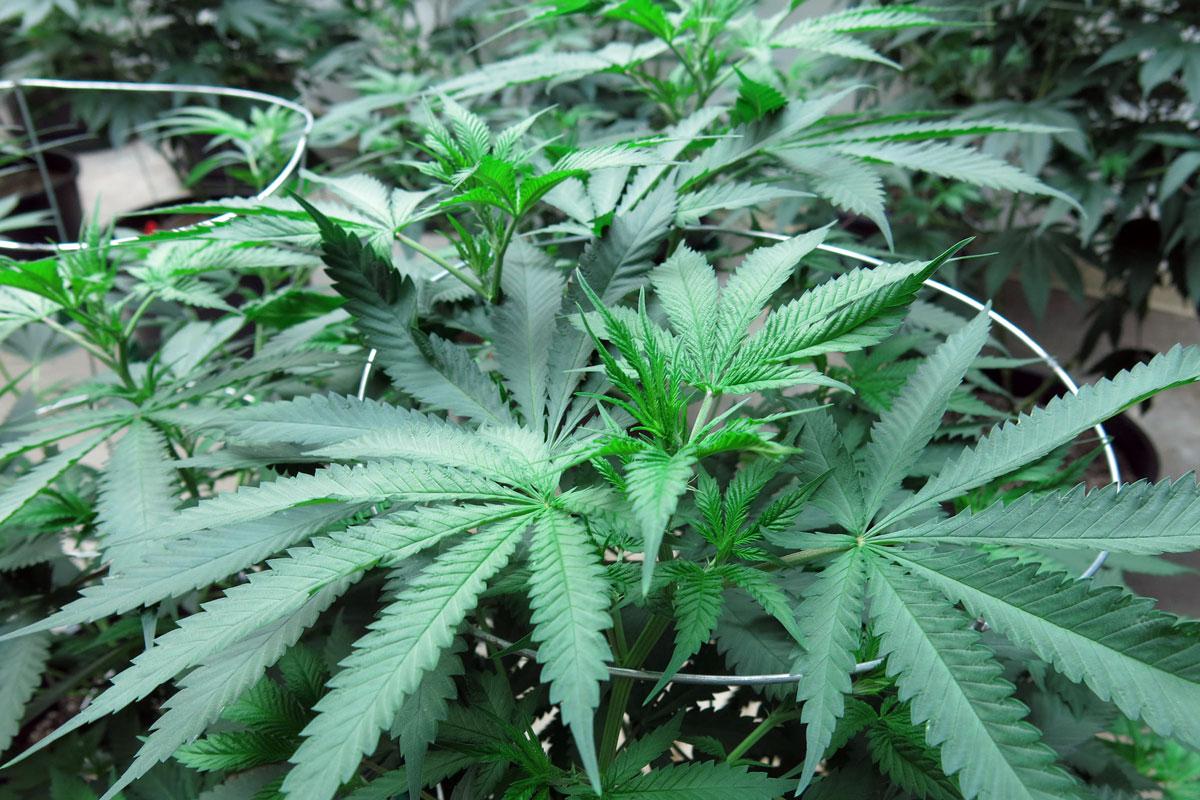
Well-trained plant breeders can now entertain a new calling: marijuana. Breeding programs, like this one at The Farm in Boulder, Colorado, are becoming a significant commercial enterprise.


Cannabis is beginning to look a lot like a commodity crop.
After spending decades in darkened basements and secreted away on small parcels of land, marijuana growers are commercializing once-illegal plant varieties: industrial hemp, recreational marijuana and medical cannabis.
As more states legalize the growth of certain types of cannabis, those in the industry are turning to traditional farmers for help, to transform the plant from black market scourge into the next big American cash crop.
Of course, this transformation would’ve been impossible without a change in law and a change in tone from regulators. In Colorado, marijuana is enshrined in the state’s constitution, and its regulations and standards are folded into several state agencies. While Gov. John Hickenlooper reluctantly took up the mantle of legalized cannabis, other state leaders are beginning to embrace it.
While Gov. John Hickenlooper reluctantly took up the mantle of legalized cannabis, other state leaders are beginning to embrace it.
Take for example, the 2016 Governor’s Forum on Agriculture, held in Denver. The event is your typical farm conference. Every year, farmers in denim and bolo ties mingle with agriculture professionals and state regulators. The governor himself swings by for a keynote speech. But this year, there was a new addition.
On the agenda was a panel discussion: “Cannabis: An Emerging Crop Of Colorado.” The session included three Colorado-based cannabis company executives, and was moderated by Duane Sinning, director of the state’s industrial hemp program.
In years past, marijuana growers haven’t been invited to the forum. But now the state is facilitating a “lessons learned” panel with cannabis companies in front of an audience of farmers, tackling everything from how to run your combine over fields of hemp to genetically-engineered marijuana.
“There’s an opportunity where traditional agriculture can help an industry emerge in this state,” Sinning says.

More than 150 different varieties of cannabis make up Boulder-based The Farm's "genetic library."
CREDIT LUKE RUNYON / KUNC, HARVEST PUBLIC MEDIA
Because cannabis is the state’s newest and flashiest cash crop, there’s a rush on finding the most efficient ways to grow it, to turn cannabis into a full blown commodity, and bring down the cost. This sometimes takes the form of innovations in lighting or hydroponic water delivery systems. In other cases growers spray plants with unapproved pesticides, sparking state-mandated recalls of contaminated marijuana.
"Farmers understand scale. They understand hardship. They understand you're only as good as your last crop."
Those are hard lessons to learn, and some marijuana companies are realizing that to avoid problems in their grow facilities, former traditional farmers might be their best new employees.
“Farmers understand scale. They understand hardship. They understand you’re only as good as your last crop,” says Brooke Gehring, CEO of LiveGreen Cannabis, a chain of shops in the Denver metro area.
Stephen Lipton knows those lessons. He’s the cultivation manager at The Farm, a recreational and medical marijuana operation in Boulder, Colorado. Before growing commercial-scale cannabis, Lipton worked as an organic farmer.

Stephen Lipton runs a two facility research and development program for breeding new strains of cannabis for The Farm in Boulder, Colorado.
CREDIT LUKE RUNYON / KUNC, HARVEST PUBLIC MEDIA
While other marijuana companies are attempting to just keep enough product on the shelves, Lipton oversees two research facilities and a development program for The Farm. In one room, which he dubs the “genetics library,” about 150 different strains of marijuana are planted in small pots.
“Genetics is really the cornerstone of the whole thing. Without that you really have nothing,” Lipton says.
Just like a plant breeder attempting to make a sweeter apple or a hardier tomato, he crosses strains in the search of the perfect variety, ready to fold the best performer into the company’s lineup.
“[We look for] plant vigor, smell, aroma, taste, anything that you can imagine really. Yield is a big one for sure,” Lipton says.
It’s a tricky balance, Lipton says, attempting to birth a high-yielding variety that still holds on to the attributes customers at the store are asking for. Like most things in agriculture, the genetics program here is built on tradeoffs. Some incredibly potent varieties tend not to yield as much. The high-yielders lack the right aroma. The best-smelling buds are duds on taste.

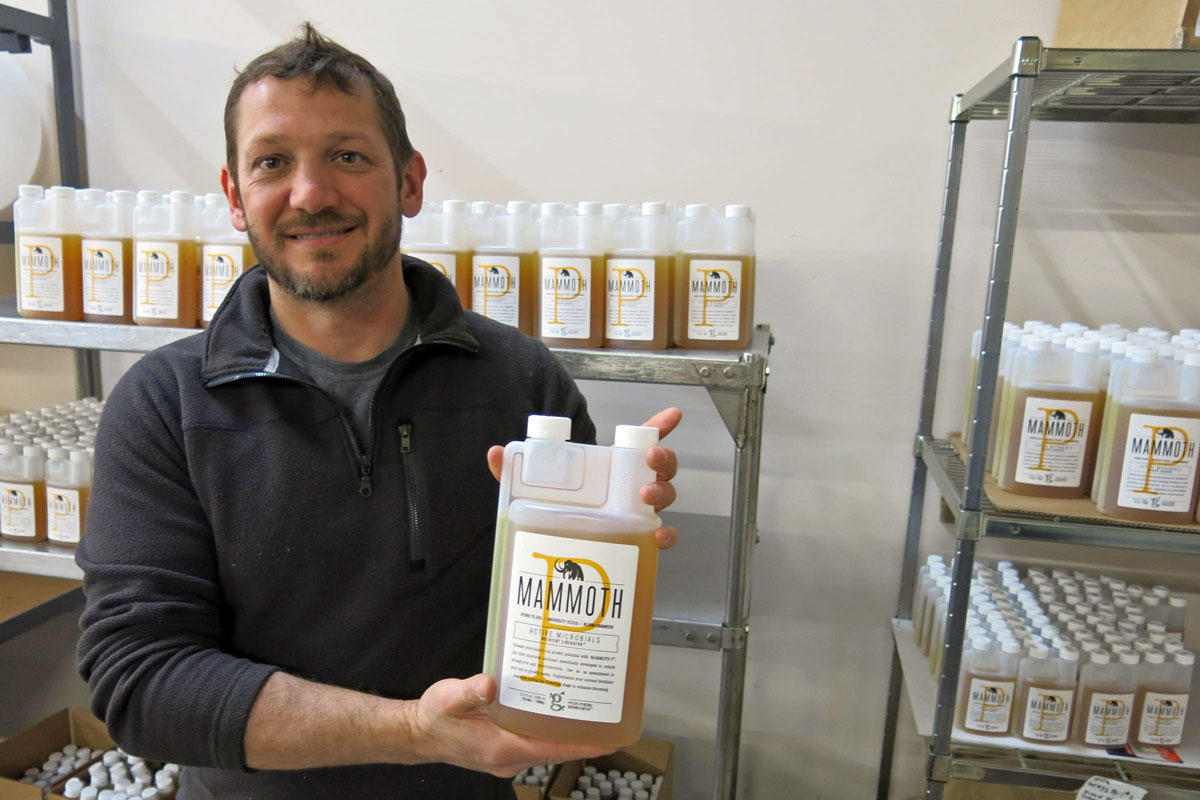
Soil microbiologist Colin Bell developed a mix of helpful bacteria at Colorado State University, and now markets his product under the brand name Mammoth P, promising marijuana growers it'll boost their yields.
CREDIT LUKE RUNYON / KUNC, HARVEST PUBLIC MEDIA
Genetics is just one factor to a successful farm operation. Most of modern agriculture relies heavily on inputs, like fertilizers and pesticides, to keep plants healthy and productive. But for obvious legal reasons, the Monsantos and John Deeres of the world aren’t catering to cannabis growers. That leaves room for startups.
One of those new kids on the block, Colin Bell, decided to use his knowledge of soil microbes to serve the marijuana sector. Bell originally developed his mix of microbes at Colorado State University to sell to vegetable farms. But to get an influx of cash, Bell and his business partners decided to pitch their beneficial bacteria to marijuana growers under the brand name Mammoth P, serving a market sorely in need of tailor-made inputs.
“We hear bigger flowers, we hear denser flowers. And in the end what it translates is to is more yield,” Bell says.
More yield translates to more money.
"To be successful and to get this industry really going on its feet, we need to involve farmers a little bit more, rather than just the basement weed growers."
In Colorado alone, marijuana sales were just shy of abillion dollars in 2015. Savvy entrepreneurs in the sector are quick to say that even more markets are coming online. More than 20 states have laws allowing industrial hemp and medical marijuana, and four states, plus Washington D.C., give permission for recreational use of the drug. With a handful of states expected to fully legalize in 2016, everyone wants in on the ground floor.
“It’s a super exciting opportunity from a business perspective. There hasn’t been a new market in many, many years. And there might not be one again in our lifetime,” Bell says.
That same excitement is on display at the cannabis panel at the Governor’s Forum on Agriculture. Grant Mattive farms potatoes and barley in the state’s parched San Luis Valley. Last season he gave hemp a try. In a region prone to drought, he likes the crop’s ability to withstand dry conditions.
“To be successful and to get this industry really going on its feet, we need to involve farmers a little bit more, rather than just the basement weed growers,” Mattive says.
At first, Mattive was skeptical about jumping onto the bandwagon, into the rush to grow cannabis. Now, he just needs to figure out how to run his combine over it.

Sunday, March 6, 2016

Hemp Manufacturing Legalized in the Commonwealth

By Ashley Ann
Source: wset.com

1280x960_50319C00-UWSNW.jpg


RICHMOND, Va. (WSET) -- The Manufacturing of Industrial Hemp for commercial purposes was approved according to Virginia's Legislation Information System.
Governor Terry McAuliffe signed the bill after it passed the General Assembly 138 - 0.
This bill will allow farmers to legally manufacture industrial hemp products. The law will go into effect July 1, 2016 according to the Virginia Industrial Hemp Coalition (VIHC).
House Bill 699 and Senate Bill 691 allows "a person with a license to manufacture industrial hemp products or engage in scientific, agricultural, or other research" involving the uses of industrial hemp.
Virginia will now join several other states that allow cultivation, production, and/or manufacturing of hemp products.
The new bill redefines industrial hemp as an agricultural commodity and allows licensed growers to cultivate the plant:
"Production of industrial hemp. Clarifies that it is lawful for a person with a license to manufacture industrial hemp products or engage in scientific, agricultural, or other research involving the applications of industrial hemp and that no person shall be prosecuted for the possession, cultivation, or manufacture of industrial hemp plant material or products. The current law authorizes the Board of Agriculture and Consumer Services to adopt regulations necessary to license persons to grow industrial hemp or administer a research program. The bill requires the Commissioner of Agriculture and Consumer Services to establish a licensure program, with a maximum license fee of $250"

Power of going green with smoothies

By Susan Cunningham
Source: steamboattoday.com


If your go-to smoothie is made of yogurt and strawberries, then you may be missing out.
Smoothies can be an easy, delicious way to load up on vegetables, with a dose of protein and healthy fats, for good measure.
Cara Marrs and Laura Stout, both registered dietician nutritionists with Yampa Valley Medical Center, give their recommendations for building the ultimate smoothie. 

Smoothie sampler

The Beginners’ Green Smoothie(Serves two to three)
Blend together two handfuls of baby spinach or three stalks of kale, one pear, one banana, 1/2 cup pineapple or mango, 1/2 avocado, almond milk or coconut milk or water with a few almonds and ice
The Gingersnap(Serves two)
Blend together two pears, fresh ginger to taste, four leaves of kale, one orange, water and ice
The Farmers Market (Serves two to three)
Blend together two carrots, four leaves of Rainbow Chard or collard greens, 1/2 yellow squash, two red apples, one yellow bell pepper, 1/2 avocado, 1/2 a red or yellow beet, Chia or flax seeds, water and ice
Recipes from Laura Stout, RDN
• Don’t be afraid to go green. Baby spinach is a good vegetable to try first, but don’t hesitate to make your smoothie with kale or other dark, leafy greens, which are “nutritional powerhouses,” according to Marrs. “Just by adding those, you’re getting vitamin A, vitamin C, potassium, vitamin K, folate and lots of fiber, for virtually no calories.”
Any green can work, from arugula to chard, and most of the time, you won’t even taste it. Avocado is another good choice, as it adds a creaminess and nutrition, without changing the flavor.
If the color green is off-putting, try to see it in a new light.
“Think of the green color as springtime,” Stout said. “You have to keep an open mind to the color green, because it is beautiful.”
• Do start small. When you start adding vegetables to your smoothies, Stout recommends trying a handful or two of baby spinach.
“As you get more comfortable adding greens, start reducing the fruit and adding more green,” she said.
• Do try vegetables that aren’t green. Beets, either cooked or raw, are a good addition. Marrs recommends pairing them with a bit of cacao powder in smoothies. And since they aren’t green, beets work well for skeptical children who don’t like the idea eating their vegetables, much less drinking them.
• Don’t limit yourself when it comes to choosing a type of fruit.
“Most people think strawberries and bananas, which is great, but there are a lot of other options,” Marrs said. Try frozen berries in winter, or peaches and melons in summer.
• Do add protein. A protein can give a smoothie staying power, which is great for those times you want a smoothie to serve as a quick breakfast. Nut butters and nuts are a great choice — Marrs’ son loves a PB&J smoothie, which she makes with almond milk, nut butter, berries and half a banana. And there are a variety of protein powders, including hemp, pea, whey and goat milk — just avoid powders with extra sugars.
• Do try adding seeds. Chia seeds, hemp seeds and flax seeds all add healthy fats and fiber and blend up easily.
• Don’t use liquids with added sugar, such as fruit juice. Instead, try unsweetened coconut or almond milk, regular milk or water with a handful of almonds. Add enough liquid to reach about three-quarters of the way up the vegetables; if it’s too thick, add more.
• Do make sure your smoothie fits your needs. Whether you’re having a snack or refueling after a hard workout, everybody’s body is different — be wary of packing in too many calories or not taking in enough.
• Do make your smoothie with real foods.
“You can make a great smoothie with mostly ingredients that are in your refrigerator,” Marrs said. “The key is we’re talking about real food, and that’s what you should put in your smoothie.”