Tuesday, September 15, 2015

Did the Industrial Value of Hemp Spark Cannabis Prohibition?

By Kentucky Hempsters
Source: leafly.com

The legalization of medical and recreational cannabis has received a lot of attention over the past few years, but what most people don’t know is that it may have been industrial hemp that triggered prohibition in the first place. Let's dive into this cannabis "conspiracy theory" to see if it holds weight.
Hemp stem and fibers

For centuries, hemp has been an extremely valuable crop. The fiber from the outer layers of its stalk was used for all kinds of textiles, papers, ropes, and other versatile products. It was such an important resource in colonial America that farmers were required to grow it and faced a fine if they did not. In many ways, America was built on hemp.
In the early 20th century, hemp became recognized as a valuable source for far more than just its fiber content. It was discovered that many other parts of the plant -- especially the cellulose -- could be used for fuel, building materials, medicines, etc.
Industrial applications of the plant proved so useful and numerous, Popular Mechanics published an article about hemp titled “The New Billion Dollar Crop.” Even Henry Ford was an early champion of hemp’s industrial value, going so far as to build a car that incorporated hemp materials.

Were Industrialists Threatened by Hemp Enough to Make It Illegal?

Factory building
Wealthy industrialists must have realized that hemp threatened to replace some of their most profitable industries, including wood pulp paper, cotton, petroleum, and chemicals. Is it just a “conspiracy theory” that those powerful men took steps to have hemp outlawed?
The possibility that hemp sparked the total prohibition of cannabis is presented in a thesis by Pepperdine University’s professor John C. Lucien:
"From 1935 on, the Bureau actively re-wrote the history of hemp by demonizing cannabis -- triggered by monopolistic greed and economic insecurity of a few financially threatened industries."
The "Bureau" that he referred to was the Federal Bureau of Narcotics (FBN), which operated under the U.S. Treasury Department. At that time, the Secretary of the Treasury was Andrew Mellon, a very powerful industrialist with interests in companies like DuPont, General Motors, and various oil interests. Mellon was well known to influence legislation in favor of big business.
Mellon appointed Henry Anslinger (his niece’s husband) to head the FBN, and Anslinger wasted no time putting the bite on hemp. Soon after, the Bureau drafted the Marihuana Tax Act, which would place all cannabis under the control of Treasury Department regulations to limit and ultimately prohibit its cultivation and production.

All the News That's Fit to Create

Stacks of newspapers
The cast of powerful anti-cannabis personalities was further accompanied by none other than William Randolph Hearst, perhaps the most powerful newsman of all time. Under the guidance of Henry Anslinger, mass media and propaganda were used to propel the anti-cannabis message from the state level to a national movement. Cannabis was demonized to the public when the FBN linked it to violent anti-social behavior of lower socio-economic groups.
Hearst provided support to the campaign by running anti-cannabis ads and articles in his many media outlets, including 20 daily newspapers and 11 Sunday papers in 13 cities. Is it just a coincidence that Hearst’s fortune was threatened by hemp production because he owned many of the forests used for wood pulp paper production?

The Passage of the Marihuana Tax Act

Marihuana Tax Act revenue stamps
The FBN took full advantage of the “reefer madness” misinformation campaign, using it to get the Marihuana Tax Act passed. Following passage of the Act, it was nearly impossible to succeed in the hemp industry because of the bureaucratic, legal, and monetary barriers it imposed.
After the Act’s passing, a representative of the American Medical Association named W.C. Woodward stated that there was no empirical evidence backing the FBN’s claims that cannabis was addictive or connected to violent behavior. He pointed out that all the evidence on which lawmakers and others relied did not come from medical sources, but instead from newspaper articles. By then, however, the “reefer madness” stigma had taken hold of the national psyche.
Whether you’re a conspiracy theorist or not, you have to admit it is highly coincidental that the “reefer madness” of psychoactive cannabis was used to prohibit non-psychoactive industrial hemp as well. Could it be that the threat of hemp’s newfound industrial value prompted powerful men to use “reefer madness” as a way to get hemp outlawed? Was it the value of industrial hemp that sparked cannabis prohibition?
Today, the conversation about cannabis in all its forms is finally achieving a more enlightened level. In the process, medical and recreational marijuana are no longer being demonized and, in many cases, are being valued. In the process, industrial hemp is also back in the news as a valuable crop for American farmers.
Although legislation has been passed such that American farmers in some states can grow, research, and market industrial hemp, federal laws still impede the process. Not until hemp is declassified from the Controlled Substances Act can the full potential of the plant and the influences it will have on modern industry be realized.

Deer devour hemp crops at southern Oregon farm

Source: washingtontimes.com

MURPHY, Ore. (AP) - Deer got the munchies at an industrial hemp crop in southern Oregon.
The deer got by barbed-wire fencing a couple weeks ago and went through the hemp plants like high-powered mowers, the Grants Pass Daily Courier reported. 
“Generally, I don’t think they like cannabis. They liked ours, though,” said Cliff Thomason, a real estate agent who is the steward of the first industrial hemp crop in Oregon, which was planted near Murphy by Thomason and his partners with Orhempco.
The company planted roughly 1,000 plants in the section the deer got into, and Thomason said there are only about 40 left.
Industrial hemp has a low level of THC, the psychoactive property of marijuana. Kit Doyle, another partner in Orhemco, said it’s high in protein and that’s likely why the deer went on a binge.
Orhempco has several crops of industrial hemp - each planted at a different time and is in a different stage of maturity. Doyle said the group expects to have other plants go to harvest that will produce hemp seed for sale.
The land is owned by Josephine County Commissioner Cherryl Walker and her husband, Martin Hill. Fellow county Commissioner Simon Hare also is a partner.
Only some of the crop is protected by the very tall fencing needed to thwart deer. Doyle said a reason some crops were left vulnerable was because of the uncertainty surrounding the program. A bill in the Oregon Legislature would have put Orhempco out of business had it passed the Senate.
“We wanted to hurry and get in the ground and we didn’t want to spend a lot of money,” Doyle said. “Next year, if we decide to grow in the same place, we will have the necessary infrastructure.”

Heal Your Skin With Hemp

By Eva Medoff
Source: stylecaster.com


After a long week sitting in an air-conditioned office, your skin (and sanity) could probably use a reboot. But what’s a millennial to do if she doesn’t have time for an hour-long facial and a (many hours long) Netflix binge? Glad you asked. With one moisturizing face treatment and one insanely addictive web series, you can get all of the R&R you need in under 20 minutes. Just add the secret ingredient: THC.
Himalayan Hemp Mud
Image via Amazon

You read that right. See, THC—yup, the psychoactive ingredient in cannabis—is actually an antioxidant, which means it can help minimize fine lines and fight skin ailments like eczema and psoriasis. Pick up a tub of Himalayan Hemp Mud ($24.99 for 5.4 oz), which contains 25,000 antioxidants (including traces of THC), skin-plumping fatty acids (like Omega 3 and 6) and loads of vitamins (such as C, E and B6). Like most mud masks, it’ll draw out impurities and combat blemishes—but it’ll also lock in moisture to leave skin supple and soft. Slather on the raw, organic formula and zen out for the next 20 minutes. It won’t give you a contact high, but our next tip might.

As it dries, boot up your new favorite web series, High Maintenance. Following the adventures of a nameless Brooklyn pot dealer, each episode (ranging from five to 15 minutes) focuses on a different marijuana-seeking client. From a serial OKCupid user in Williamsburg (“Heidi”) to a snarky, Manhattan-dwelling BFF duo (“Olivia”), it’s like watching an indie comedy rolled up into an anthropology lesson. Bonus points if you can spot Dan Stevens (cousin Matthew from Downtown Abbey) or Yael Stone (Lorna from Orange is The New Black). You’ll crack up so hard your roommate will think you’re, well, stoned.

In the end, you’ll have glowy, moisturized skin and a 15-minute laughing session. How’s that for a weekend high?


Monday, September 7, 2015

Botany: The double life of cannabis

By Clive Cookson
Source: ft.com

The valuable plant, which consists of three species and hybrids between them, is not well labelled
C
annabis is a valuable plant, as a source both of mind-bending marijuana and of hemp fibres and seeds, yet scientific knowledge of its genetics and evolutionary history has been scarce because of legal restrictions on growing it — even in the cause of science.
A study at the University of British Columbia and Dalhousie University in Canada, published in PLOS One, begins to fill this gap. The researchers compared the genomes of 81 marijuana and 43 hemp samples. Understanding cannabis genetics and evolution could assist breeding efforts for both crops, they say.
They found cannabis, which consists of three species (sativaindica and ruderalis) and hybrids between them, is not well labelled.
“Cannabis breeders and growers often indicate the percentage of sativa or indica in a cannabis strain, but they are not very accurate,” says Jonathan Page of UBC.
Hemp, which is based on sativa, shows significant genetic separation from marijuana, as the plants have been bred for different purposes. “The genetic difference between marijuana and hemp has legal implications in many countries,” Page says. “We require a practical, accurate and more reliable classification system of this plant.”
Photograph: Alamy


Buckingham pulls hemp food stunt

By Alex Druce
Source: theland.com.au

NSW Greens MP Jeremy Buckingham admitted to eating cannabis seeds to make a point in Budget estimates today.


FIERY Greens MP Jeremy Buckingham told a NSW budget estimates hearing that he ate cannabis for breakfast to show the potential value of the hemp food industry.
Mr Buckingham - who in May "vaped" inside the upper house chamber to prove a point on e-cigarette laws - admitted to Ag Minister Niall Blair he had "broken the law" by consuming cannabis seeds that morning.
Mr Buckingham followed his admission by asking Mr Blair why a potentially lucrative hemp-food industry was being stifled in NSW.
"Minister you may or may not be surprised that this morning I consumed cannabis. I broke the law" Mr Buckingham said.
"Why is the NSW government standing in the way of a billion-dollar hemp food industry and refusing to allow hemp seed to be grown, sold and consumed in NSW?"
Mr Buckingham later posed for photos in the press gallery with a bowl of seeds from Hemp Foods Australia.
Mr Blair said while he was open to hemp products being eaten in NSW, the product needed further safety guarantees.
"In January 2015 the ministerial forum on food regulation agreed that hemp food is a safe and nutritious food, rejected an application to allow the sale of no-THC hemp food products in consumption," Mr Blair said.
"The application was rejected for a range of reasons that do not directly relate to safety as a food. The application sought to legalise the sale of hemp food provided the concentration of THC is below specified levels to ensure no psychoactive effects."
Budget estimates concludes today after hearings with Environment Minister Mark Speakman, Emergency Services Minister David Elliott. Regional Development Minister John Barilaro, and Local Government minister Paul Toole.


Hemp grower spruiks (sparks?) a revolutionary industry

Source: echo.net.au

vHunter Valley farmer Bob Doyle and his bumper hemp crop which he says has a huge future. Mr Doyle will make a presentation at the upcoming Byron Bioenergy Conference. Photo by Stuart Scott, The Maitland Mercury
Hunter Valley farmer Bob Doyle and his bumper hemp crop which he says has a huge future. Mr Doyle will make a presentation at the upcoming Byron Bioenergy Conference. Photo by Stuart Scott, The Maitland Mercury

A Hunter Valley grazier and well-known industrial hemp grower will address next week’s Byron Bioenergy Conference, to update northern rivers farmers on the fledgling hemp industry, describing hemp as ‘almost the perfect crop’.
But he says large-scale hemp-fibre processing is still some time off with a lack of large-scale processing plant.
Bob Doyle, a sixth generation beef farmer from the Paterson Valley near Dungog, says industrial hemp, a relative of the illegal cannabis plant, doesn’t need pesticides, is water-efficient and can be grown in rotation with lucerne as a break crop.
Mr Doyle’s 30-hectare hemp farm in Vacy is one of several industrial hemp plantations grown legally in NSW as an alternative to traditional crops such as lucerne and maize.
The hemp industry was legalised in NSW in 2008, giving farmers a chance to sustainably boost their profits.
Mr Doyle reckons the potential across Australia is ‘huge’, but the main thing holding the fibre-products side of the industry back on the north coast and elsewhere is the lack of a fibre processing plant.
However, growing hemp for seed for the hemp-food industry and small-scale fibre processing for alternative building material would be viable on the northern rivers.
‘The focus in the short term on the north coast is for growing hemp for grain, and there will be an opportunity for some fibre processing for hurd for hemp masonry products,’ he told Echonetdaily.
‘Large-scale fibre-processing mills are still a few years away.’
He said that even trial hemp crops in Victoria were hampered by the lack of such machinery and farmers there ‘have had to put it in storage for future use’.
‘There is no large-scale processing in Australia at the moment, but plenty of people trying.
‘What is needed across the board is a co-ordinated approach, and to this end, a new national alliance of industrial hemp growers is being formed to do this.’
Mr Doyle said industrial hemp could also be used as a waste product for biochar production.
A couple of farmers in the Dungog area have licences to grow industrial hemp from the state government.
Mr Doyle is part of a group developing an industrial hemp processing mill at Dungog.
‘Last season, we were a part of the largest grower group growing fibre in Australia and his presentation at the Byron Bioenergy Conference at Tyagarah on September 12 is eagerly awaited by locals keen to see the industry get a foothold on the north coast.
As the managing director of Hemp International Australia, he is keen to get the word out about the crop, but he says the issue needs ‘a bit of crank-up momentum’ in terms of processing the hemp fibre.
Mr Doyle was a dairy farmer until 2006, but now concentrates on running beef cattle and growing industrial hemp. He has also been actively involved in Landcare since 1990.
His company, Doyle Rural Services, have contracts spreading biosolids and managing Hunter Water effluent reuse farms
Around the world, the hemp plants’ long, straight stems are used to produce a range of fibre-based products, from a base for skin-care products, paper products, textiles, paints, load-bearing masonry for building, insulation and as an additive to wool in soft-textured durable yarns.
As a natural fibre, hemp has many benefits which has generated a lot of interest around the nation and worldwide.
More recently Mr Doyle and other hemp farmers bought a Dungog timber mill which they are converting into a hemp-processing facility aiming to produce hurd for the hemp masonry industry.
Hemp fibre products can be used as a replacement for bricks and concrete in walls, with its high insulation properties.
‘Hemp is a crop that has to well managed to optimise the benefits. It isn’t as easy to grow as often has been promoted,’ he said.
Mr Doyle will talk about how to slowly develop a viable hemp industry, in any number of regions across Australia.

Biochar movie

Meanwhile, a couple of Tweed Valley biochar enthusiasts who have produced a film about a sustainable timber plantation will premier the film at the Byron Bioenergy Conference.
Dolph Cooke and Gillian Tubbs, from Biochar Project Australia in Kunghur in the Tweed Valley, made the film ‘Avachar – The Movie’, about their journey on the flailing plantation.
A conference organiser said the couple’s ‘grassroots style of living, making biochar and teaching others has changed things forever’.
The film will be screened from 6-8pm on Saturday, September 12, including an Introduction and Q & A session afterwards.
Dolph Cook at home with his biochar kiln.
For further information on the conference on Saturday and Sunday, September 12-13, visit www.byronbiochar.com.au

Can Hemp Join Corn And Wheat As Everyday Crops? CSU Researchers Are On It

By Luke Runyon
Source: kunc.org

Hemp grows tall on a research farm in rural Larimer County, Colorado.


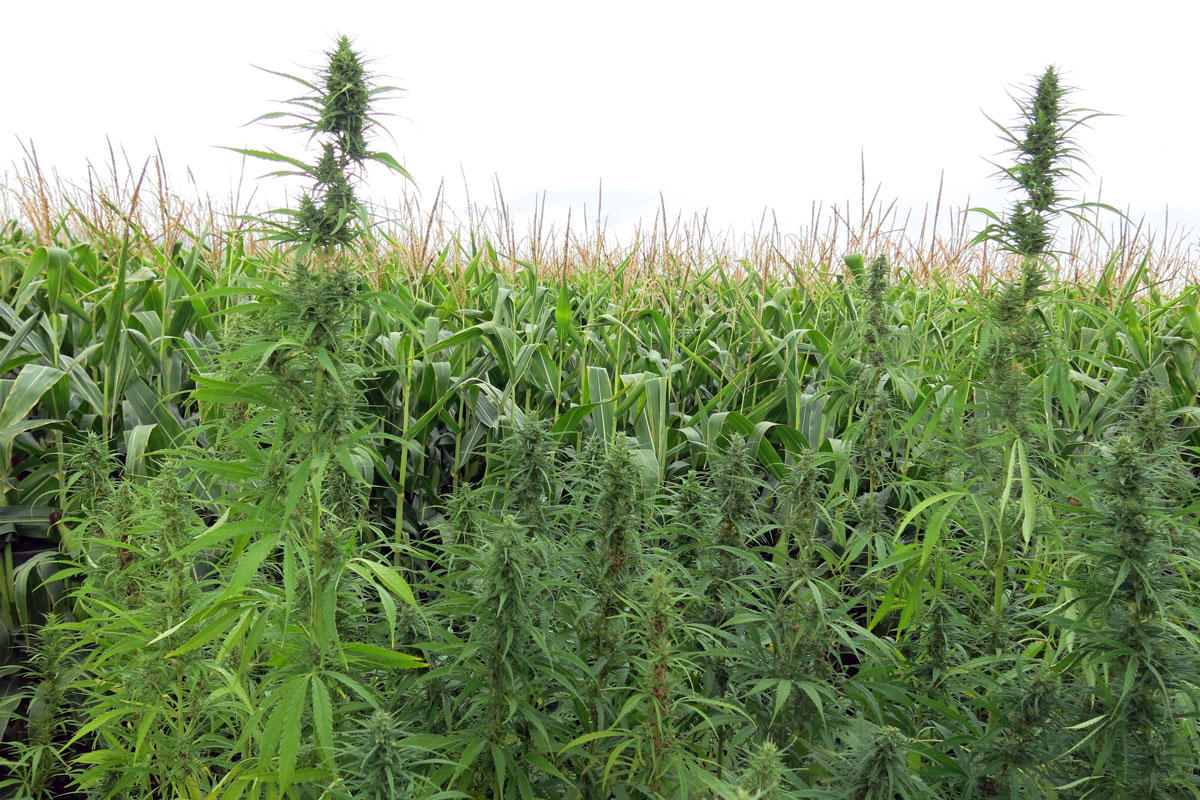
On a research farm north of Fort Collins, Colorado, in a secret location, buried in the middle of a corn field, grows Colorado’s newest and most buzzed about commodity crop -- industrial hemp.
It’s almost harvest time at the farm, and soon researchers at Colorado State University will be adding bushels of hemp next to the usual, familiar piles of corn, wheat and oats.
Hemp is a member of the cannabis family, but it’s lacking in psychoactive properties. Instead, it’s grown more for fiber and oil. But decades of prohibition have left academia lacking in published scientific research about the plant’s very basic properties.
John McKay, a plant geneticist at CSU, leads the team studying the 17 varieties of hemp on this test plot. The corn field border is meant to keep curious hemp enthusiasts from snooping around, and disrupting the experiments inside.
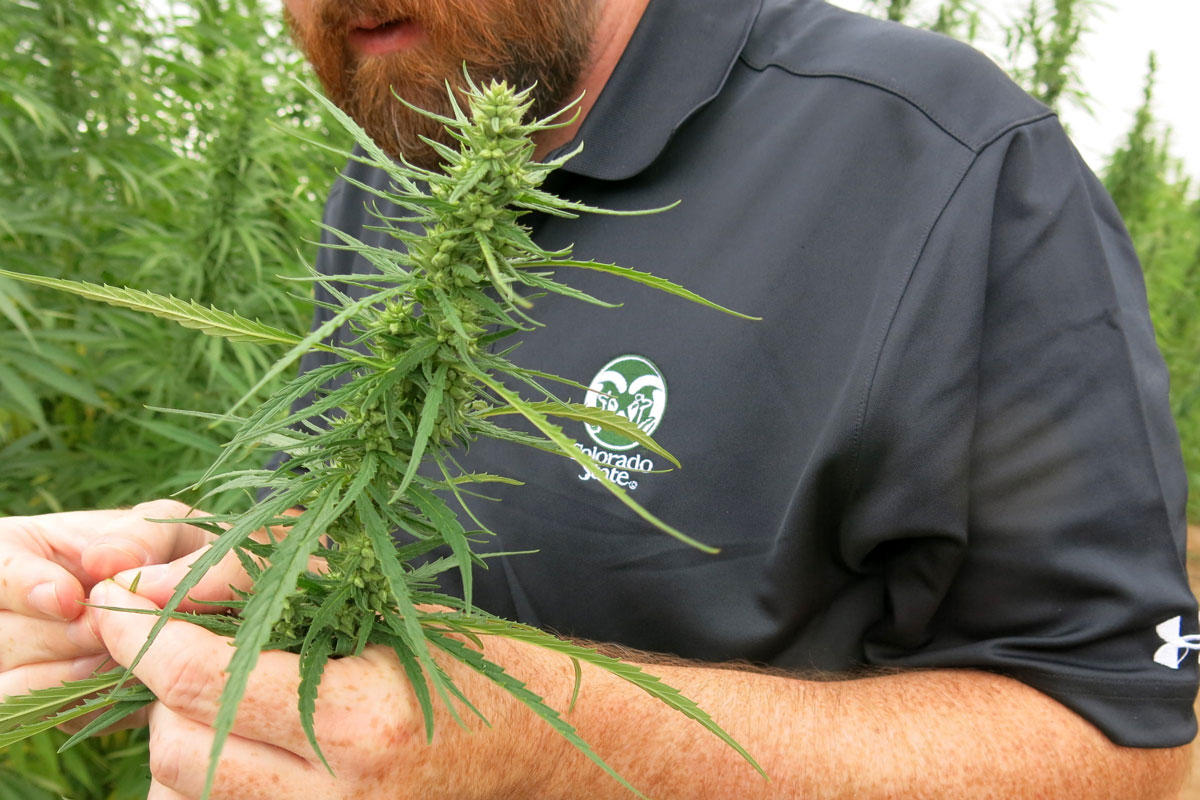
Brian Campbell, a graduate student at Colorado State University, shows off hemp stalks.
CREDIT LUKE RUNYON / KUNC, HARVEST PUBLIC MEDIA
“From the scientific side we’ve tried to keep people out of all of our experiments,” McKay says. “Because they’re going to knock seeds off of plants and interfere with the data. And this experiment, people are more interested than anything else I’ve done.”
McKay and his graduate student, Brian Campbell, weave through the corn stalks, eventually coming upon a half-acre of deep green hemp stalks.
Campbell has a huge smile on his face as he explains what’s happening inside this corn field.
“My background has been in alternative oilseeds so this is kind of like the king of alternative oilseed crops,” Campbell says. “So it’s been an exciting summer for me personally just to get to work with something that hasn’t been done to death, like corn.”
Hemp stalks rise above the corn field border it was planted within.
CREDIT LUKE RUNYON / KUNC, HARVEST PUBLIC MEDIA
The juxtaposed corn offers a glimpse into what hemp’s future could look like. The hemp field is a messy tangle of plants, ranging in height, stalk thickness and hardiness. The neighboring corn is uniform, sturdy, in neat and tidy rows thanks to centuries of breeding and research. The hemp’s varietal variability is what surprised John McKay.
“So if you look closely in each of the plots,” he says. “There’s quite a bit of variation from plant to plant and it looks like some of that is still genetic variation. If you look over there at the corn it’s extremely uniform.”
A more concerted breeding program could turn hemp from a much-hyped mysteryinto a full-blown commodity, McKay says. Imagine combines and tractors roaming over fields of hemp. But until then, variation among the crop will make it tough to monetize, and to pitch to pragmatic farmers.
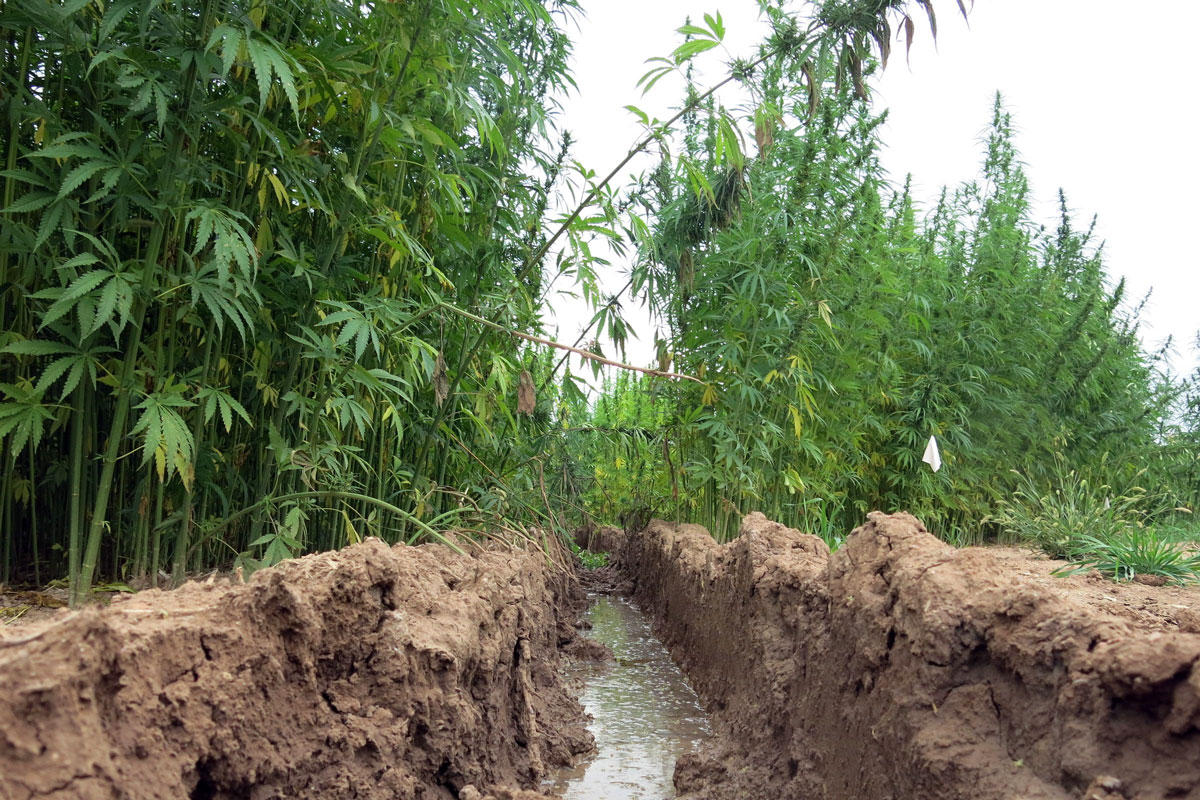
Researchers are using overhead sprinkler irrigation to water the hemp. The system's tires dig deep trenches in the soil.
CREDIT LUKE RUNYON / KUNC, HARVEST PUBLIC MEDIA
One Chinese variety, grown for fiber production, towers overhead at 10 feet tall. Others, from Italy and Romania, are short and bushy, laden with seeds. The crop trial is designed to see which varieties grow best in Colorado. Another test plot in southwestern Colorado is part of the project.
“When you’re growing a fiber variety you want it to go as long as possible before flowering so you get all the stalk biomass,” Campbell says. “I mean down here you can see some of them are much thicker than a thumb.”
Hemp is enjoying a resurgence in popularity. The once-banned crop is popping up on small plots of land across the country. Laws have been loosened in the last year to allow experiments like this one. Even with the more lax regulations, it took months to get research projects off the ground due to funding problems andinterference from federal drug enforcement officials.
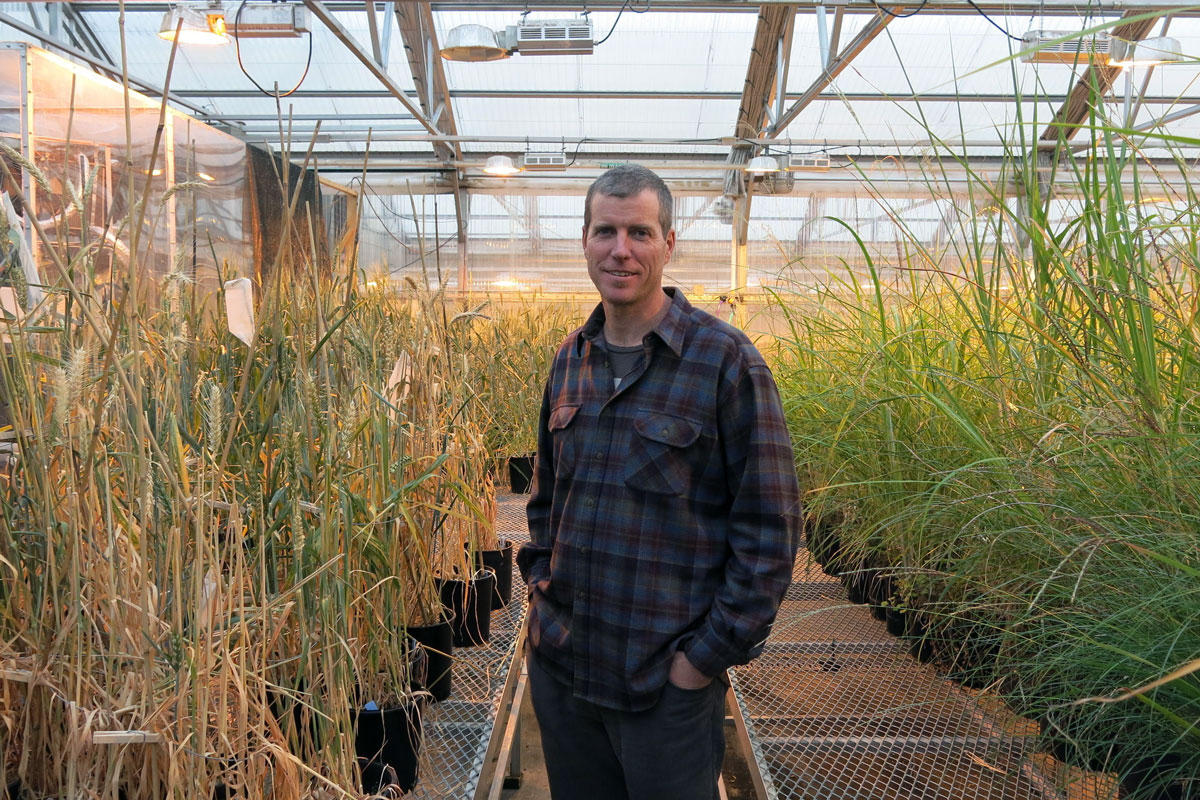
John McKay, a plant geneticist at Colorado State University, says this research study focusing hemp has brought a lot of attention to the plant science department.
CREDIT LUKE RUNYON / KUNC, HARVEST PUBLIC MEDIA
Hemp-based foods have taken off, same with body care products that use the plant's oil. Some of its lesser known compounds could be used as medicine. But there’s little scientific research published about hemp because of decades of prohibition, which is why CSU got involved, McKay says.
“This has been, just in terms of how to plant it, what to expect and when, it’s been a fairly seat of the pants operation. As opposed to the other crops we’ve been doing for years,” McKay says.
This experiment, which began when a seed shipment from Europe to Fort Collinscleared customs, has brought a certain amount of chaos to the usually quiet plant science department at CSU. McKay has endured hours of meetings with university lawyers, a rarity for the research who usually focusing on benign crops like rice and camelina.
As experiments like this take off and mature, and the results are rolled out to farmers, the end result could be a different agricultural landscape in Colorado, with some of the state’s amber waves of grain turning emerald green.